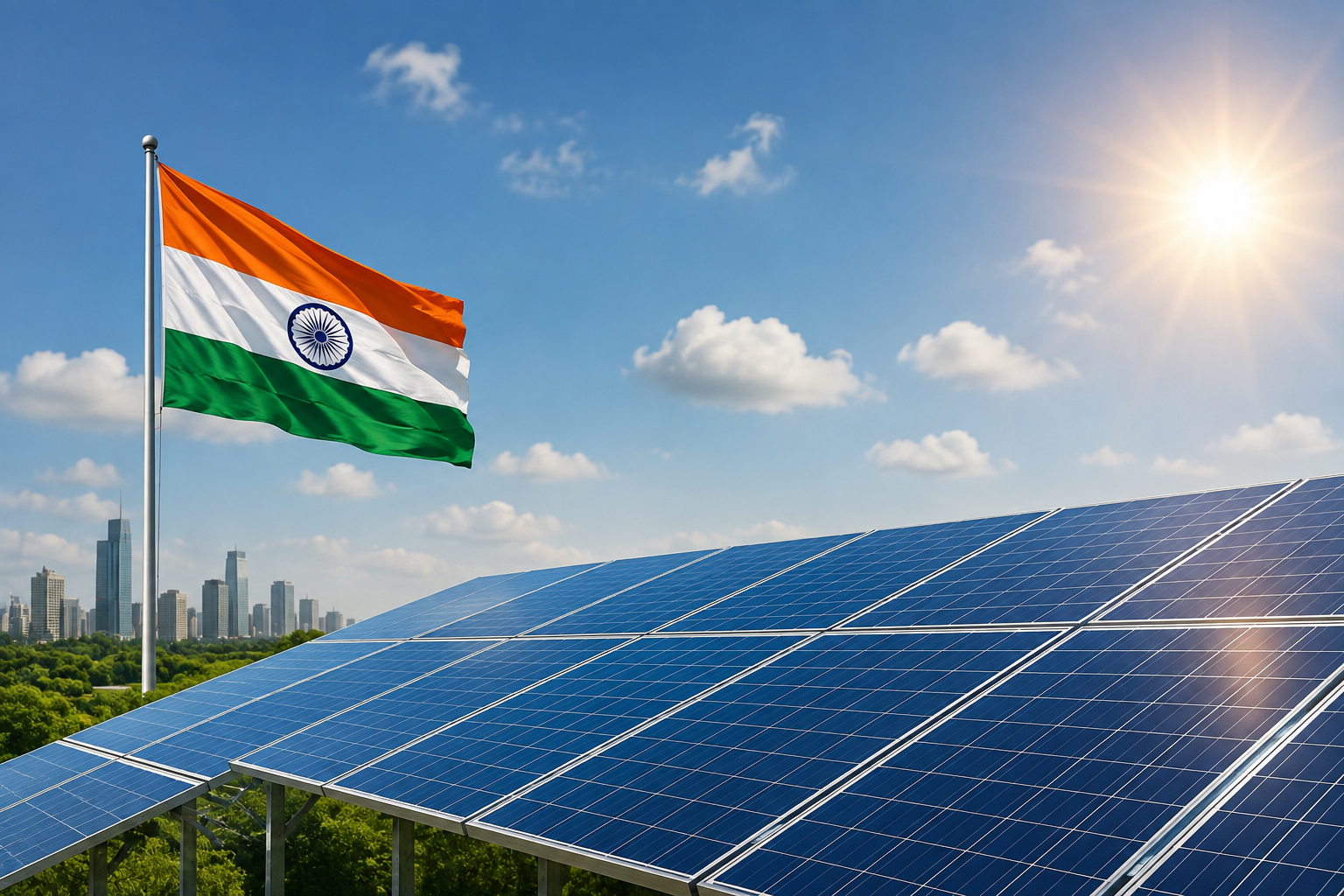
Solar power tariffs have dropped from ₹18 to ₹2.44 per unit since 2010.
Rapid capacity addition and government schemes are driving India’s clean energy expansion.
Highlights
- India has become the world’s second-largest solar market in terms of annual capacity additions.
- Solar tariffs have fallen from ₹18 per unit in 2010 to ₹2.44 per unit.
- India’s installed solar capacity has increased from 3 GW in 2014 to 162.15 GW by June 30, 2026.
- India added 37 GW of new solar capacity in 2025, ahead of the US, which added 34 GW.
- PM Surya Ghar and PLI schemes have accelerated rooftop solar adoption and domestic manufacturing.
- China remains the global leader in overall solar capacity, followed by the US in total installed capacity.
Story
India has emerged as the world’s second-fastest growing solar energy market, overtaking the United States in annual solar capacity additions. The achievement reflects the country’s rapid transition towards renewable energy, supported by falling solar tariffs, large-scale investments and government-backed incentive schemes.
One of the biggest reasons behind India’s solar boom has been the dramatic decline in solar power tariffs. The cost of solar electricity has fallen from nearly ₹18 per unit in 2010 to just ₹2.44 per unit, making it one of the most affordable sources of electricity in the country. Competitive bidding, lower equipment costs and improved project execution have helped bring prices down significantly.
Government initiatives such as the PM Surya Ghar Yojana and the Production Linked Incentive (PLI) Scheme have further accelerated solar adoption. Rooftop solar installations are increasing across households, allowing consumers to reduce electricity bills while contributing to clean energy generation. These schemes have also encouraged domestic manufacturing of solar equipment and attracted fresh investments into the sector.
According to government data, India’s installed solar capacity has grown from just 3 GW in 2014 to 162.15 GW as of June 30, 2026. In 2025 alone, the country added 37 GW of new solar capacity, surpassing the 34 GW added by the United States during the same period.
India’s growing renewable energy footprint is also reflected in rising electricity demand. Power consumption increased by 11% in July 2026, highlighting the expanding role of solar energy in meeting the country’s electricity needs.
Globally, China continues to lead with nearly 890 GW of installed solar capacity, supported by massive solar parks and strong government policies. While the United States still ranks ahead of India in total installed capacity, India’s faster pace of annual expansion has made it the world’s second-largest solar market by yearly capacity additions.
India’s rapid progress strengthens its position as a global clean energy leader and moves the country closer to achieving its renewable energy and climate goals.