India rolls out its first global EXIM shipping container, aiming to reduce dependence on China.
Highlights
- China controls nearly 90–97% of global container manufacturing
- India launches first globally deployable EXIM container
- Maersk orders 1,000 containers from DCM Shriram
- Government plans ₹10,000 crore support scheme
- Move may boost steel, logistics and manufacturing jobs
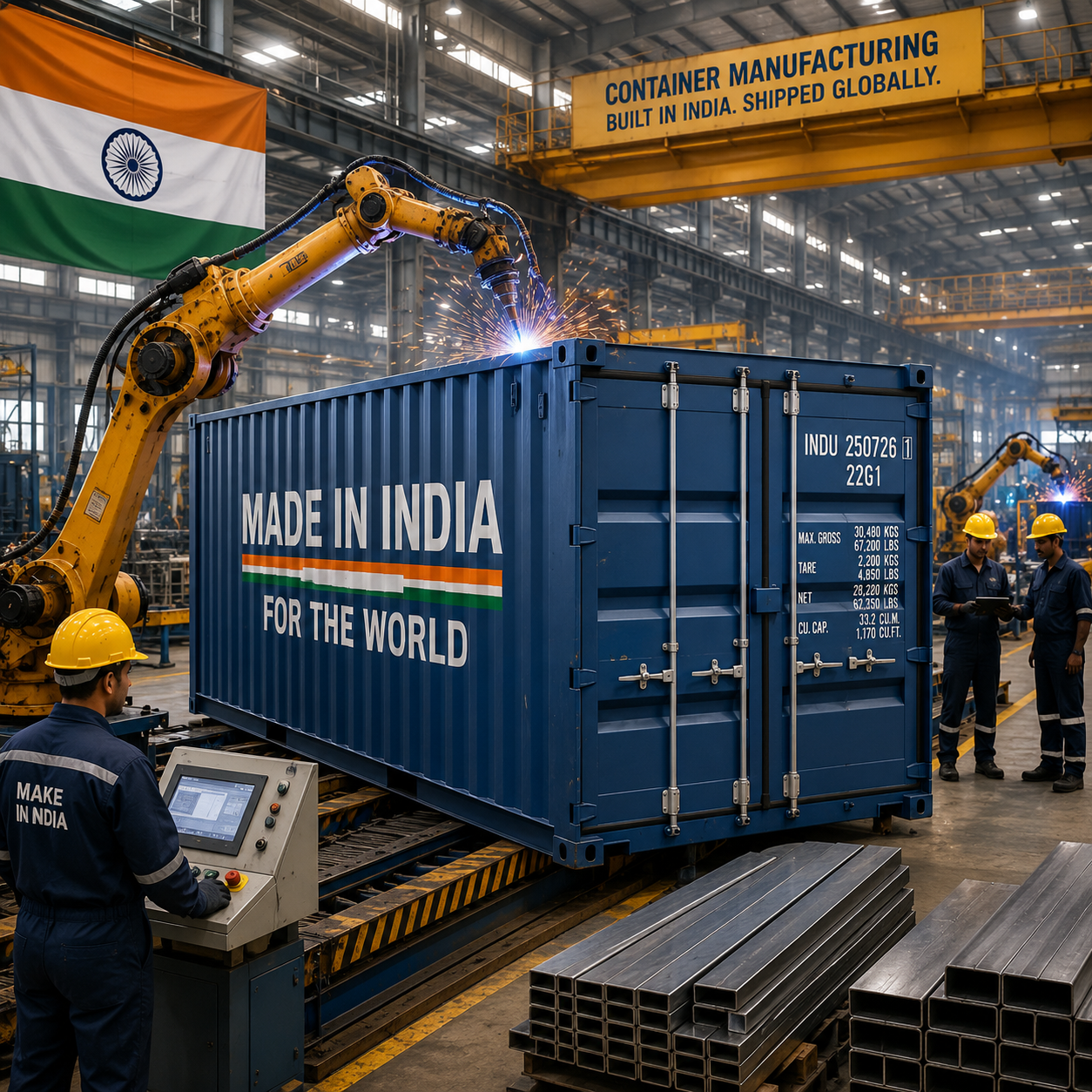
India has taken an important step towards reducing its dependence on China in global trade infrastructure by launching its first export-import shipping container for international deployment. The development marks India’s entry into a sector where China has long held near-total dominance.
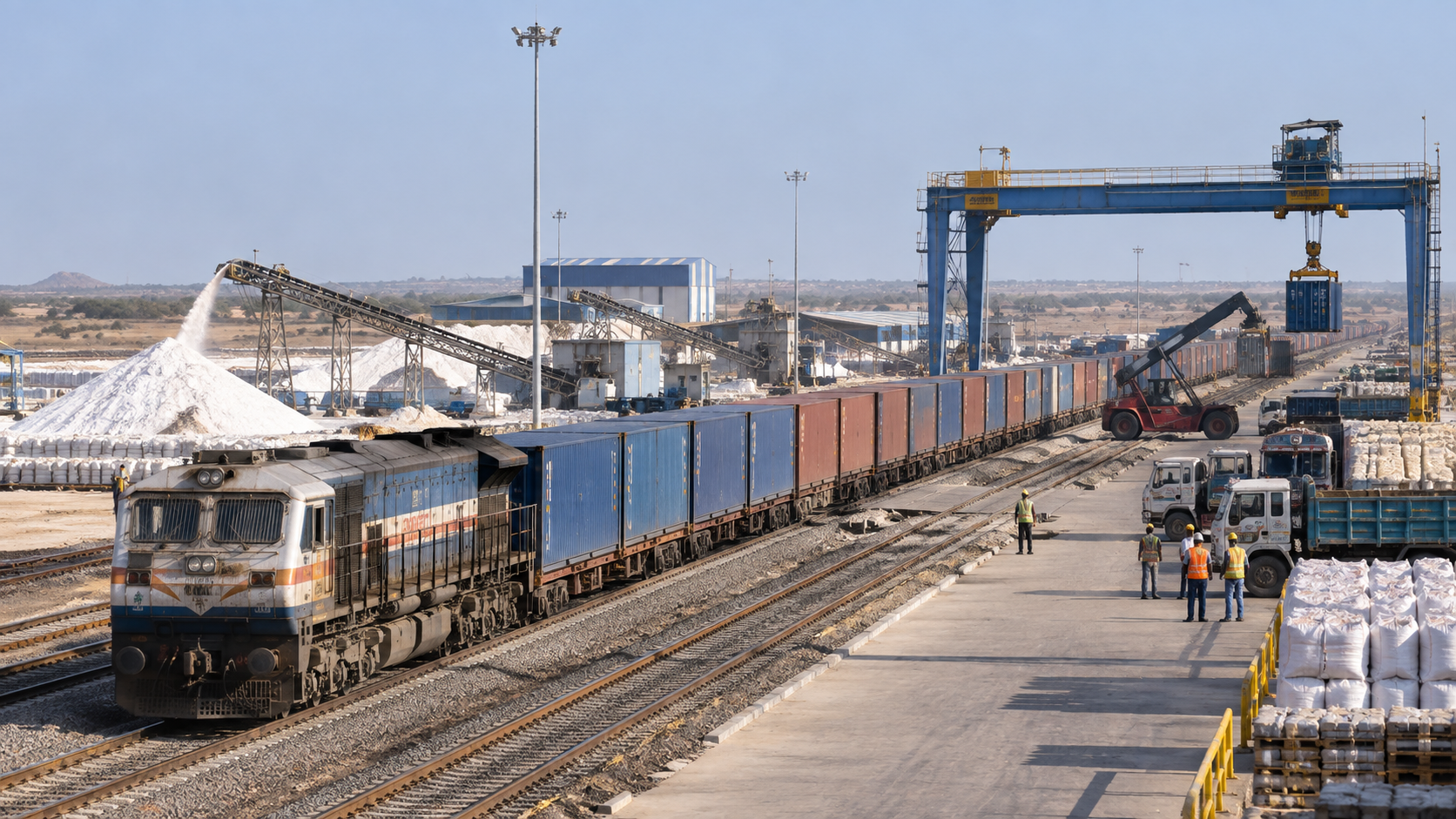
Steel shipping containers are the backbone of global trade, carrying everything from machinery and electronics to consumer goods. However, nearly 90–97% of the world’s container manufacturing capacity is controlled by China. For years, Indian exporters and importers have depended heavily on imported containers, making the country vulnerable to supply disruptions.
The Covid-era container shortage exposed this weakness sharply. As containers piled up in some regions and became scarce in others, Indian exporters faced delays, higher freight costs and uncertainty. That crisis pushed policymakers to look at container manufacturing as a strategic requirement, not just an industrial opportunity.
India’s latest milestone comes with the rollout of its first globally certified EXIM container at Dadri in Uttar Pradesh. The project was developed with support from global shipping major Maersk and DCM Shriram Group. Maersk has also placed an order for 1,000 containers, giving commercial credibility to India’s emerging container manufacturing ecosystem.
The government is also planning a ₹10,000 crore Container Manufacturing Promotion Scheme to support new facilities, expansion, technology development, testing and skilling. The aim is to build a competitive domestic industry capable of serving both Indian and global shipping demand.
However, India faces a tough road ahead. Containers made in India are currently estimated to cost 30–40% more than those produced in China. Chinese factories benefit from massive scale, automation and deep supply chains. Indian manufacturers will need larger orders, better technology and cost efficiency to compete globally.
Still, the move has wider benefits. A domestic container industry can boost demand for steel, fabrication, welding, coatings, logistics services and specialised components. It can also create direct and indirect employment while supporting India’s larger maritime and manufacturing ambitions.
India is still at an early stage, and China’s dominance will not disappear quickly. But the first global EXIM container shows that India has moved from discussion to action. For a country aiming to become a major export and manufacturing hub, reliable access to containers is now a strategic necessity.