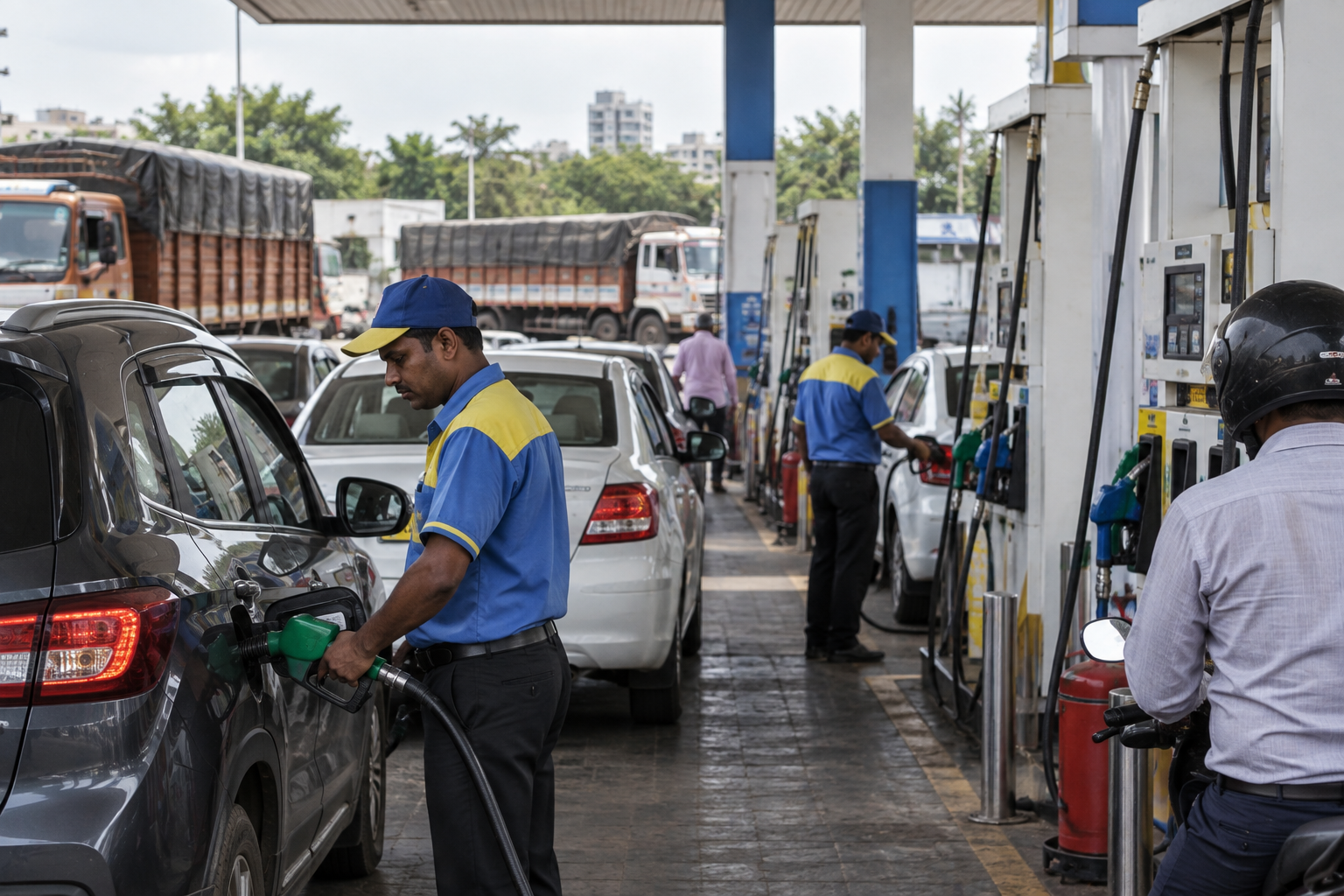
Petrol, Diesel Sales Still Rise
India’s overall fuel demand declined 2.8% year-on-year in August 2026 despite strong growth in petrol and diesel consumption, with a sharp fall in LPG and naphtha sales weighing on total petroleum-product demand.
Data from the Petroleum Planning and Analysis Cell (PPAC) of the Ministry of Petroleum and Natural Gas showed total fuel consumption at 18.61 million metric tonnes in August, compared with the year-earlier period.
The headline decline masks divergent trends across individual fuel categories. Petrol consumption remained strong, with sales rising 8.2% year-on-year to 3.84 million tonnes. The increase points to continued mobility and vehicle-use activity despite broader volatility in the energy market.
Diesel, India’s largest-selling petroleum product, also recorded healthy growth. Consumption increased 6.8% to 7.02 million tonnes during August. Diesel demand is closely linked to road transportation, commercial activity, agriculture and other parts of the economy, making its performance an important indicator of fuel-intensive economic activity.
However, the increase in transport fuels was more than offset by weakness in other petroleum products.
LPG demand saw the sharpest decline, with sales falling 17.2% to 2.35 million tonnes. The decline comes against a backdrop of continuing changes in India’s LPG consumption patterns following supply pressures earlier in the year. Earlier PPAC data had also shown a steep year-on-year fall in LPG consumption in August, while consumers and some commercial users increasingly explored alternatives such as piped natural gas where available.
Naphtha consumption also contracted sharply, falling 22.3% to 0.83 million tonnes. Naphtha is widely used as a petrochemical feedstock, meaning changes in its consumption can reflect shifts in industrial and petrochemical activity.
At the same time, some petroleum products recorded gains. Bitumen consumption, which is closely associated with road construction and infrastructure activity, increased 19.8% in August. Fuel-oil consumption also edged up 4.8% during the month.
The contrasting movement in fuel categories highlights the changing composition of India’s energy demand. While mobility-related fuels such as petrol and diesel continued to expand, declines in cooking gas and industrial feedstocks pulled overall consumption lower.
The figures also come at a sensitive time for India’s energy market. International crude oil prices and supply conditions have remained volatile amid geopolitical tensions in West Asia. Recent market developments have pushed India’s crude import costs higher, potentially increasing pressure on refiners and oil marketing companies.
The August data therefore presents a mixed picture of domestic fuel consumption. Strong petrol and diesel demand suggests that road mobility and fuel-intensive economic activity remain relatively resilient, while weaker LPG and naphtha demand points to significant shifts in household, commercial and industrial energy use.
For the oil industry, the trend will be closely watched in the coming months. Changes in crude prices, monsoon conditions, transportation activity, industrial output and alternative-fuel adoption could influence the trajectory of India’s petroleum demand.
The broader automotive market is also undergoing a transition. In August, alternative-fuel passenger vehicles—including CNG, hybrids and electric vehicles—accounted for a larger share of retail sales than petrol-powered vehicles for the first time, according to industry data.
This shift, combined with changing LPG consumption and continued growth in conventional transport fuels, indicates that India’s energy demand is becoming increasingly differentiated across sectors. Overall fuel consumption may therefore depend not only on economic growth but also on how quickly consumers and businesses shift between conventional petroleum products and alternative energy sources.