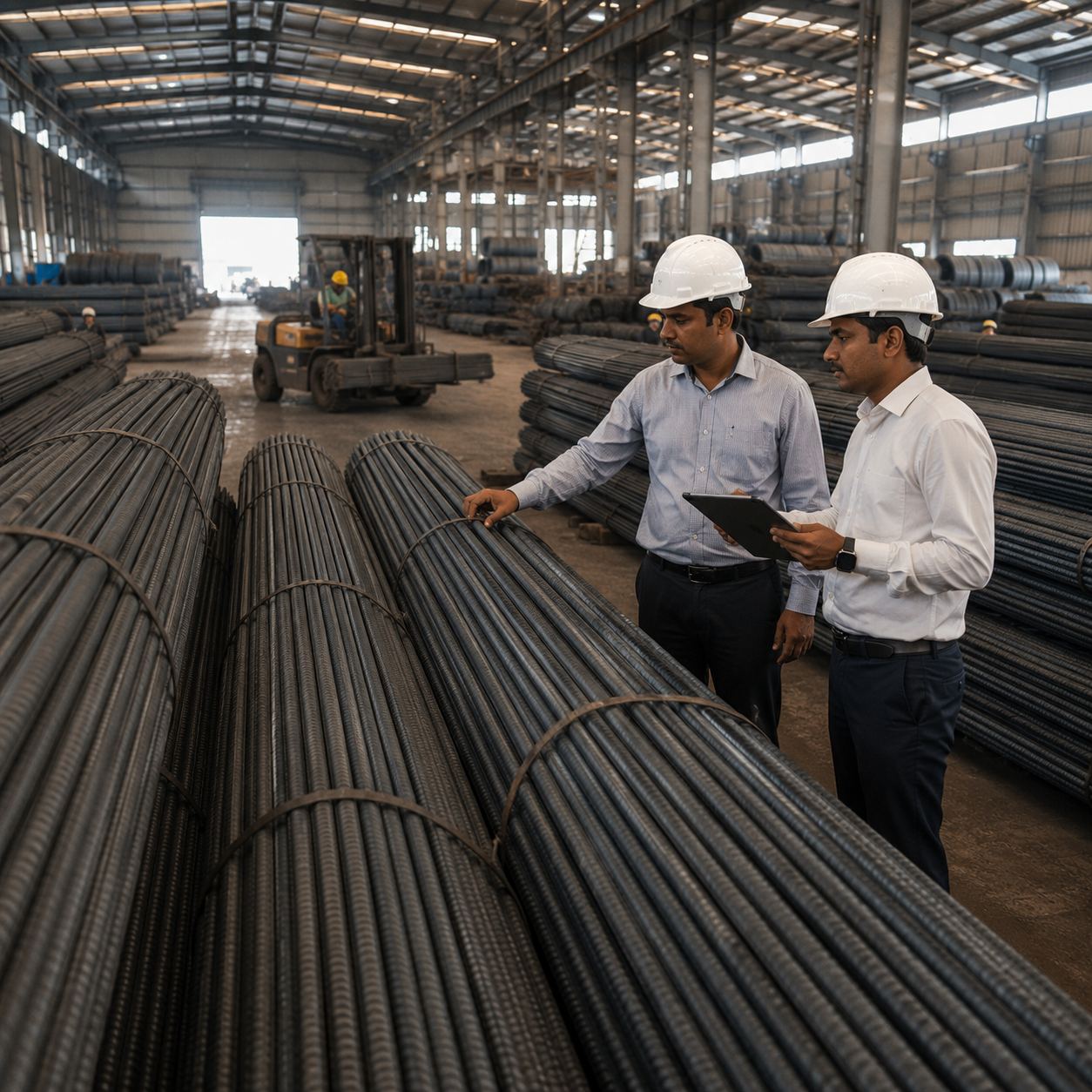
Weak construction demand, high inventories and the monsoon slowdown push TMT rebar prices to their lowest level in six months, with recovery expected after the rainy season.
Key Highlights
- TMT rebar prices have fallen to a six-month low of ₹50,000 per tonne.
- Prices dropped 10% in June from ₹56,000 per tonne at the end of May.
- Rebar rates are down 16% since April, when prices were around ₹60,000 per tonne.
- Weak construction demand and excess inventory are the main reasons for the decline.
- Monsoon-related slowdown has delayed construction activity across the country.
- Contractors are postponing steel purchases due to reduced site work.
- BigMint expects demand to improve after the monsoon season.
- Government infrastructure projects could support a gradual recovery in steel prices.
Steel Prices Fall to Multi-Month Low
Prices of TMT rebars, one of the most widely used construction steel products, have dropped to a six-month low as weak demand and excess market inventories continue to pressure the domestic steel market.
According to a report by BigMint, benchmark blast furnace (BF) route TMT rebar prices have declined to ₹50,000 per tonne, marking the lowest level since December 2025.
Sharp Correction Since April
Steel prices have witnessed a steep correction over the past three months.
TMT rebar prices have fallen 10% from ₹56,000 per tonne at the end of May and nearly 16% compared to ₹60,000 per tonne recorded in April. The report noted that prices are now approaching levels last seen six months ago.
Weak Demand Behind Price Fall
BigMint said the decline is primarily driven by sluggish demand rather than lower production costs.
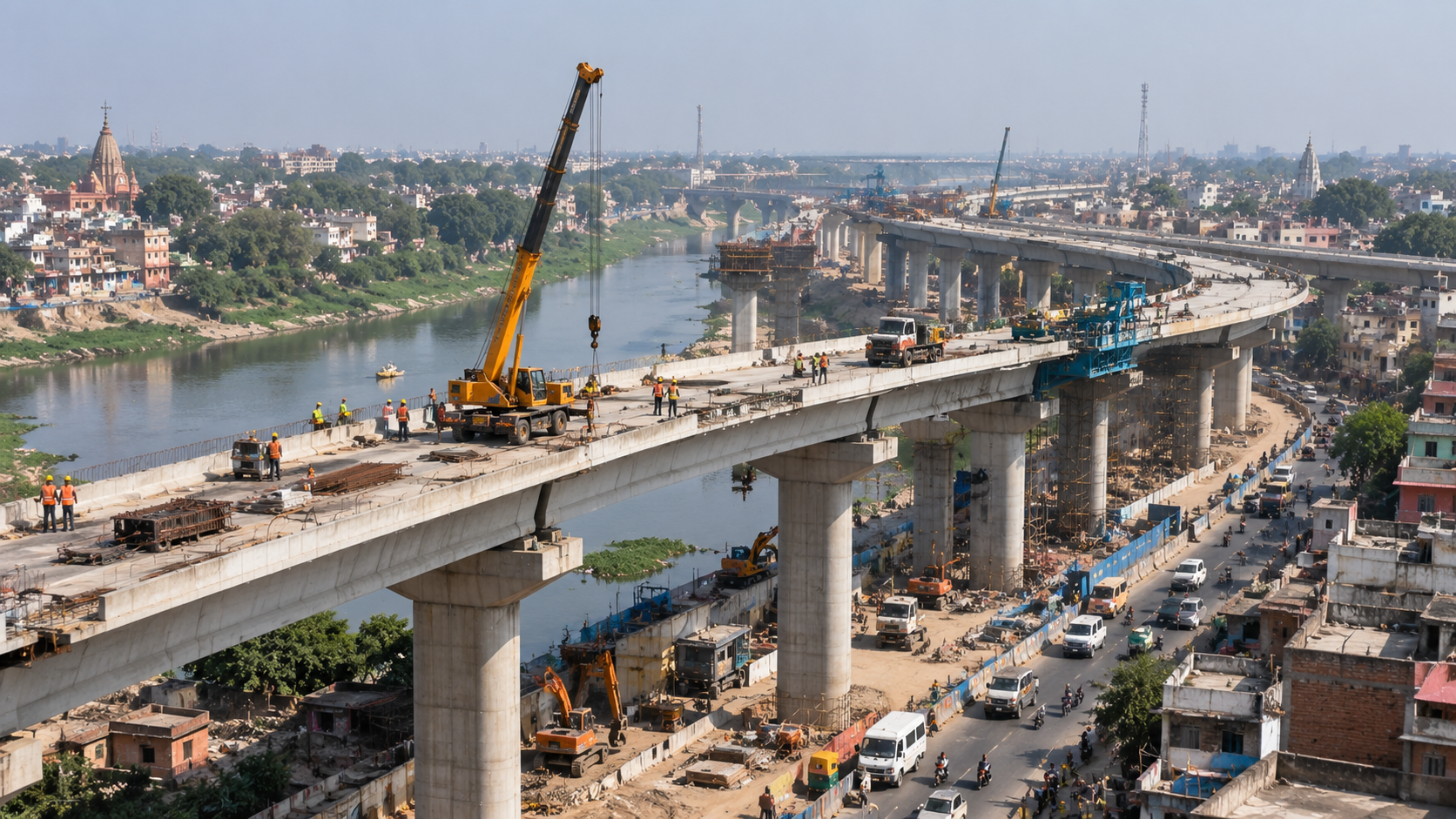
Construction activity has slowed significantly during the monsoon season, with heavy rainfall disrupting work at project sites. As a result, contractors and builders have delayed fresh steel purchases, leading to weaker demand across the market.
At the same time, steel inventories remain elevated, increasing pressure on manufacturers and distributors to reduce prices.
Recovery Expected After Monsoon
Despite the current weakness, industry analysts remain optimistic about the medium-term outlook.
Demand for steel is expected to improve once the monsoon season ends and construction activity resumes. Large-scale government infrastructure projects and ongoing public investments are likely to boost steel consumption during the second half of the year.
However, BigMint noted that the pace of any price recovery will depend on how quickly inventories are cleared and infrastructure funding is released for upcoming projects.