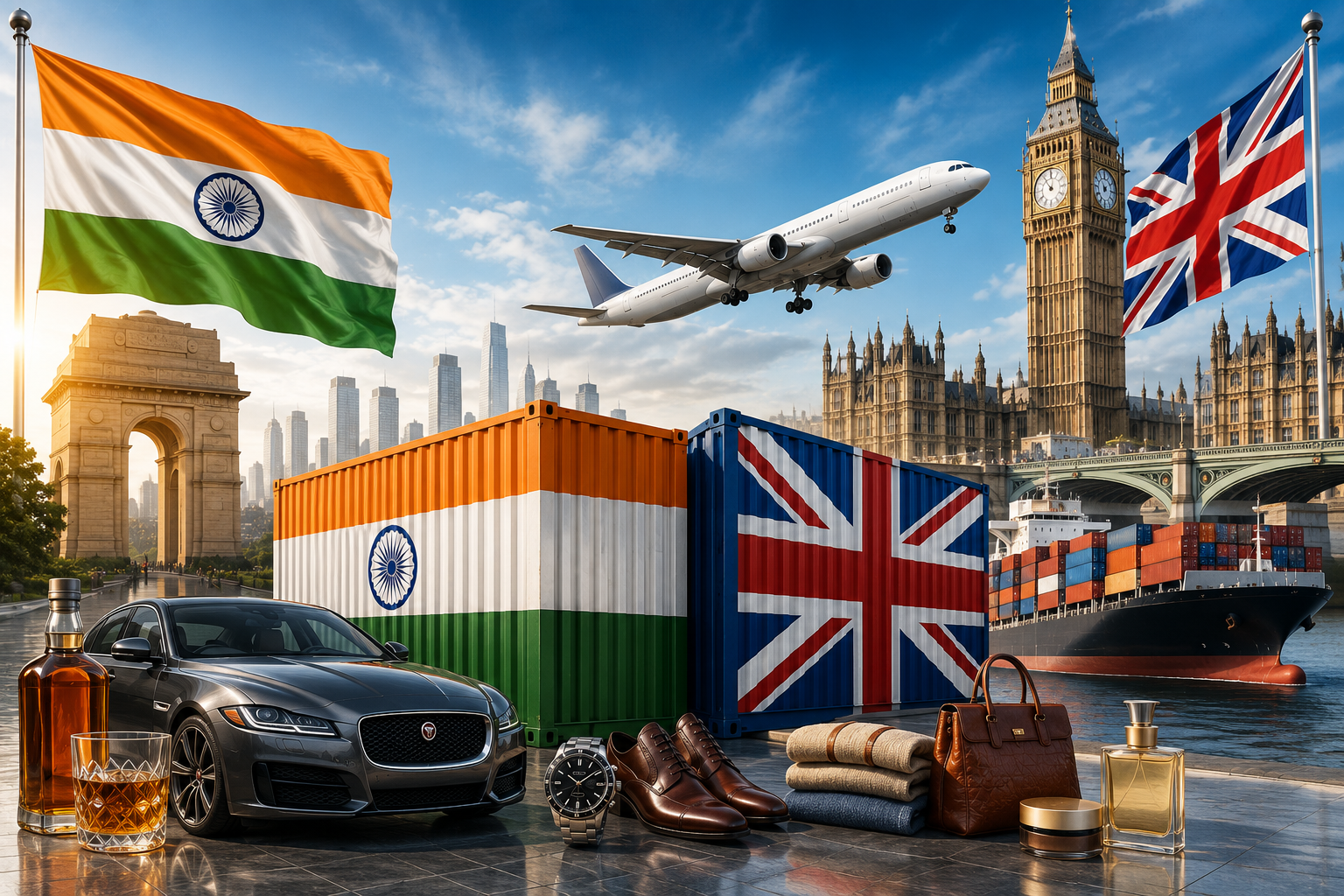
India and the UK have implemented their landmark Free Trade Agreement from July 15, reducing tariffs on a wide range of goods. The deal is expected to boost bilateral trade, exports, investments, and consumer benefits in both countries.
Highlights
- India-UK Free Trade Agreement (FTA) comes into force from July 15.
- UK goods will enter India at significantly lower tariffs, making products like Scotch whisky, luxury cars, cosmetics and fashion items cheaper.
- India will receive zero-duty access for 99% of its exports to the UK.
- Textile, leather, engineering, pharma, jewellery and marine sectors are expected to benefit the most.
- Bilateral trade is projected to double to around USD 120 billion by 2030.
- The agreement is expected to create jobs, strengthen MSMEs and attract higher investments.
The India-UK Free Trade Agreement (FTA) officially came into effect on July 15, marking a major milestone in economic relations between the two countries. The landmark trade pact is expected to make several British products more affordable in India while giving Indian exporters duty-free access to the UK market.
Under the agreement, 99% of Indian exports will enjoy zero-duty access in the UK, while the average tariff on UK products entering India will fall sharply. Around 85% of British goods will become completely tariff-free over the next decade, reducing costs for consumers and businesses.
Among the biggest beneficiaries in India will be consumers purchasing imported British products. Tariffs on Scotch whisky and gin will be reduced from 150% to 75% immediately, and further lowered to 40% over the next ten years. Luxury British vehicles, including brands such as Jaguar Land Rover and Rolls-Royce, will also become more affordable under a tariff quota system. British chocolates, biscuits, salmon, lamb, cosmetics, medical devices, fashion products and homeware are also expected to become cheaper.
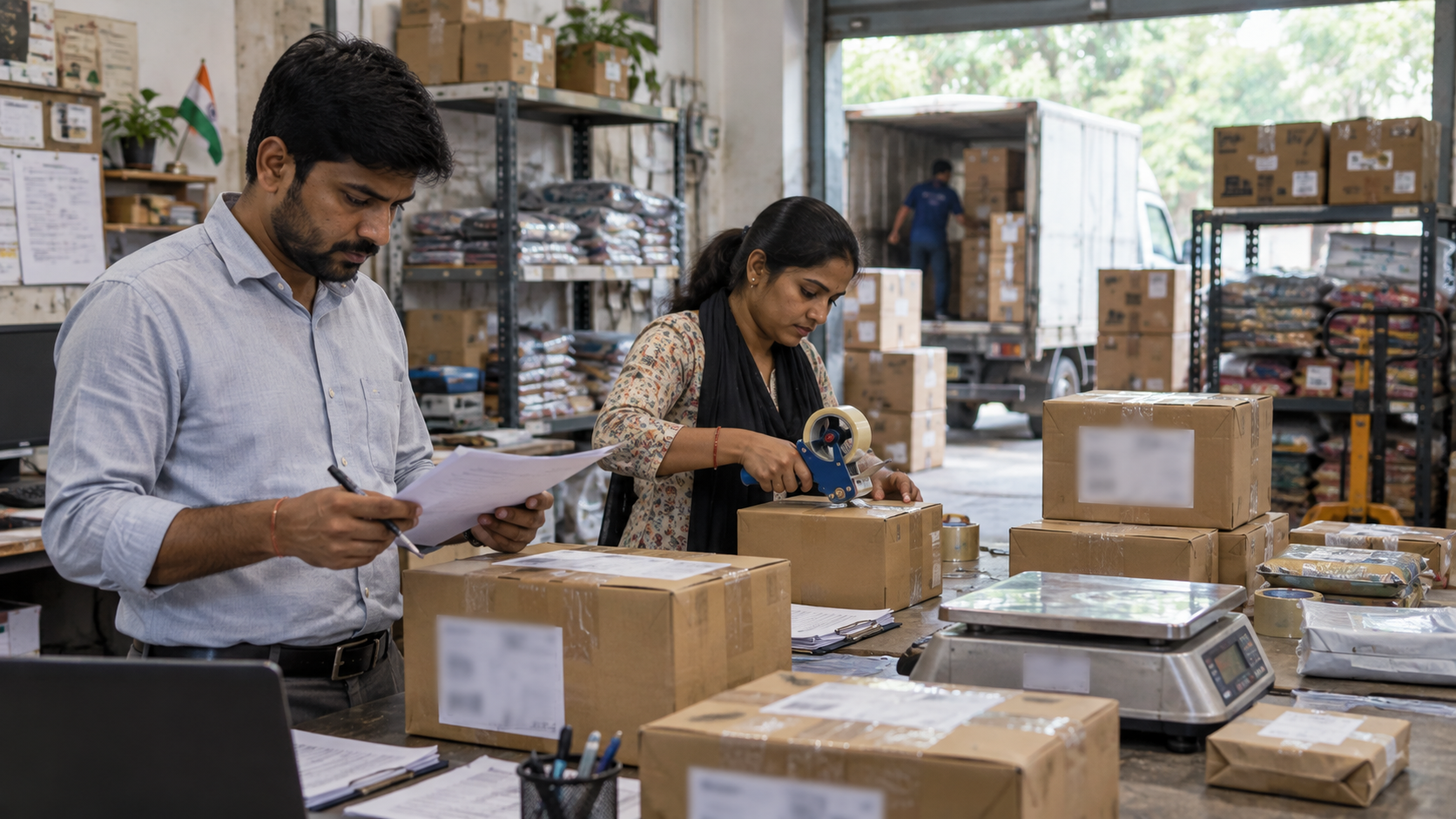
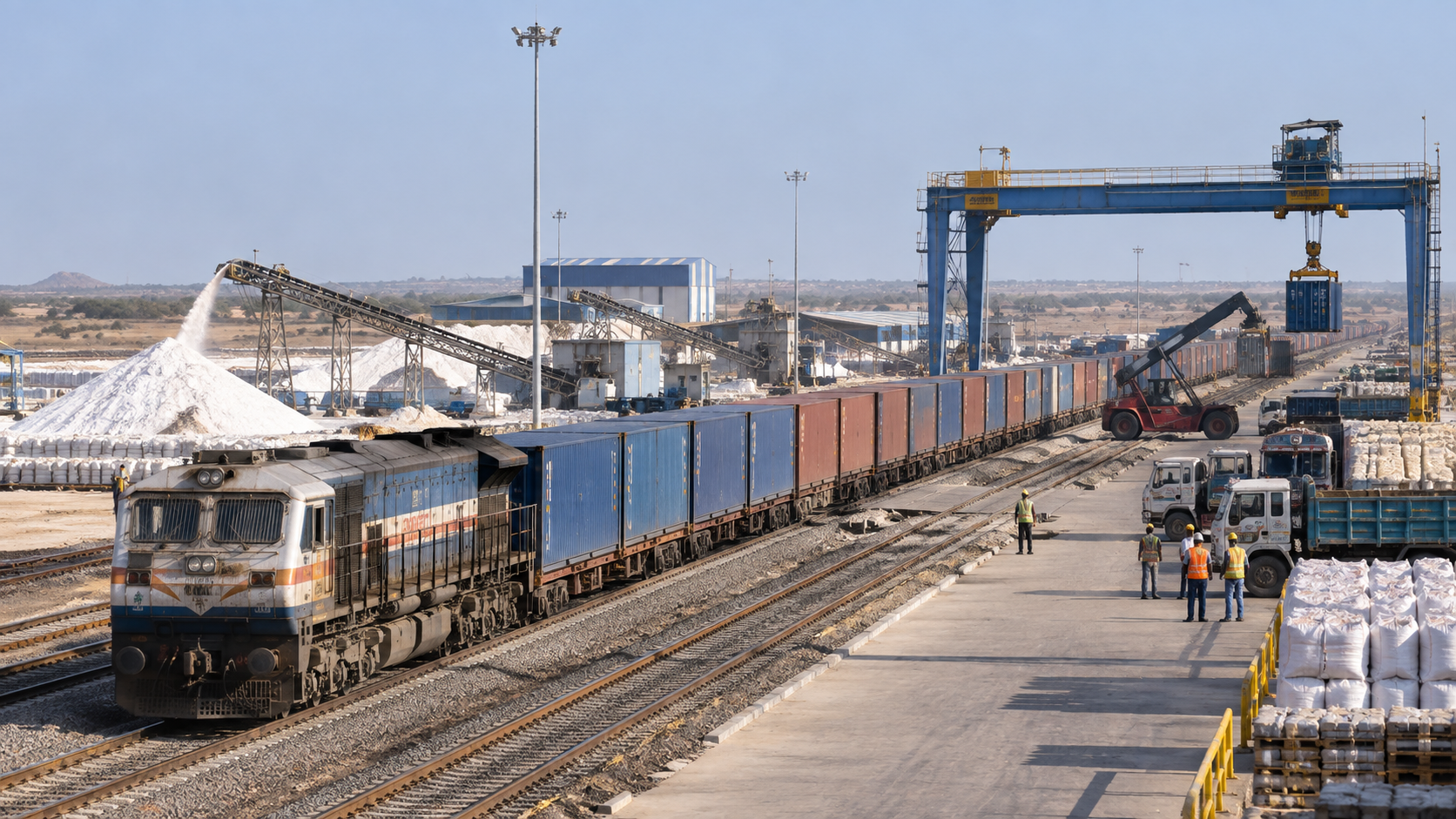
For India, the agreement provides a major opportunity to expand exports across several sectors. Textiles and apparel, gems and jewellery, leather products, engineering goods, auto components, pharmaceuticals, medical devices, basmati rice, tea, spices, marine products, and speciality chemicals are expected to witness stronger demand in the UK market due to the removal of import duties.
The agreement is also expected to encourage greater British investment in India’s IT, financial services, manufacturing and clean energy sectors. Industry experts believe the deal will particularly benefit India’s MSMEs by opening new export opportunities and improving global competitiveness.
Negotiations for the FTA began in January 2022 and concluded after nearly three-and-a-half years and 14 rounds of discussions. The agreement was signed on July 24, 2025, in the presence of Prime Minister Narendra Modi and UK Prime Minister Keir Starmer.
With the FTA now operational, both countries aim to nearly double bilateral trade to around USD 120 billion by 2030, strengthening their long-term strategic and economic partnership.