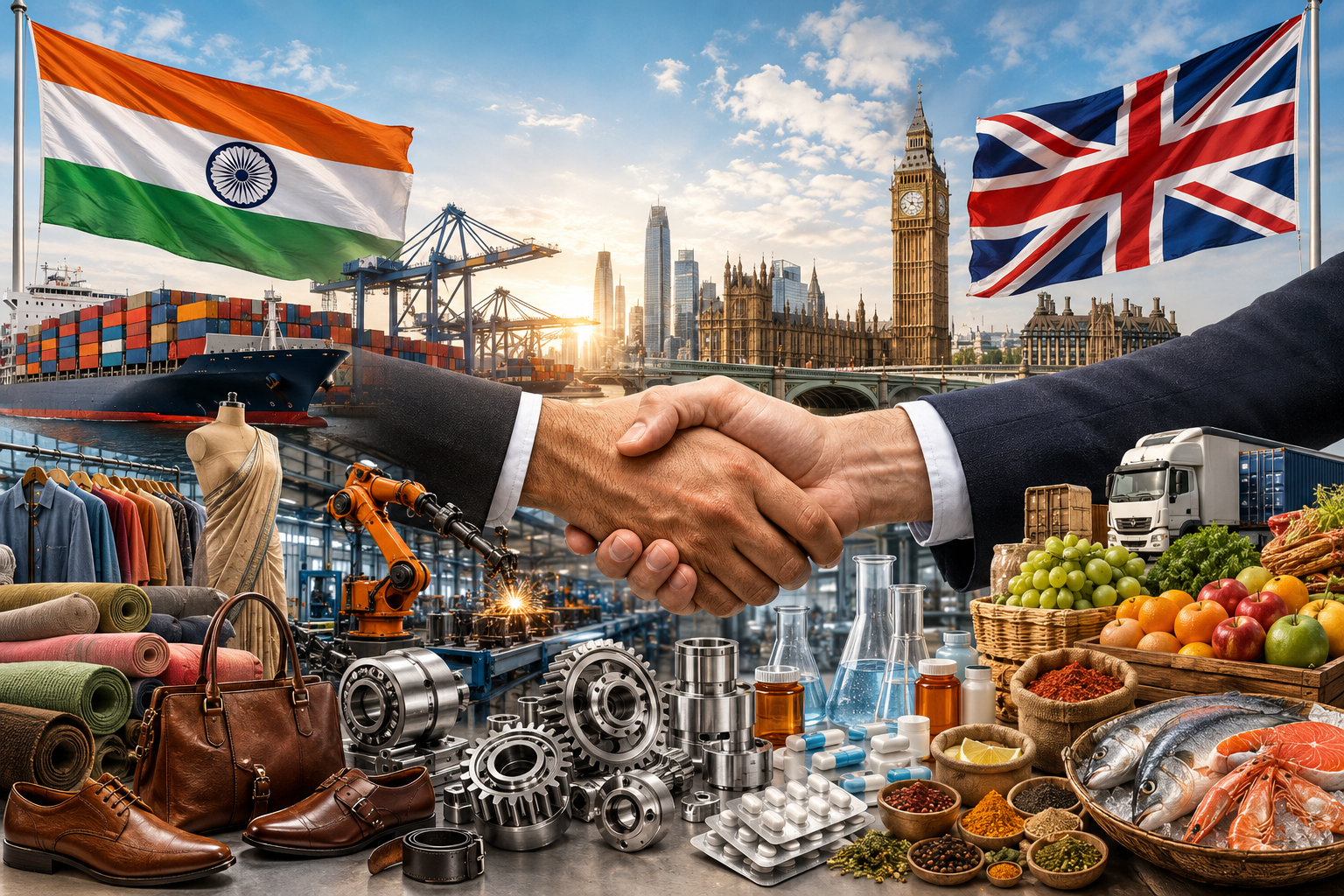
Nearly 99% of Indian exports will get zero-duty access to the UK from July 15. The trade pact is expected to boost textiles, leather, engineering goods, agriculture, pharmaceuticals and IT services.
Key Highlights
- Nearly 99% of Indian exports to the UK will enjoy zero-duty access.
- Textiles, apparel, leather and footwear sectors are among the biggest beneficiaries.
Marine products, processed foods and agricultural exports become more competitive. - Engineering goods, auto components, pharma and chemicals gain easier market access.
- IT and professional services benefit from improved regulatory certainty and social security exemption.
- Experts say exporters must still meet UK quality, sustainability and certification standards.
New Delhi, July 14 India and the United Kingdom will usher in a new era of economic partnership on Tuesday as the Comprehensive Economic and Trade Agreement (CETA) comes into force on July 15, giving Indian exporters unprecedented access to one of the world’s largest consumer markets.
For India Inc., the agreement represents far more than a tariff-cutting exercise. Nearly 99% of Indian exports by value will now enjoy zero-duty access to the UK, making Indian products more competitive against global rivals and creating fresh opportunities across labour-intensive manufacturing, agriculture, services and high-value engineering.
Textiles and apparel poised for biggest gains
The biggest beneficiaries are expected to be India’s textiles and apparel manufacturers, who have long argued that tariffs eroded their competitiveness in the British market. UK import duties of up to 12% on garments and textiles will be eliminated, improving price competitiveness for exporters from hubs such as Tiruppur, Surat, Ludhiana and Panipat.
Industry experts believe the agreement could help India expand its market share in the UK while encouraging international brands to source more from Indian manufacturers.
Leather, footwear and MSMEs get a boost
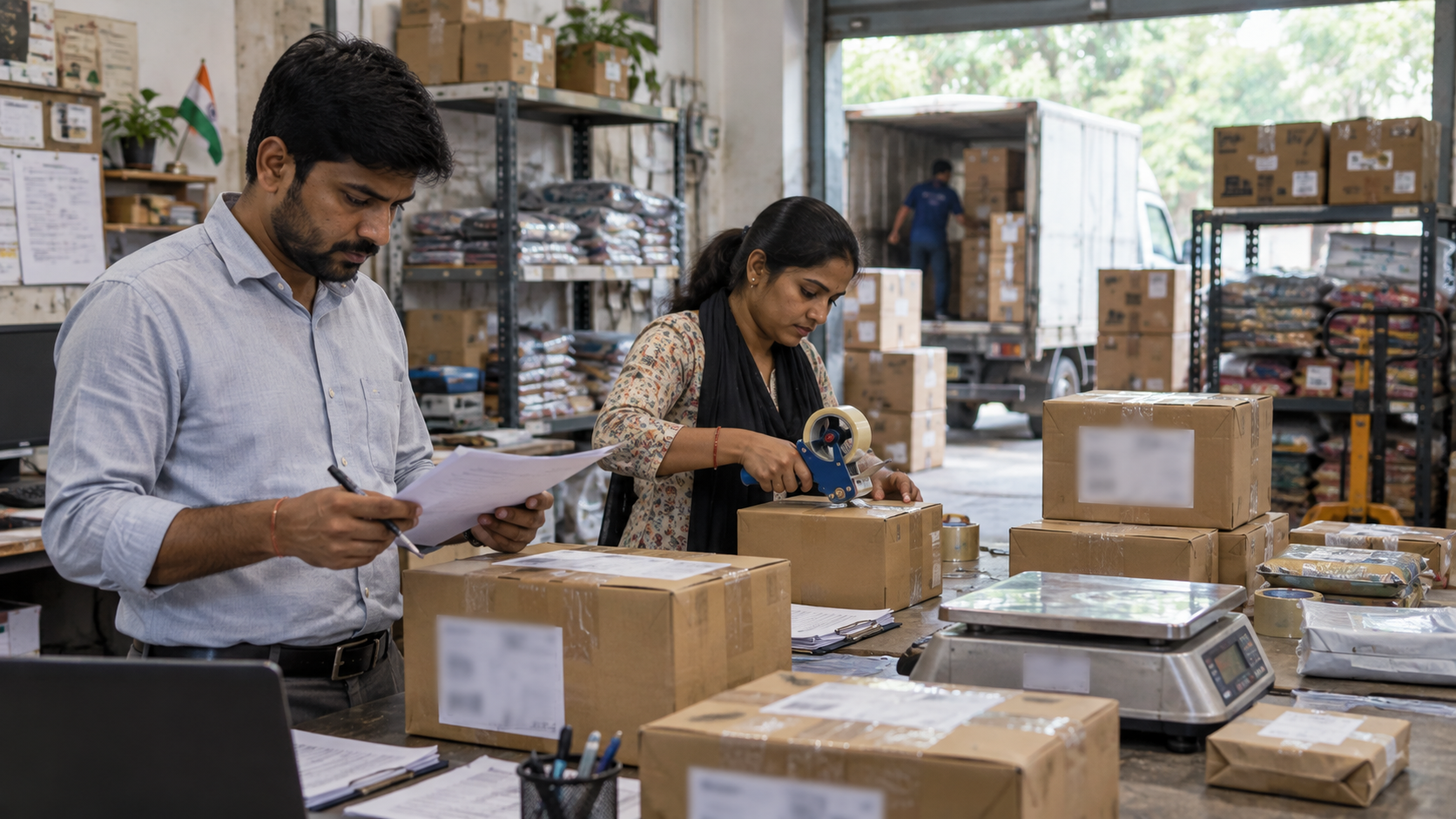
India’s leather and footwear industry, dominated by MSMEs in Tamil Nadu, Uttar Pradesh and West Bengal, is another major winner. Existing UK duties of up to 16% will disappear, making Indian shoes, handbags, leather garments and accessories significantly more competitive.
The sector, which employs millions of workers, is expected to see higher export orders as British retailers diversify sourcing beyond traditional suppliers.
Marine products and processed foods become more competitive
Seafood exporters from Andhra Pradesh, Gujarat, Kerala and Odisha are expected to gain from the removal of tariffs exceeding 21% on several marine products.
Similarly, processed food exporters—including manufacturers of ready-to-eat meals, spices, pickles, confectionery and packaged foods—will benefit from the elimination of tariffs that previously reached as high as 70%, opening significant opportunities in Britain’s growing ethnic and premium food markets.
Engineering goods and auto components eye larger UK market
Engineering exporters, one of India’s largest export segments, are also expected to benefit as tariffs of around 18% on several products are removed.
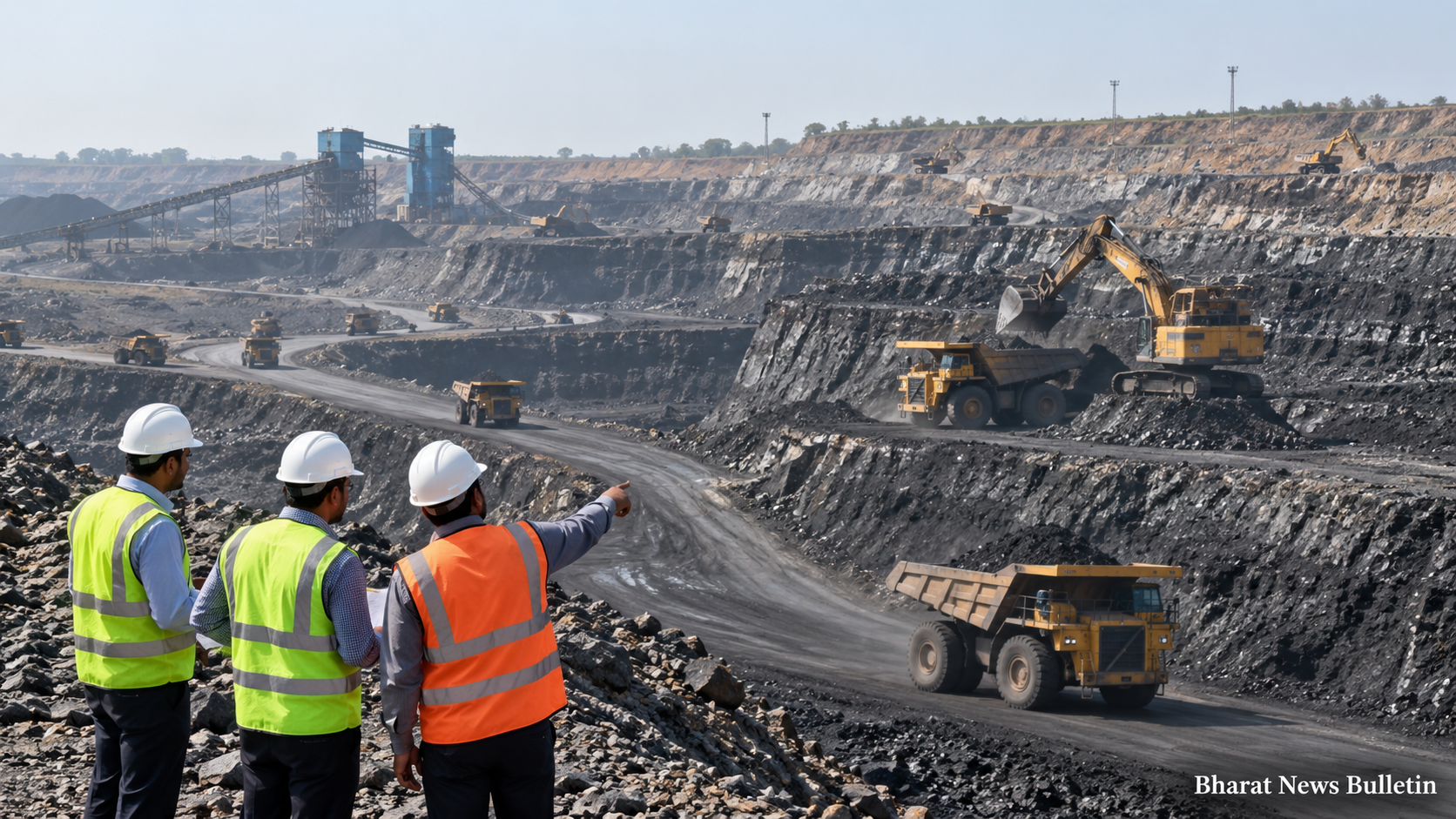
Manufacturers of industrial machinery, electrical equipment, auto components and capital goods believe the agreement will strengthen India’s position in UK supply chains while helping diversify export markets amid global trade uncertainties.
Pharma and chemicals gain easier market access
Indian pharmaceutical companies, already major suppliers of generic medicines to the UK, are expected to benefit from improved market access and greater regulatory certainty under the agreement.
Chemical exporters are also likely to gain from lower trade barriers and streamlined procedures that reduce transaction costs and improve predictability for exporters.
IT and professional services receive regulatory certainty
Unlike traditional trade agreements focused only on merchandise exports, the India-UK pact provides significant opportunities for India’s services sector.
IT and IT-enabled services, consulting, engineering, financial services, education and healthcare providers are expected to benefit from enhanced market access, clearer regulatory frameworks and provisions that facilitate business operations between the two countries.
An accompanying Double Contribution Convention will exempt eligible Indian professionals on temporary assignments in the UK from making social security contributions there for up to five years, reducing costs for both employees and employers.
Farmers and agri exporters see new opportunities
Indian exporters of fruits, vegetables, cereals, spices, tea, coffee and value-added agricultural products are expected to find stronger opportunities in the UK market, particularly as demand for premium and ethnic food products continues to grow.
The agreement is expected to improve returns for farmer producer organisations, food processors and agri-exporters by making Indian products more price competitive.
Beyond tariffs
While tariff elimination is the headline feature, trade experts note that the agreement also simplifies customs procedures, strengthens rules governing digital trade, improves transparency and provides greater certainty for businesses investing across both countries.
However, analysts caution that lower tariffs alone will not guarantee export growth. Indian companies will still need to meet stringent UK quality standards, sustainability requirements and certification norms while strengthening logistics and buyer relationships to fully capitalise on the agreement.
A strategic milestone
The India-UK CETA is India’s most comprehensive bilateral trade agreement with a major Western economy and is expected to deepen economic integration between the two countries. Policymakers see it as a template for future trade agreements with other advanced economies.
As the pact comes into force on July 15, exporters across sectors—from textile mills and seafood processors to software companies and engineering manufacturers—will be watching closely to see whether tariff-free access translates into higher orders, greater investment and stronger export growth in one of India’s most important overseas markets.