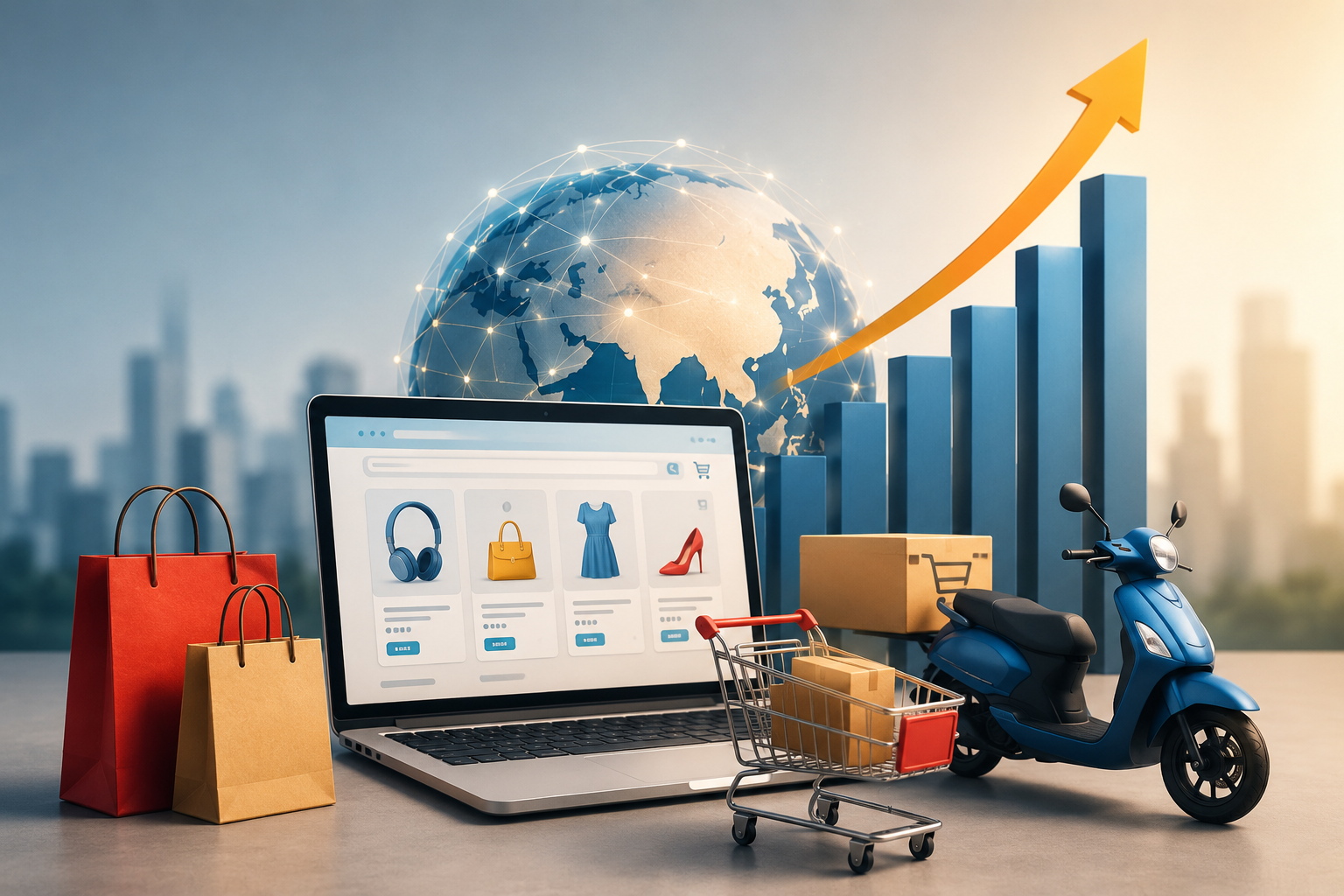
India’s e-commerce market is projected to nearly triple to $345 billion by 2030, compared with $125 billion in 2024, driven by rapid growth in quick commerce, wider adoption in smaller cities and increasing use of artificial intelligence.
According to research consultancy Infisum’s report “Smart Growth in a Fast Market”, the sector is expected to expand at a CAGR of 18.4% through 2030. Quick commerce is emerging as the fastest-growing part of the ecosystem and could become a $65-70 billion market by 2030.
The report estimates that quick commerce could contribute 45-50% of incremental e-retail growth over the next five years. To support faster deliveries, India’s dark-store network is projected to rise from 2,525 stores in 2025 to around 7,500 by 2030.
Blinkit currently leads the quick-commerce segment with a 44% market share, followed by Zepto at 25% and Swiggy Instamart at 20%. Blinkit processed around 900 million orders during FY26, according to the report.
Gen Z is another major force shaping online retail. The generation already accounts for nearly one-third of online shoppers and is expected to become India’s largest digital-spending cohort by 2030.
E-commerce growth is also expanding beyond metropolitan markets. Around 66% of new direct-to-consumer orders now come from Tier-II and Tier-III cities, indicating increasing digital adoption and purchasing power outside major urban centres.
By 2030, e-commerce is expected to account for 10-12% of India’s total retail spending and contribute around 2.5% to the country’s GDP. India could have approximately 420-440 million online shoppers by the end of the decade.
Technology will play an increasingly important role in this expansion. The report expects AI and machine learning to improve retail productivity by 35-37% by 2030. AI-powered shopping assistants, conversational commerce and virtual try-ons are also expected to reshape how consumers discover and purchase products online.