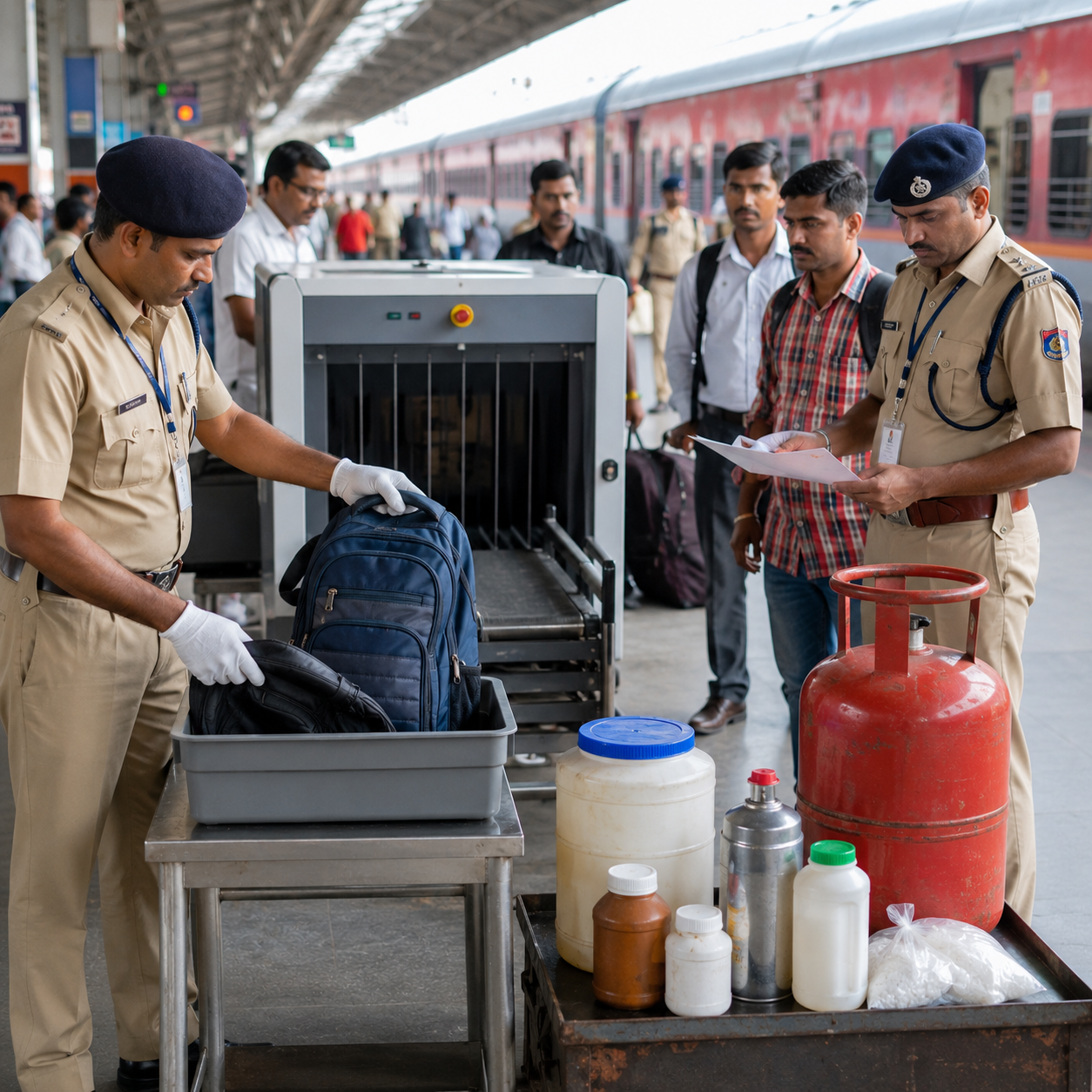
New rules impose stricter penalties on passengers carrying hazardous or banned items to improve train safety.
Key Highlights:
- Indian Railways increases fine for carrying prohibited goods to ₹10,000.
- New penalties introduced under the Jan Vishwas Act, 2026.
- Hazardous items include petrol, diesel, gas cylinders, fireworks, and corrosive chemicals.
- Offenders may face imprisonment of up to one year in severe cases.
- Railway authorities can seize dangerous materials during inspections.
- Ticketless travel, smoking, and unauthorized hawking now attract higher penalties.
News Story:
Indian Railways has implemented stricter penalties under the Jan Vishwas (Amendment of Provisions) Act, 2026, significantly increasing fines for passengers carrying banned or hazardous goods onboard trains. The revised regulations came into force in June 2026 and are aimed at enhancing passenger safety and preventing accidents caused by dangerous materials.
Under the amended rules, passengers found carrying prohibited items such as petrol, diesel, kerosene, gas cylinders, fireworks, firecrackers, acids, corrosive chemicals, and other flammable substances can now face a minimum fine of ₹10,000.
In addition to the monetary penalty, offenders will be held responsible for any injury, damage, or loss caused by such materials. Railway officials are also empowered to confiscate hazardous goods during inspections.
Passengers who refuse to remove prohibited items or fail to pay the prescribed penalty may face imprisonment of up to one year, a court-imposed fine, or both.
The updated legislation also introduces tougher punishments for other railway offences. Ticketless travel and fraudulent ticket usage will attract a minimum penalty of ₹500 plus the applicable fare. Men travelling in coaches reserved for women can face a fine of ₹2,500, while smoking, unauthorized hawking, begging, public intoxication, and nuisance activities will now attract fines of up to ₹2,000.