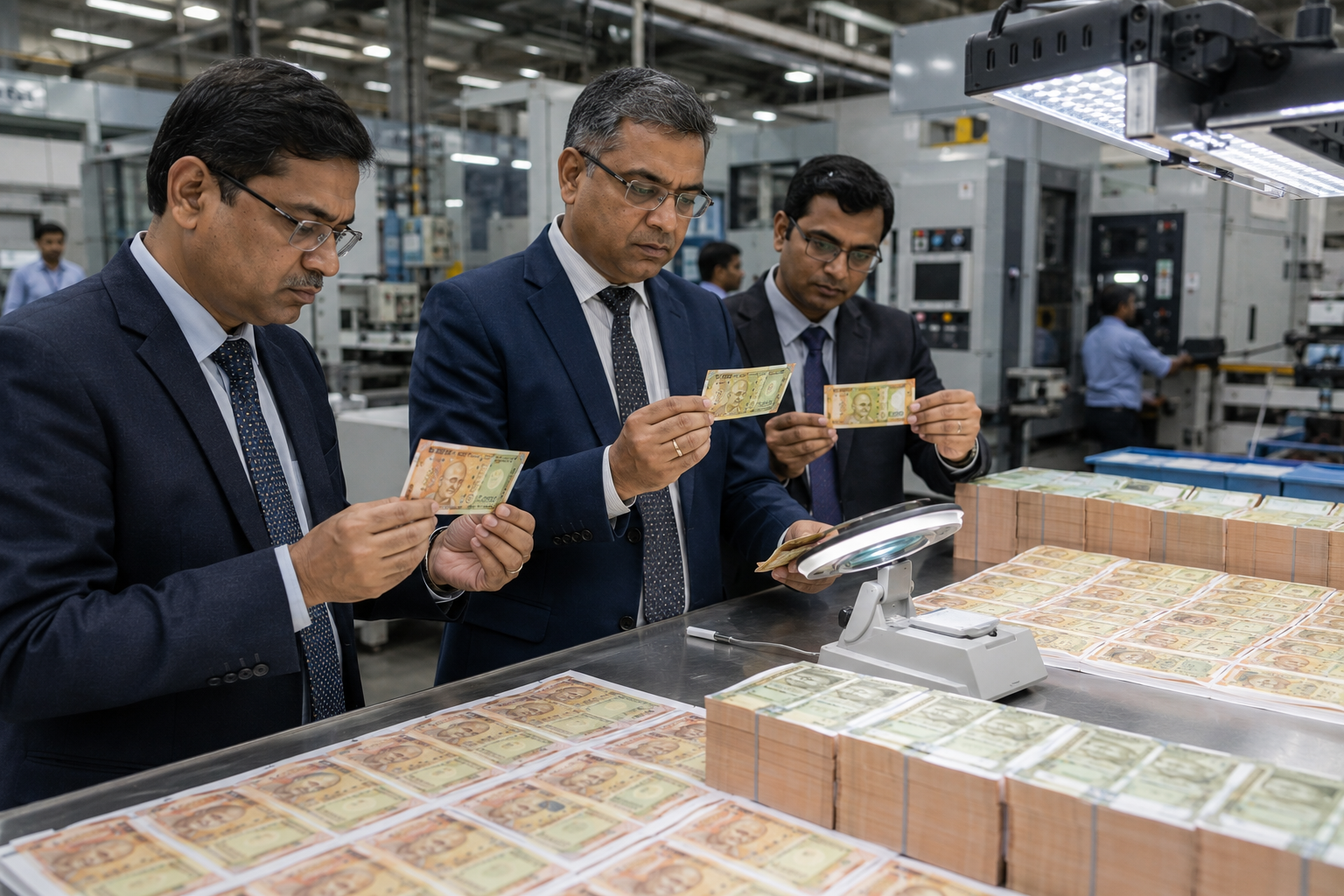
The Reserve Bank of India plans to introduce India’s first polymer currency notes at the beginning of the next financial year. The pilot project aims to improve note durability, strengthen security against counterfeiting and reduce long-term currency management costs.
Key Highlights
- RBI targets rollout of polymer currency notes next financial year.
- Pilot project will initially cover ₹10 and ₹20 denominations.
- Polymer notes are expected to last two to four times longer than paper notes.
- New notes will feature enhanced security to curb counterfeiting.
- Paper and polymer notes will coexist during the pilot phase.
News Story
The Reserve Bank of India (RBI) has announced plans to introduce India’s first polymer currency notes at the beginning of the next financial year, marking a significant step toward modernising the country’s currency management system.
RBI Governor Sanjay Malhotra said the initiative is currently in the pilot stage and will initially focus on lower denomination notes, particularly ₹10 and ₹20, which experience the highest circulation and wear. The central bank will evaluate the performance of polymer notes under Indian climatic and operational conditions before deciding on wider adoption.
According to the RBI, polymer notes offer significantly higher durability than conventional paper currency and can remain in circulation for two to four times longer. Their longer lifespan is expected to reduce replacement costs while improving the efficiency of currency management.
Apart from durability, polymer notes provide stronger security features that make them more resistant to counterfeiting. The RBI believes the new substrate can enhance the integrity of India’s currency system while lowering long-term expenditure on printing replacement notes.
The government has already authorised the printing of up to two billion polymer banknotes for field trials. During the pilot phase, both paper and polymer currency will continue to circulate as legal tender, with no immediate plans to replace existing paper notes completely.
The RBI has also initiated the procurement process for advanced polymer substrates equipped with modern security features through its currency printing subsidiary. The move comes as the central bank continues efforts to improve currency quality, reduce counterfeit circulation and enhance the sustainability of India’s cash management infrastructure.