Tariffs & beyond: Future of India-US trade relations

The recent escalation of US tariffs under the Trump administration has sparked global trade tensions, with India now facing potential reciprocal duties starting April 2. Given that the US is India’s largest single-country export destination, these tariffs could pose significant risks to key Indian export sectors.

Centre for Advanced Trade Research, the research division of Trade Promotion Council of India, developed a research report that analyses the impact of Trump tariffs on global trade as well as on India. It further gives a numerical analysis of the sectors that face significant risk if reciprocal tariffs are indeed applied, as Trump has promised, on April 2. Finally, the report also analyses India’s opportunities in Canada and Mexico following US tariff impositions and evaluates how an India-US FTA could further strengthen India’s trade prospects in North America.
US tariffs

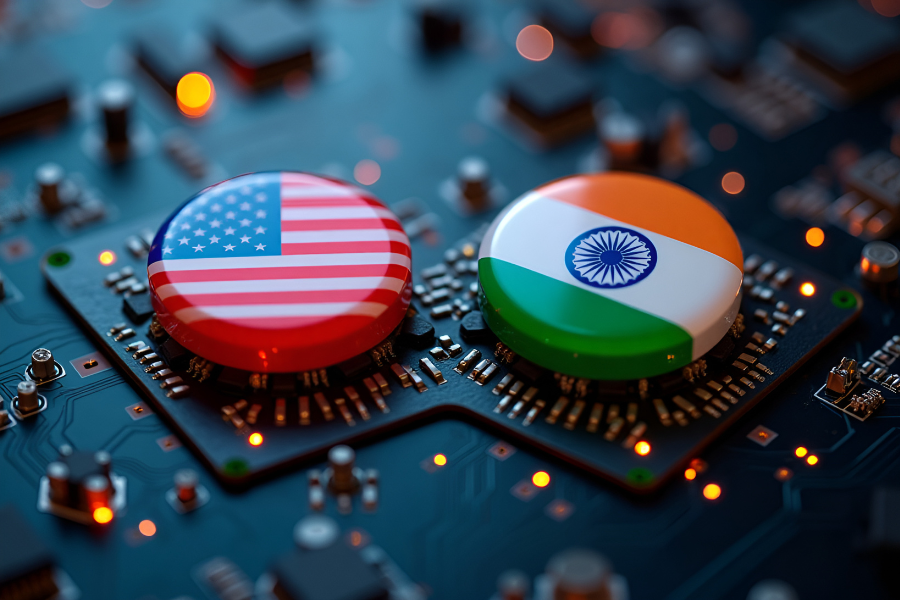
Since taking office in January, Trump has reignited an aggressive trade war, with promises of sweeping duties. February marked a major escalation, as Trump imposed 10% tariffs on Chinese imports and 25% on Mexico and Canada, citing national security concerns. The move sent shockwaves through North America, threatening the USMCA trade deal.

By March, Trump escalated the trade war, doubling tariffs on Chinese imports to 20%, triggering Beijing’s 15% retaliation on US farm goods. The EU joined the fray after Trump raised steel and aluminum tariffs to 25%, sparking countermeasure threats. As tensions peaked, he warned of a 200% tariff on European wine if Brussels taxed US whiskey. By late March, he hit the energy and auto sectors, imposing 25% tariffs on Venezuelan oil buyers—indirectly targeting China—and on auto imports, aiming to boost US manufacturing but disrupting global supply chains.

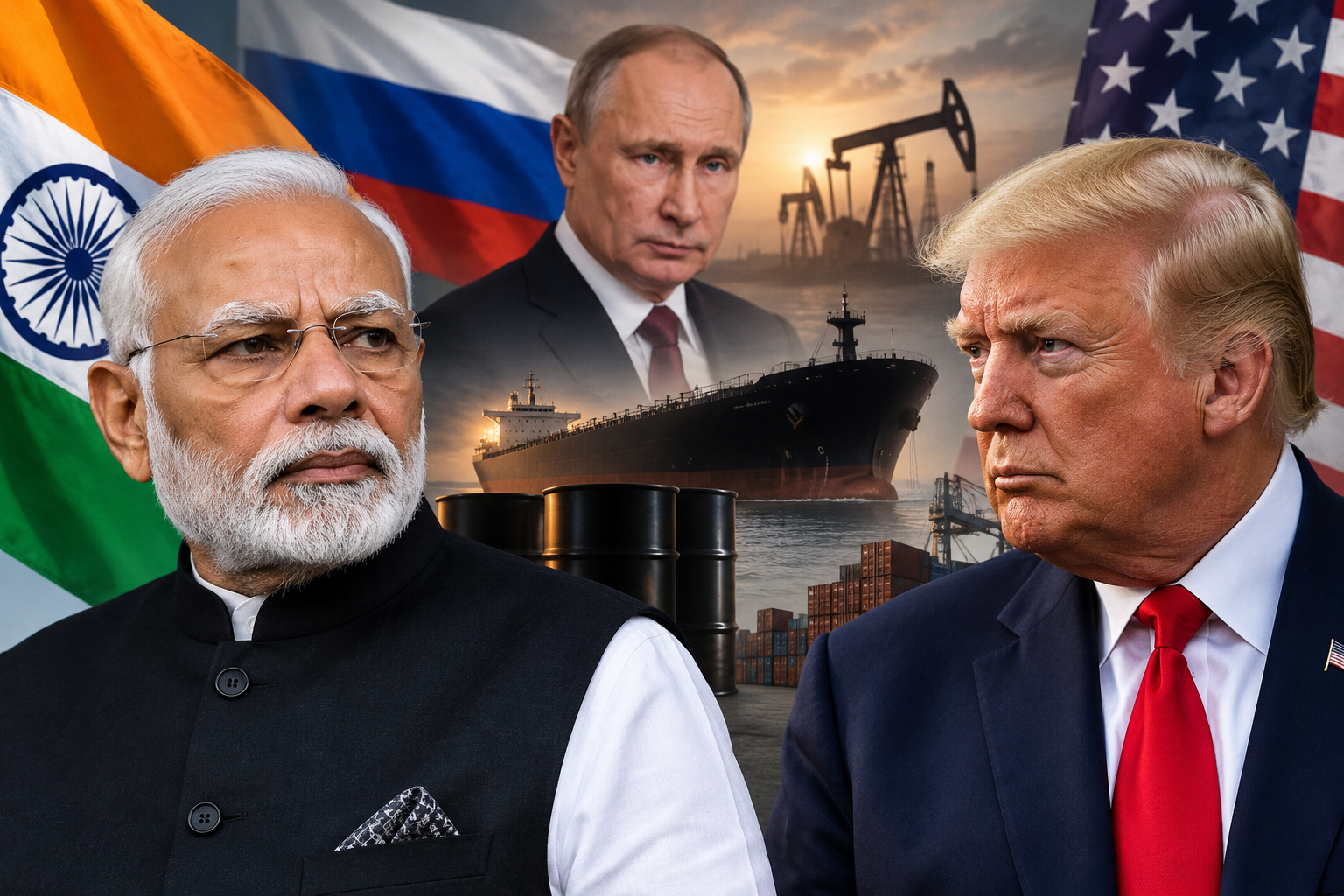
Now, India is the latest target, set to face reciprocal tariffs starting April 2. While this is not the first time the US has leveraged tariffs as a strategic tool, the potential impact on India’s exports cannot be overlooked. Given that the US is India’s largest single-country export destination, these tariffs could disrupt key sectors.

Dr. Manoj Pant, Former Vice Chancellor of IIFT and Visiting Professor at Shiv Nader University, notes, “US tariff actions could either serve as a passing fad in search of a few good deals for America, or, in a less positive case, trigger a race to the bottom—where escalating protectionism fragments markets, stifles growth, and erodes competitiveness. The path ahead depends on whether history repeats itself or takes a new course.

Ajay Srivastava, Founder, GTRI, warns, “India should approach a proposed BTA with the U.S. cautiously, as it may not be in its best interest. Donald Trump has a history of disregarding negotiated agreements—he sidelined NAFTA in favour of the USMCA which is also not being honoured. Even if a deal is struck, there is no guarantee it will remain unchanged.”

He further adds that beyond tariffs, other provisions in the agreement could pressure India to further open its market, which may not be beneficial. If India does proceed, it should strategically open around 90% of tariff lines, focusing on sectors where the US is not a dominant manufacturing power. It should resist opening up sensitive areas such as agriculture and automobiles, where domestic interests need protection.

Trump’s approach appears to be testing this very premise. Whether these aggressive tariffs simply serve as leverage to make some deals or spiral into a self-defeating cycle of retaliations remains uncertain. The coming months will determine if the world is headed toward realignment or deeper economic fragmentation.

Overview of India-US trade relations

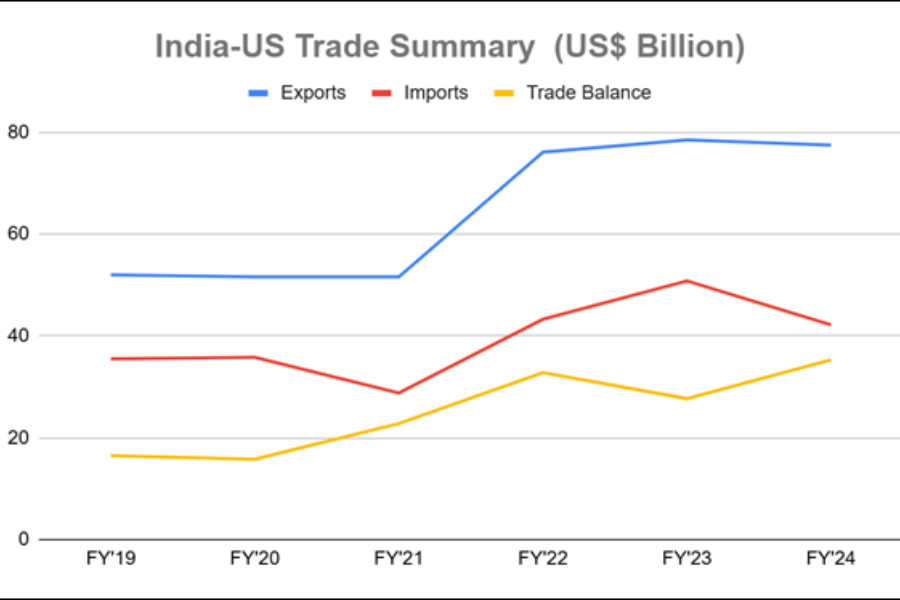
The United States has always remained a vital export market for India since liberalization. In FY 1992, the US accounted for 16.4% of India’s total exports, peaking at 22.8% by FY 2000 as trade relations strengthened. However, the 2008 financial crisis led to a slowdown, reducing the US share to 11% by 2010. Since then, India’s exports to the US have rebounded. Overall, India’s exports to the US have grown at a 10.3% CAGR over 30 years—from approximately US$ 20-25 billion in the early 1990s to US$ 77.5 billion in FY 2024.

Despite temporary setbacks, trade between the two countries has expanded significantly. Over the past five years, India’s exports have grown at an 8.3% CAGR, while imports have increased at 3.2% CAGR. The US share in India’s trade basket has also risen steadily, from 15.7% in 2018 to 17.7% in recent years especially due to post-COVID growth and the boon of electronic exports. While India has diversified its export destinations, the US remains its largest single-country trading partner.


India-US trade

Source: Ministry of Commerce and Industry

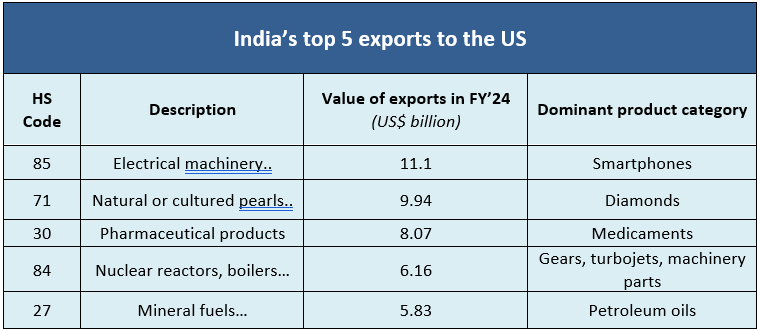
India’s exports to the United States in FY 2024 were led by high-value sectors, showcasing the country’s strong manufacturing and resource capabilities. Electrical machinery and equipment, dominated by smartphone exports, topped the list, followed by diamonds under the natural and cultured pearls category. Pharmaceutical products, primarily medicaments, reinforced India’s critical role in global healthcare supply chains. Machinery and nuclear reactors collectively contributed to exports, though no single product dominated this category. Meanwhile, petroleum oils under mineral fuels and oils remained a key export.
Source: ITC Trade Map

Which sectors are at risk?

A tariff differential analysis reveals that India generally imposes higher tariffs than the US, except in a few categories like knitted fabrics and apparel. This puts most Indian exports at risk if reciprocal tariffs are enforced. A data-driven review of India’s top 90% exports to the US identified 24 HS codes, which were further classified into high-risk, moderate-risk, and other-at-risk categories based on their tariff differential and US’ share. By strategically addressing these high-value sectors, India can significantly mitigate the impact of a possible reciprocal tariff.

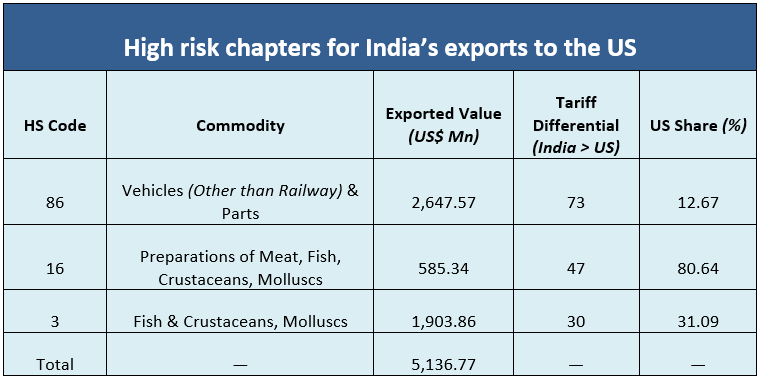
High-risk export chapters (Tariff Differential ≥ 30% & US Share > 10%)

This high-risk category accounts for US$ 5.14 billion in exports, making these products particularly vulnerable to US reciprocal tariffs.
 

Source: ITC Trade Map

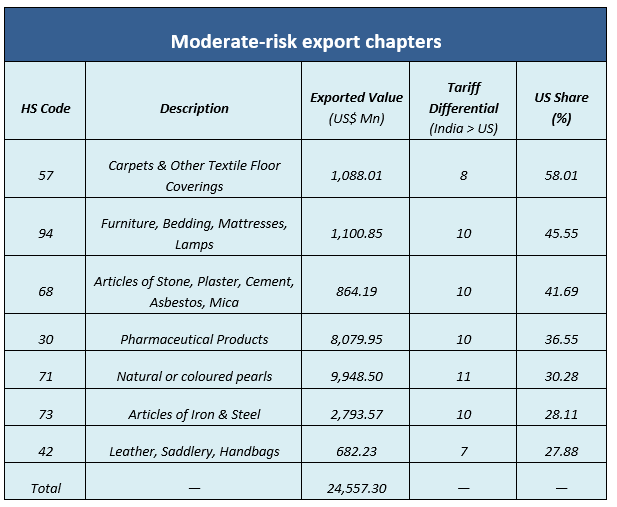
Moderate-risk chapters(Tariff Differential ≥ 7% & US Share > 25%)

This moderate-risk category accounts for US$ 24.55 billion in exports, making these products moderately vulnerable to US reciprocal tariffs.
Source: ITC Trade Map; figures for 2023

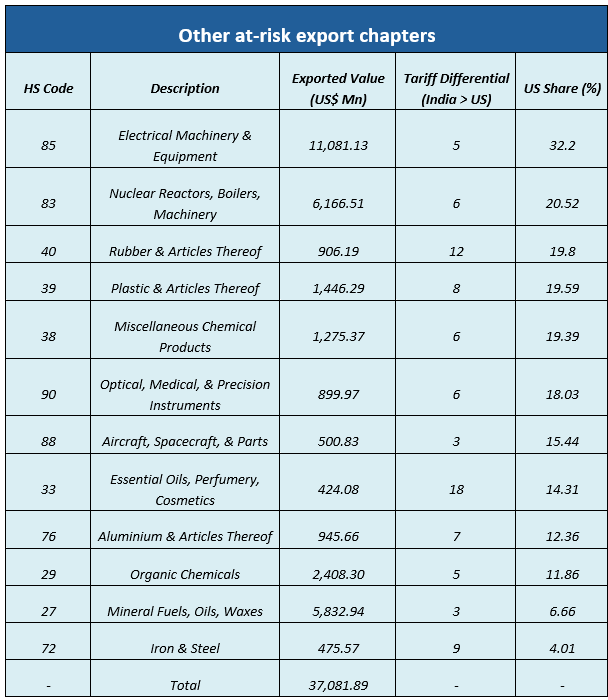
Other-at-Risk Products (Tariff Differential < 7% OR US Share < 25%)

This category accounts for $37 billion in exports. While these sectors have a relatively lower tariff differential and US share, they remain critical due to their high export value and should be closely monitored for potential trade disruptions.
Source: ITC Trade Map

Note:

1) The tariff differential is calculated as the tariff US levies on Indian exports subtracted by the tariff India imposes on US goods. A higher tariff differential indicates greater vulnerability to reciprocal duties, making it a key factor in assessing risk levels across different export categories.

2) US share indicates US’ share in India’s total exports of that chapter.

Conclusion

India’s trade relationship with the United States is at a pivotal moment, where strategic tariff decisions will shape its long-term trade competitiveness. While India can liberalize most tariff lines without significantly affecting its overall export performance, a select group of 24 HS codes—accounting for 90% of India’s exports to the US—demands a more cautious approach. India has an opportunity to align its tariff policy with areas where the US is considering reductions, while also ensuring that domestic industries with high value but lacking a distinct skill advantage remain protected. By selectively lowering tariffs in sectors where India has a revealed comparative advantage and the US does not, India can strengthen its export position and maximize trade benefits.

Dr. Nilanjan Banik, Program Chair at Mahindra University  notes, “The US tariff actions are part of a broader strategy to address trade imbalances and reduce dependence on China. While this disrupts global supply chains and challenges WTO-led governance, it also accelerates the China+1 strategy. India must enhance trade logistics and streamline regulations to capitalize on this shift while protecting vulnerable industries from reciprocal tariffs and product dumping.”

A well-calibrated tariff strategy will not only ensure that India remains competitive in its trade with the US but also strengthens its long-term economic interests by protecting vital domestic industries while leveraging growth opportunities in key export sectors.

Further, the shifting trade dynamics resulting from US tariff impositions on Canada and Mexico present a strategic opening for India to expand its export footprint in North America. As US exports to these countries decline across multiple sectors, India has the opportunity to step in, particularly in refined petroleum, vehicle components, plastics, and chemicals. While India may not fully replace US or Chinese suppliers, it can gain a competitive edge through cost advantages, trade agreements, and supply chain efficiencies. However, to maximize these gains, Indian exporters must focus on enhancing production capacity, meeting stringent quality standards, and ensuring timely deliveries.

Dr. Arpita Mukherjee, Professor at ICRIER, underscores the importance of this shift, stating, “For India to benefit from the China+1 shift, policy clarity, tariff rationalization, and a transparent investment framework are essential.” With global trade evolving, ensuring India’s trade policies align with these changes will be key to leveraging emerging opportunities.

India’s ultimate trade strategy lies in balancing market access with domestic industry protection. While tariff realignment with the US can unlock new opportunities, rushing into liberalization without sectoral safeguards could expose Indian exporters to intense competition. A measured approach—opening up non-sensitive tariff lines, strengthening high-risk industries, and pushing for services sector gains—will ensure India maximizes trade benefits while securing its long-term economic interests.

Key highlights of research study titled Tariffs & beyond: The future of India-US trade relations by CATR:

  • Understanding the impact of tariffs on US economy, world and India-US trade relations
  • Granular analysis of impacted sectors at 6-digit level in context of Indian exports
  • Opportunities that Trump tariffs could open up for India in North America
  • Strategic options for India to conserve its interests and minimise the fallout

To get a complimentary copy of the report, please click on this link.
Previous Post
Next Post

Most Recent Posts

  • All Post
  • 8th Pay Commission
  • Aadhar
  • Aditya Birla Capital
  • Advertising Standards
  • Affordable Housing
  • Agriculture
  • Agriculture & Food
  • AI in Healthcare
  • AI Technology
  • Airlines
  • alcohol industry
  • Android
  • APEDA
  • Apple
  • Artificial Intelligence
  • Ashwini Vaishnaw
  • Asset Management
  • Atmanirbhar Bharat
  • Audio Devices
  • Audio Products
  • Auto Industry
  • Automobile
  • Automobiles
  • Automotive
  • Automotive Industry
  • Aviation
  • Bain Healthcare Report 2026
  • Bank
  • Banking
  • Banking Technology
  • Battery Industry
  • Beverage Industry
  • Beverages
  • Bihar
  • biotechnology
  • Bitcoin
  • BMW Group India
  • Brand Insight
  • BRICS
  • Bullion Market
  • Business
  • Business & Economy
  • Business & Trade
  • Business Leadership Post COVID-19
  • Business News
  • Business Terminology
  • Business Utilities
  • Buyback
  • Capital Goods
  • Capital Markets
  • CarsBusiness
  • CBIC
  • CCI
  • Child Investment
  • China
  • China technology news
  • Citizen Services
  • Clean Energy
  • Clean Technology
  • Cloud Computing
  • coal
  • Commerce
  • Commerce and Industry
  • Commercial Real Estate
  • Commercial Vehicles
  • Commodities
  • Communications
  • Companies
  • Competition Law
  • Compliance
  • Computer Accessories
  • connected cars
  • Consumer Affairs
  • Consumer Electronics
  • Consumer Finance
  • Consumer Goods
  • Consumer Health
  • Consumer Markets
  • Consumer News
  • Consumer Protection,
  • Consumer Rights
  • Consumer Spending
  • Consumer Trends
  • Content Creation
  • Copper
  • Corporate
  • corporate affairs
  • Corporate Earnings
  • Corporate Governance
  • Corporate News
  • Corporate Social Responsibility
  • Cost of Living
  • Country
  • CRED
  • Credit Cards
  • CREDIT RATING
  • Crude Oil
  • Cryptocurrency
  • CSR
  • Culture
  • Currency
  • Customs Duty
  • Cyber Security
  • Cybersecurity
  • Dairy Industry
  • Data & Analytics
  • Defence
  • Delhi Government
  • Delhi-NCR
  • Demographics
  • Derivatives
  • DGCA
  • DGFT
  • DigiLocker
  • Digital Assets
  • Digital Economy
  • Digital Health India
  • Digital Identity
  • Digital India
  • Digital Infrastructure
  • Digital passport for robots
  • Digital Payments
  • Digital Platforms
  • digital services
  • Diplomacy
  • Dixon Technologies
  • DPIIT
  • E Commerce
  • E-commerce
  • E-Governance
  • Ease of Doing Business
  • Economic Growth
  • Economy
  • Edible Oil Industry
  • Editor Choice
  • EdTech
  • Education
  • Electric Mobility
  • Electric Vehicles
  • Electronics
  • Employment
  • ENERGY
  • Engineering
  • Entertainment
  • Environment
  • EPFO
  • Ethanol Economy
  • EV Industry
  • EV Technology
  • Exports
  • EXTER
  • Farmers
  • Fashion
  • FINANCE
  • Finance Ministry,
  • Financial Marketing
  • Financial Markets
  • Financial News
  • Financial Planning
  • Financial Results
  • Financial Services
  • Fintech
  • FnTech
  • Food & Beverage
  • Food & Beverages
  • Food Exports
  • Food Industry
  • Food Manufacturing
  • Food Processing
  • Food Regulations
  • food safety
  • Foreign Exchange
  • Foreign Investment
  • Foreign Policy
  • Foreign Trade
  • Forex Reserves
  • fssai
  • FTA
  • Fuel
  • Fuel Prices
  • Future Energy
  • Gadgets
  • Gadgets & Apps
  • Gaming
  • GDP
  • Generative AI Healthcare
  • Geopolitics
  • GI Products
  • Global Brand Alliance
  • Global Economy
  • Global Markets
  • Global Politics
  • Global Tech
  • Global Trade Policy
  • Global Trends\
  • Gold
  • Gold Market
  • Gold Prices
  • Gols & Silver
  • Government
  • Government & Policy
  • Government Affairs
  • Government Bonds
  • Government Data
  • Government Initiatives
  • Government Policy
  • Government Policy & Regulation
  • Government Scheme
  • Government Schemes
  • Government Services
  • Green Energy
  • Green Mobility
  • GroupGlobal
  • GST
  • GST Council
  • GST Counsil
  • Hair Care
  • Hardware
  • Hatchback Segment
  • Health Supplements,
  • Horticulture
  • Housing
  • HSBC
  • Human Resources
  • humanoid robot market
  • Hyundai
  • IBT Infographics
  • iinvestment
  • Imports & Exports
  • Income Tax
  • India
  • India Auto Market
  • India Business News
  • India Inc
  • India News
  • India Retail
  • India-Canada Relations
  • India-China
  • India-Japan Relations
  • India-Russia Relations
  • India-South Korea Relations
  • India-US Relations
  • Indian Economy
  • Indian Navy
  • Industrial Pollution
  • Inflation
  • Infra
  • Infrastructure
  • Innovation
  • Instagram
  • Insurance
  • international
  • International Affairs
  • International Cooperation
  • International Relations
  • International Trade
  • Internet & Connectivity
  • Internet Policy
  • Internet Regulation
  • Interview
  • Investing
  • Investment News
  • Investments
  • iPhone News
  • IPO
  • IT Industry
  • Jewellery
  • Jio Platforms
  • JioBlackRock
  • Jobs & Careers
  • Joint Ventures
  • Kim Kardashian
  • Labour
  • Latest
  • Launches
  • Leadership
  • Leaderspeak
  • Lending
  • Lifestyle
  • Lifestyle Tech
  • List
  • Loans & Credit
  • Local News
  • Logistics
  • LPG
  • Luxury Cars
  • Machinery
  • Macroeconomics
  • Macroeconomy
  • maharashtra
  • Maharashtra News
  • Make in India
  • Makhana
  • Manufacturing
  • Market Outlook
  • Markets
  • Maruti Suzuki
  • Mergers & Acquisitions
  • Meta
  • Microsoft
  • Middle East
  • Mobile Apps
  • Mobile Industry
  • Mobile Launch
  • Mobility
  • Monetary Policy
  • Monsoon
  • MoSPI
  • MSME
  • Mutual Funds
  • Nano Tech
  • National
  • National news
  • NEET 2026
  • NewsElectric
  • NewsTata
  • NPCI
  • NPS Vatsalya
  • Office Market
  • Oil & Gas
  • Oil and Gas
  • Others
  • OTT
  • Packaged Drinking Water
  • Packaged Foods
  • Packaging Industry
  • Packaging Innovation
  • Passenger Vehicles
  • Paytm
  • Pension & Retirement
  • Pensions
  • Personal Care
  • Personal Finance
  • Perspectives
  • Petroleum
  • PFRDA
  • Pharmaceuticals
  • PM Modi
  • PMAY-G
  • PMAY-U
  • PMAY,
  • PMI
  • policy
  • Population
  • PORTS
  • Positive News
  • PPF
  • Precious Metals
  • Pricing
  • Product Labeling
  • Product Labelling
  • Product Launch
  • Property Market
  • PSU
  • PSU Banks
  • Public Health
  • Public Policy
  • Public Safety
  • Public Sector
  • Public Services
  • Public Welfare
  • Quarterly Results
  • Railways
  • Rajasthan
  • Raksha Bandhan
  • Raksha Bandhan Gifts
  • Rare Earths
  • RBI
  • Real Estate & Realty Sector
  • Recycling
  • Regulation
  • Regulatory Action
  • Regulatory Affairs
  • Regulatory Updates
  • REIT
  • Reliance Industries
  • Renewable Energy
  • RERA
  • Research
  • Retail
  • Retirement Planning
  • Road Infrastructure
  • Robotics & Automation
  • robotics standards
  • Rupee
  • Rural Development
  • Rural Housing
  • SAIL
  • Salaries
  • Samsung
  • Savings
  • Science & Technology
  • Sebi
  • Security
  • Semiconductor
  • Services Sector,
  • SHIPPING
  • Silver Prices
  • Skill Development
  • Skills Development
  • Small Business
  • Smart Devices
  • Smart Home
  • Smart Mobility
  • Smartphones
  • Social Impact
  • Social Media
  • Society
  • Software Development
  • Solar Energy
  • Space Technology
  • Startups
  • Statistics
  • Steel Industry
  • Stock Market
  • stocks
  • streaming
  • Sugar Industry
  • Sukanya Samriddhi Yojana
  • Sustainability
  • SUV
  • Tamil Nadu Pollution Board
  • Tariffs
  • Tariffs & Duties
  • Tata Group
  • Tata Motors
  • Tata Sons
  • Tax Planning
  • Taxation
  • Tech
  • Tech Branding
  • Technology
  • Telecom & Technology
  • Telecom Industry
  • Top Story
  • Tourism
  • Trade
  • Trade Agreement
  • Trade Basket
  • Trade Partner
  • Trade Policy,
  • Transportation
  • Travel
  • Trending
  • Two-Wheelers
  • UIDAI
  • UPI
  • Urban Development
  • US-Iran Conflict Economic Impact
  • US–India Relations
  • Uttar Pradesh
  • VehiclesLuxury
  • vivo
  • Wastewater Management
  • Water Quality,
  • Wealth Management
  • Wearables
  • Wellness
  • WhatsApp
  • Wheat
  • Workplace
  • World
  • World News
  • Worldview
  • Yamaha
  • zLead Slider
    •   Back
    • Healthcare
    • Auto
    • Fmcg
    • Hospitality
    •   Back
    • Cash Crop
    • Organic
    • New Era Agri
    • Processed Food
    •   Back
    • Construction
    • Power
    • Mining
    • Telecom
    •   Back
    • ENERGY
    •   Back
    • Export/Import
    • Trade Deal
    • Trade Fair
    •   Back
    • Policies
    • Industry
    • Finance
    •   Back
    • Others technology
    • Mobile phone
    • Gadgets
    •   Back
    • Manufacturing
    • Services
    • Startup

India Business & Trade is a national media platform decoding the ideas, decisions and shifts shaping India’s growth story—across plicy, business, global commerce and a rapidly evolving marketplace.

Reach Us

India Business & Trade
M-62, Saket, New Delhi-110064, India

Subscribe To Newsletter

Stay ahead in the dynamic world of trade and commerce with India Business & Trade’s weekly newsletter.

Copyright © 2026 India Business & Trade. All Rights Reserved


Fatal error: Uncaught TypeError: Unsupported operand types: string * int in /var/www/sites/indiabusinesstrade.in/wp-content/plugins/royal-elementor-addons/admin/includes/wpr-templates-modal-popups.php:192 Stack trace: #0 /var/www/sites/indiabusinesstrade.in/wp-content/plugins/royal-elementor-addons/admin/includes/wpr-templates-modal-popups.php(128): WprAddons\Admin\Includes\WPR_Templates_Modal_Popups::get_template_settings() #1 /var/www/sites/indiabusinesstrade.in/wp-content/plugins/royal-elementor-addons/admin/includes/wpr-templates-modal-popups.php(106): WprAddons\Admin\Includes\WPR_Templates_Modal_Popups::render_popup_content() #2 /var/www/sites/indiabusinesstrade.in/wp-content/plugins/royal-elementor-addons/admin/includes/wpr-templates-modal-popups.php(64): WprAddons\Admin\Includes\WPR_Templates_Modal_Popups::display_popups_by_location() #3 /var/www/sites/indiabusinesstrade.in/wp-includes/class-wp-hook.php(341): WprAddons\Admin\Includes\WPR_Templates_Modal_Popups->render_popups() #4 /var/www/sites/indiabusinesstrade.in/wp-includes/class-wp-hook.php(365): WP_Hook->apply_filters() #5 /var/www/sites/indiabusinesstrade.in/wp-includes/plugin.php(522): WP_Hook->do_action() #6 /var/www/sites/indiabusinesstrade.in/wp-includes/general-template.php(3224): do_action() #7 /var/www/sites/indiabusinesstrade.in/wp-content/plugins/royal-elementor-addons/admin/templates/wpr-canvas.php(64): wp_footer() #8 /var/www/sites/indiabusinesstrade.in/wp-includes/template-loader.php(132): include('...') #9 /var/www/sites/indiabusinesstrade.in/wp-blog-header.php(19): require_once('...') #10 /var/www/sites/indiabusinesstrade.in/index.php(17): require('...') #11 {main} thrown in /var/www/sites/indiabusinesstrade.in/wp-content/plugins/royal-elementor-addons/admin/includes/wpr-templates-modal-popups.php on line 192