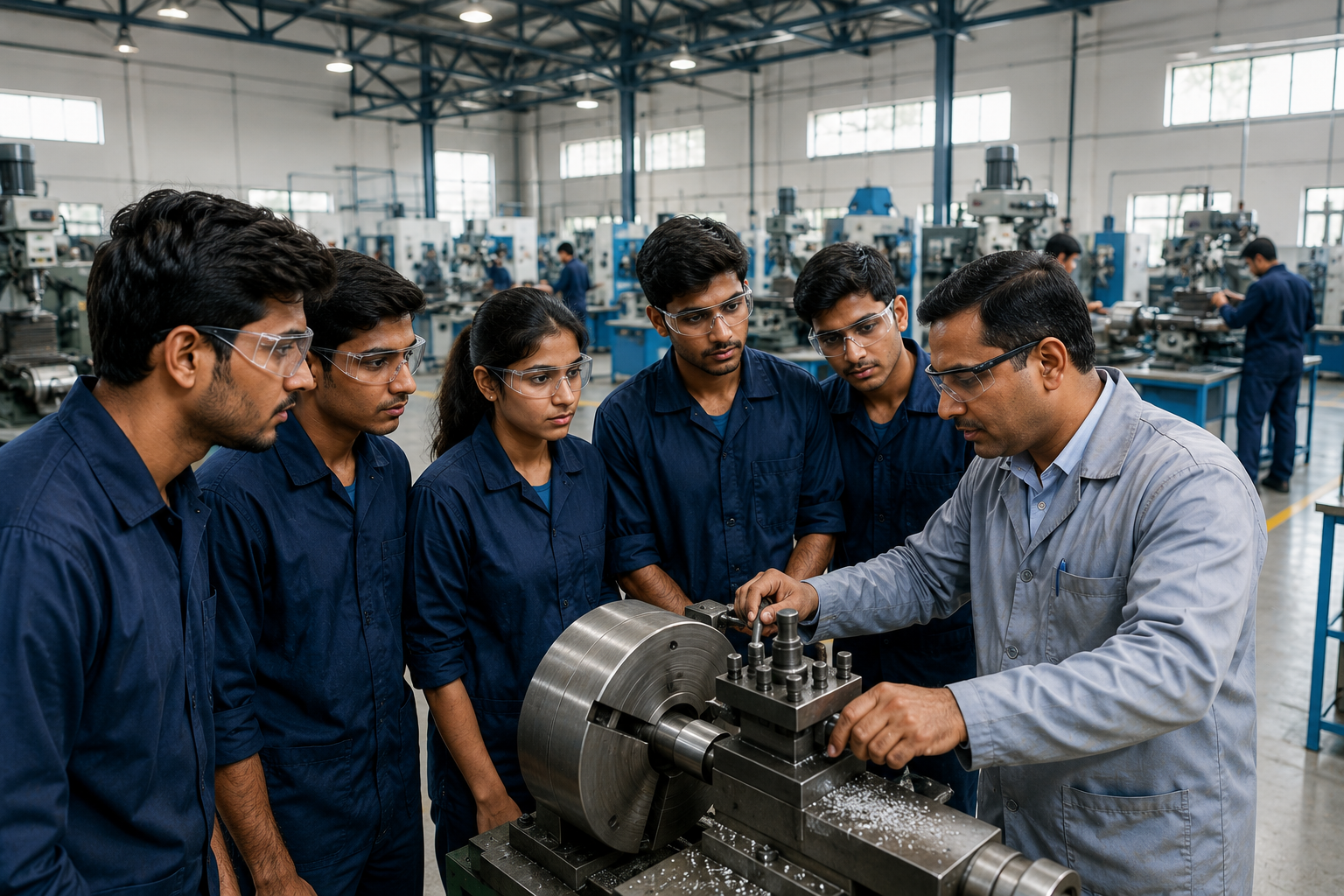
Of the eight PM-SETU clusters identified in Uttar Pradesh, seven remain open for industry collaboration. The programme aims to modernise ITIs through industry-led investment, governance and training.
Highlights:
- Uttar Pradesh has 32 ITIs identified across eight PM-SETU clusters
- Seven clusters remain open for industry partnerships
- Each cluster can attract investment of up to ₹241 crore
- Centre to contribute 50%, State 33% and industry partners 17%
- Anchor Industry Partners will hold 51% ownership in the SPV
- Defence, aerospace, drones and advanced manufacturing among key skill areas
The Ministry of Skill Development and Entrepreneurship (MSDE) and the Uttar Pradesh government have invited industries to play a larger role in modernising Industrial Training Institutes under the PM-SETU Scheme.
The initiative was highlighted at the PM-SETU Industry Conclave in Lucknow, which brought together representatives from government, industry, defence public sector enterprises, multilateral institutions and the skilling ecosystem.
In Uttar Pradesh, 32 ITIs have been identified across eight clusters. Seven of these clusters are still available for industry collaboration.
Under PM-SETU, each cluster consists of one Hub ITI and four Spoke ITIs and can attract investment of up to ₹241 crore. The funding model provides for a 50% contribution from the Government of India, 33% from the State Government and 17% from Industry Partners.
The scheme also introduces a Special Purpose Vehicle model aimed at giving industry a major role in running these clusters. Anchor Industry Partners will hold a 51% stake in the SPV, while the Centre and State Governments will hold 24.5% each.
According to information shared at the conclave, approved industry partnership proposals under PM-SETU represent more than ₹1,500 crore of committed industry-led investment across seven clusters in five states. More proposals are currently under consideration.
Participating defence and manufacturing organisations highlighted growing demand for skilled technicians in aerospace systems, shipbuilding, electronics manufacturing, precision engineering, defence production, advanced welding, mechatronics and drone technologies.
Defence Minister Rajnath Singh highlighted the importance of a highly skilled workforce as India seeks to emerge as a global manufacturing and technology hub, particularly amid rapid technological changes in defence, aerospace, electronics, robotics and automation.
Skill Development and Entrepreneurship Minister Jayant Chaudhary said PM-SETU is designed as a partnership between government, industry and training institutions, with companies taking an active role in developing, governing and operating ITI clusters.
During the conclave, NSDC and the Lucknow Cantonment Board also signed an MoU to establish Shaurya Academy. The academy will prepare young people for careers in the Armed Forces, police and other uniformed services.