Black Sea War Disrupts Supplies
Key Highlights
- Russia-Ukraine hostilities are putting fresh pressure on wheat supplies from the Black Sea region.
- Attacks and disruptions around key export routes are raising concerns among Asian wheat importers.
- Wheat prices have climbed as buyers assess supply risks and potential delays.
- Russia and Ukraine remain important suppliers to global grain markets.
- Higher wheat costs could increase pressure on food prices across Asian markets.
- Import-dependent countries may face higher procurement and shipping costs if disruptions continue.
News Story
The ongoing Russia-Ukraine conflict is creating fresh concerns for wheat-importing countries across Asia, with disruptions around the Black Sea region pushing up wheat prices. Continued attacks and uncertainty over export infrastructure and shipping routes have increased supply risks for international buyers.
The Black Sea region is one of the world’s most important grain-exporting areas, with Russia and Ukraine playing a major role in global wheat trade. Any disruption to production, storage, ports, transportation or shipping routes can quickly affect international prices and the availability of supplies.
According to the latest report, wheat prices have recorded a significant rise as Asian importers assess the impact of the continuing conflict. The increase comes at a time when buyers are closely monitoring developments in the Black Sea and evaluating alternative sources of supply.
Black Sea Disruptions Raise Supply Concerns
The Russia-Ukraine war has repeatedly affected global agricultural commodity markets since the conflict began. While grain exports have continued through various arrangements and alternative routes, attacks on infrastructure and renewed military activity have periodically created uncertainty for traders.
The latest escalation is adding another layer of risk. Damage or threats to ports, storage facilities and transportation infrastructure can disrupt the movement of wheat from exporting regions to international markets.
For Asian buyers, the impact can be particularly important because several countries rely significantly on imported wheat to meet domestic requirements. Any reduction in available Black Sea supplies can force importers to compete for cargoes from other producing regions.
Asian Importers Face Higher Costs
Rising international wheat prices can have a wider impact on Asian economies. Importers may need to pay more for grain, while higher freight, insurance and logistics costs can further increase the landed cost of wheat.
The effect can eventually extend to flour mills, food manufacturers and consumers. Wheat is a major raw material for products such as bread, noodles, biscuits and other processed foods. Sustained increases in wheat procurement costs could therefore add pressure to food manufacturers’ operating expenses.
However, the final impact on consumer prices will depend on several factors, including domestic inventories, government policies, local wheat production, currency movements and the availability of alternative suppliers.
Russia And Ukraine Remain Crucial
Russia has emerged as one of the world’s leading wheat exporters, while Ukraine has historically been a major supplier of grains to international markets. Their geographic position gives them an important role in supplying countries across Europe, the Middle East, Africa and Asia.
Consequently, developments in the Black Sea can influence global wheat prices even when domestic harvest conditions in other producing countries remain stable.
For Asian importers, prolonged disruption could lead to greater diversification of supply sources. Buyers may increasingly look toward other major wheat-producing countries to reduce their exposure to geopolitical risks.
Food Inflation Risks Remain
The rise in wheat prices comes against the backdrop of continuing uncertainty in global commodity markets. If the conflict causes prolonged disruption to exports, higher wheat prices could contribute to broader food inflation in import-dependent economies.
Governments and food agencies are likely to monitor international prices, domestic stocks and import requirements closely. Countries with adequate strategic reserves may be better positioned to absorb temporary supply disruptions, while markets heavily dependent on imports could remain more vulnerable.
For now, traders and importers are closely watching developments in the Black Sea. Any further attacks on export infrastructure or restrictions on shipping could trigger additional volatility in global wheat markets.
The latest price movement highlights how geopolitical conflicts can quickly translate into higher costs for essential commodities, with consequences extending well beyond the countries directly involved in the war. (Jagran)
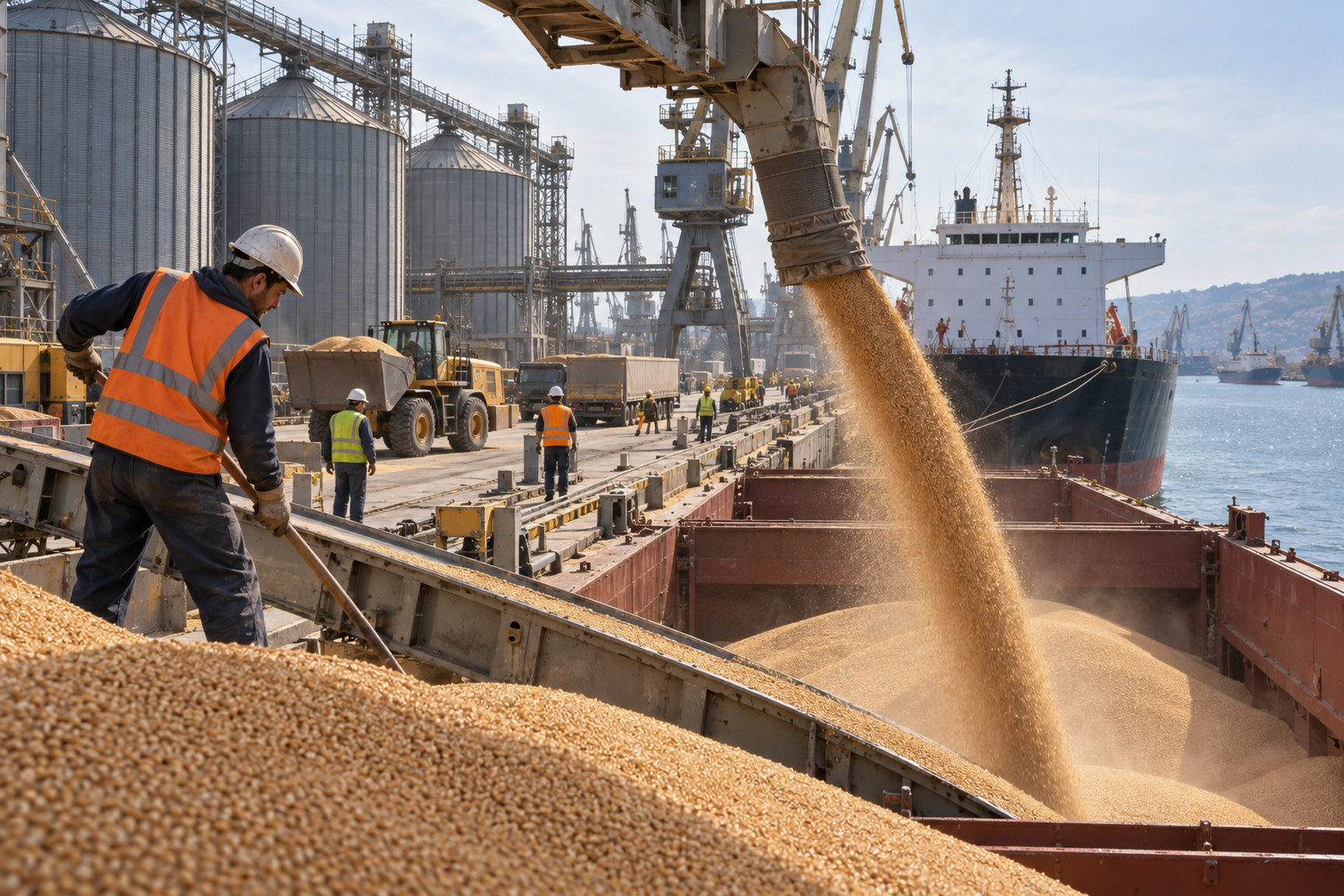
Wheat being loaded at a Black Sea grain export terminal amid supply concerns caused by the Russia-Ukraine conflict.