The Centre has approved a massive biogas scheme to turn agricultural waste into income.
The initiative aims to increase farmers’ earnings while promoting clean energy and organic farming.
Highlights
- Cabinet approves ₹23,731 crore GOBARdhan (National Circular Bioenergy) Scheme.
- Farmers can earn additional income by supplying cattle dung and crop residue to CBG plants.
- The scheme will support biogas plants through capital assistance, assured demand and better infrastructure.
- Organic manure produced from biogas plants can reduce fertiliser costs for farmers.
- The programme aims to boost rural jobs and attract private investment in villages.
- The scheme will run from FY27 to FY36 to expand compressed biogas production across India.
The Union Cabinet has approved the ₹23,731 crore GOBARdhan (National Circular Bioenergy) Scheme, a major initiative that could create a new source of income for millions of Indian farmers by converting agricultural waste into clean energy.
The scheme will be implemented from FY2027 to FY2036 and aims to significantly increase the production of Compressed Biogas (CBG) across the country. It is designed to make cattle dung, crop residue and other organic waste valuable resources instead of being discarded or burned.
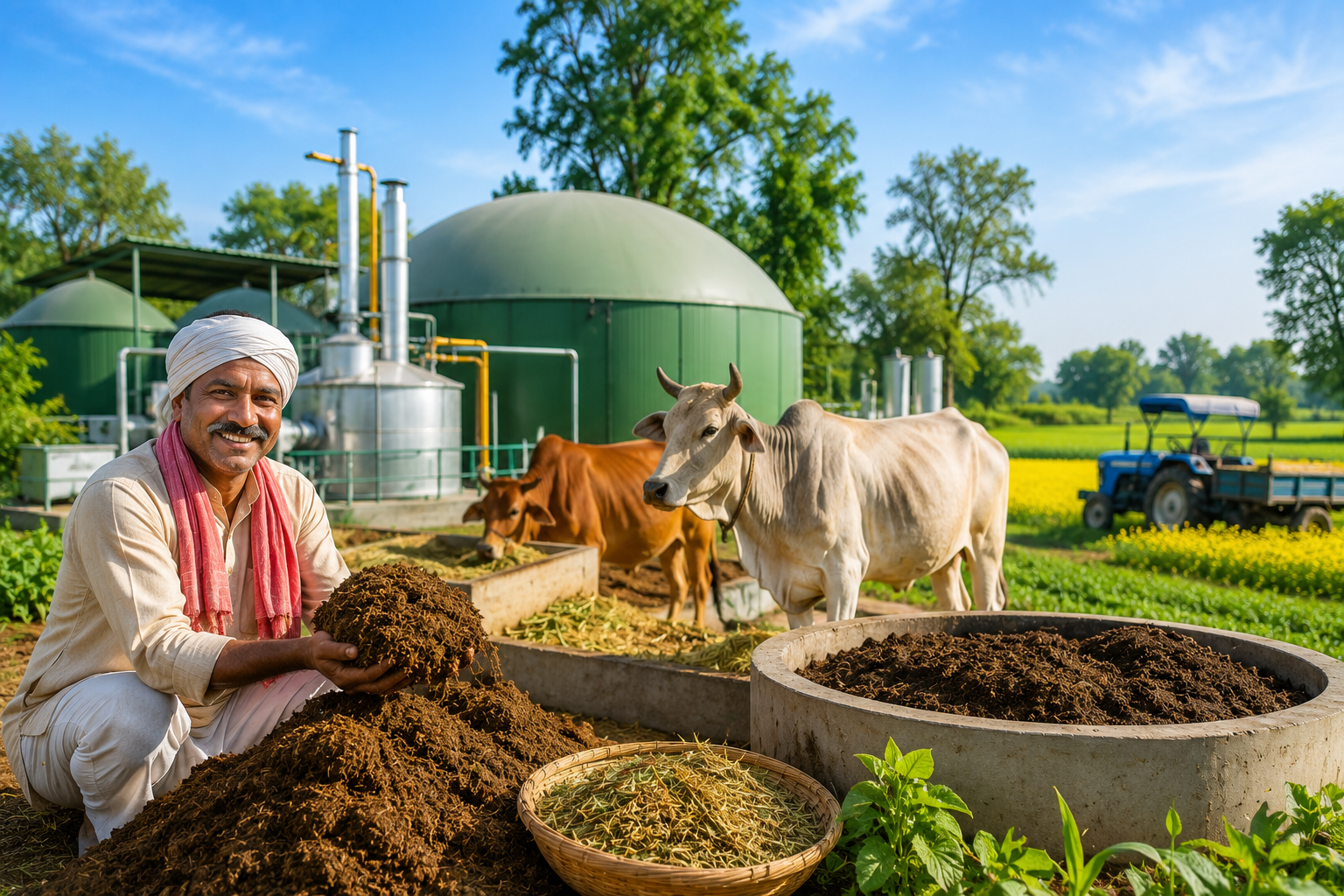
For farmers, the biggest benefit is the opportunity to earn extra income by selling cattle dung and crop waste to nearby CBG plants. Materials that earlier had little commercial value can now generate regular earnings, creating an additional revenue stream alongside farming.
The scheme also promotes the use of organic manure produced during the biogas-making process. This bio-slurry can improve soil health and help reduce farmers’ dependence on expensive chemical fertilisers, lowering cultivation costs over time.
To encourage investment, the government will provide capital support, improve pipeline infrastructure, facilitate credit access, promote technology development and ensure stable demand for compressed biogas. These measures are expected to attract private companies to set up more CBG plants, creating employment opportunities in rural areas.
The government said the initiative builds on earlier programmes such as SATAT, the Market Development Assistance Scheme, the Biomass Aggregation Machinery Scheme and the National Bioenergy Programme. More than 200 CBG plants have already been commissioned under previous initiatives.
Apart from improving farmers’ incomes, the scheme is expected to reduce stubble burning, promote cleaner villages, strengthen India’s energy security by reducing dependence on imported fossil fuels and support the country’s renewable energy goals.
With the GOBARdhan Scheme, agricultural waste is expected to become a valuable rural asset, helping farmers earn more while contributing to a cleaner and more sustainable economy