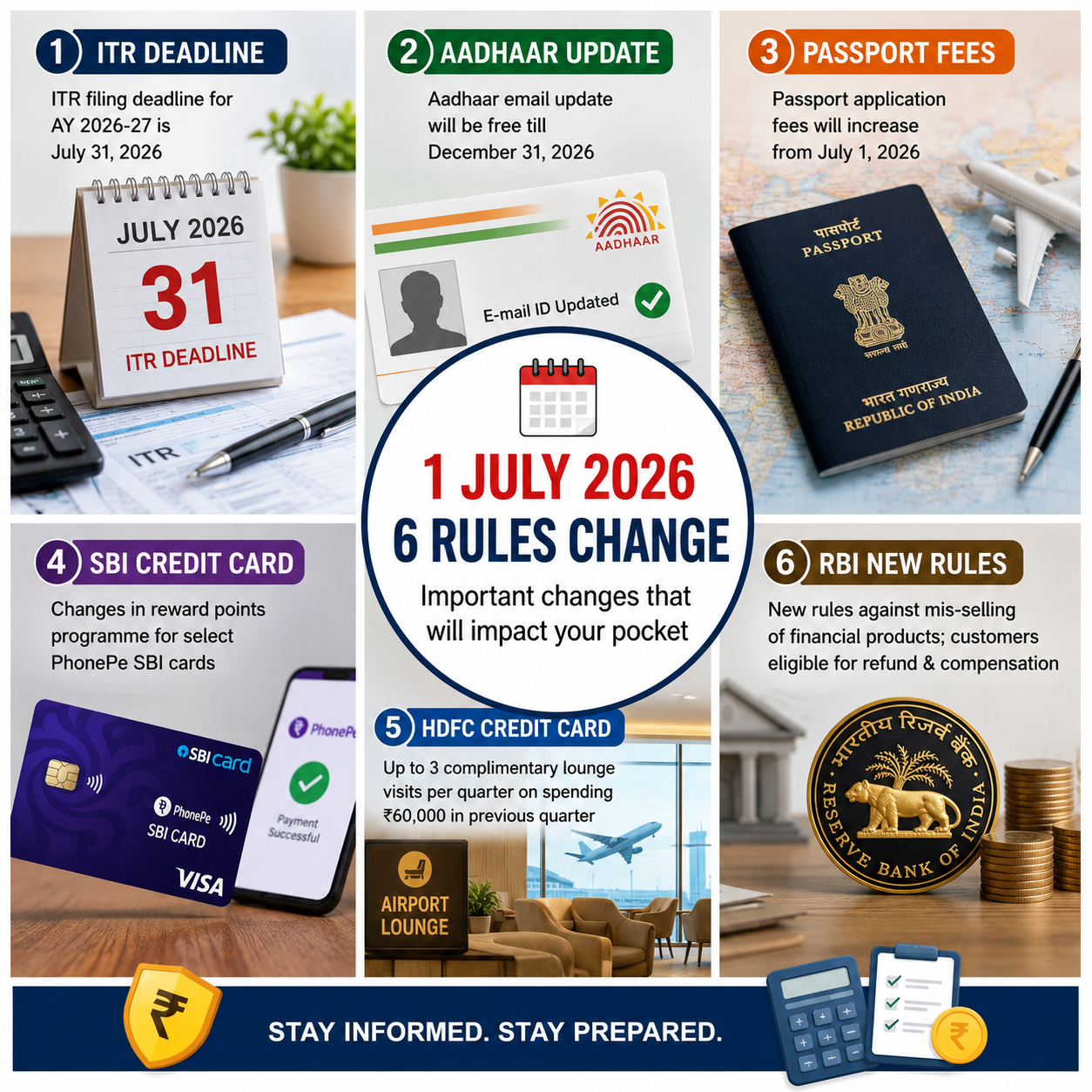
From July 1, changes related to ITR, Aadhaar, passport fees, credit cards and banking rules will come into effect, impacting taxpayers and consumers.
Highlights:
- ITR filing deadline for eligible taxpayers remains July 31, 2026.
- Aadhaar email update will be free until December 31, 2026.
- Passport application fees will increase from July 1.
- SBI and HDFC Bank revise select credit card benefits.
- RBI introduces stronger customer protection against mis-selling.
Several important financial and banking-related changes will come into effect from July 1, 2026, impacting taxpayers, bank customers, credit card users, passport applicants and Aadhaar holders. The new rules are aimed at improving customer protection, updating service charges and streamlining financial services.
One of the most important deadlines for taxpayers is the filing of Income Tax Returns (ITR) for Assessment Year 2026-27. Individuals filing ITR-1 and ITR-2 must submit their returns by July 31, 2026. Missing the deadline may lead to penalties, loss of certain tax benefits and restrictions on carrying forward eligible losses.
The Unique Identification Authority of India (UIDAI) has announced that updating the registered email address in Aadhaar will be free until December 31, 2026. Earlier, users had to pay a fee of ₹75 for this service. The waiver is expected to encourage more Aadhaar holders to keep their records updated.
Credit card users will also see changes from July 1. SBI Card has revised the reward points programme for select PhonePe SBI credit cards, introducing new earning limits and excluding certain transactions from reward eligibility.
Meanwhile, HDFC Bank has modified the domestic airport lounge access benefit for eligible credit card holders. Customers will now receive up to three complimentary lounge visits per calendar quarter, provided they spent at least ₹60,000 in the previous quarter.
Applying for a passport will also become more expensive. The Ministry of External Affairs has increased service fees for both normal and Tatkal passport applications in India and abroad, with the revised charges taking effect from July 1.
In another significant consumer-friendly move, the Reserve Bank of India (RBI) has introduced new rules to curb the mis-selling of financial products by banks. Customers who are sold unsuitable financial products will now be eligible for refunds and compensation, strengthening consumer protection in the banking sector.
These changes are expected to affect millions of individuals and businesses, making it important for consumers to understand the new rules and plan their finances accordingly.