
Maharashtra and Karnataka Follow as EV Adoption Expands
Delhi has retained the top position in the India Electric Mobility Index 2025, highlighting its progress in electric vehicle adoption and the broader ecosystem supporting India’s transition towards cleaner mobility.
According to the NITI Aayog report based on the index, Delhi recorded the highest overall score in the country at 84, followed by Maharashtra with 78, Karnataka with 73, Chandigarh with 71 and Goa with 65.
Among large states, Maharashtra and Karnataka emerged as leading performers, while Manipur ranked highest among hilly and northeastern states. Delhi, Chandigarh and Goa performed strongly among Union Territories and city states.
The India Electric Mobility Index evaluates states and Union Territories across three major areas — Transport Electrification Progress, Charging Infrastructure Readiness and EV Research and Innovation Status.
Delhi, Chandigarh and Maharashtra were placed in the top-performer category for transport electrification progress. Karnataka, meanwhile, recorded the highest charging infrastructure readiness score nationally at 97.
The report also showed continuity among India’s strongest EV markets. Delhi, Maharashtra, Karnataka and Chandigarh remained among the leading jurisdictions compared with their 2024 performance. Madhya Pradesh recorded a notable improvement, moving from 23rd position to seventh.
NITI Aayog noted that 29 of India’s 36 states and Union Territories have notified EV policies, indicating broader policy support for electric mobility across the country.
EV adoption has also increased substantially. Electric vehicles accounted for only around 0.5% of total vehicle sales in 2018, but their share had risen to 8.25% by 2025-26, with more than 8.7 million EVs on Indian roads.
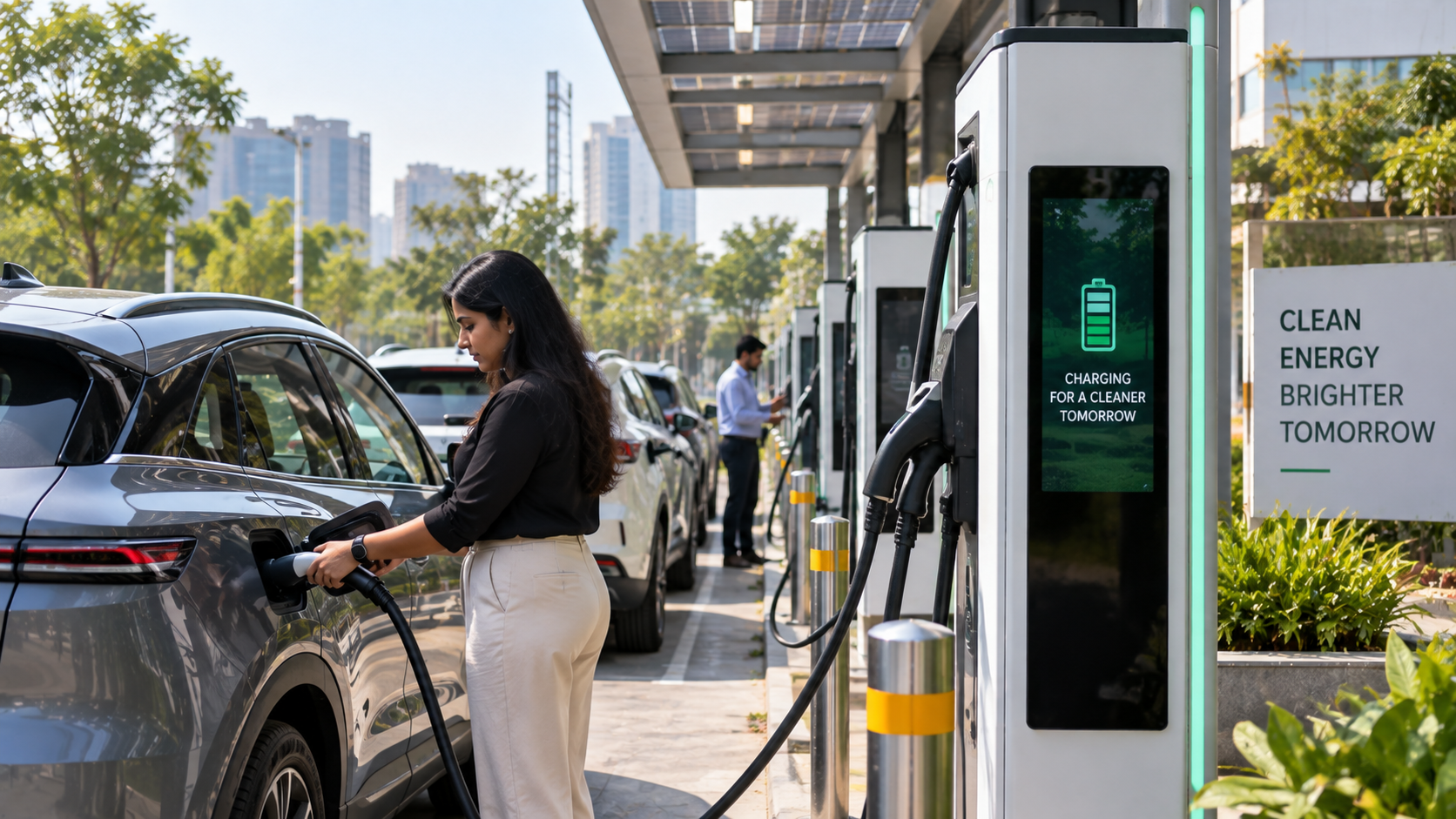
Charging infrastructure has expanded alongside adoption. The number of public charging stations increased from approximately 5,151 in December 2022 to more than 29,000 by June 2025.
Under the index methodology, Transport Electrification Progress carries a 50% weight, Charging Infrastructure Readiness accounts for 30%, while EV Research and Innovation Status contributes the remaining 20%.
The report positions electric mobility as an important component of India’s transport decarbonisation strategy. Road transport accounts for roughly 12% of the country’s energy-related carbon dioxide emissions, while India’s automotive industry itself represents a major part of the national economy and manufacturing sector.