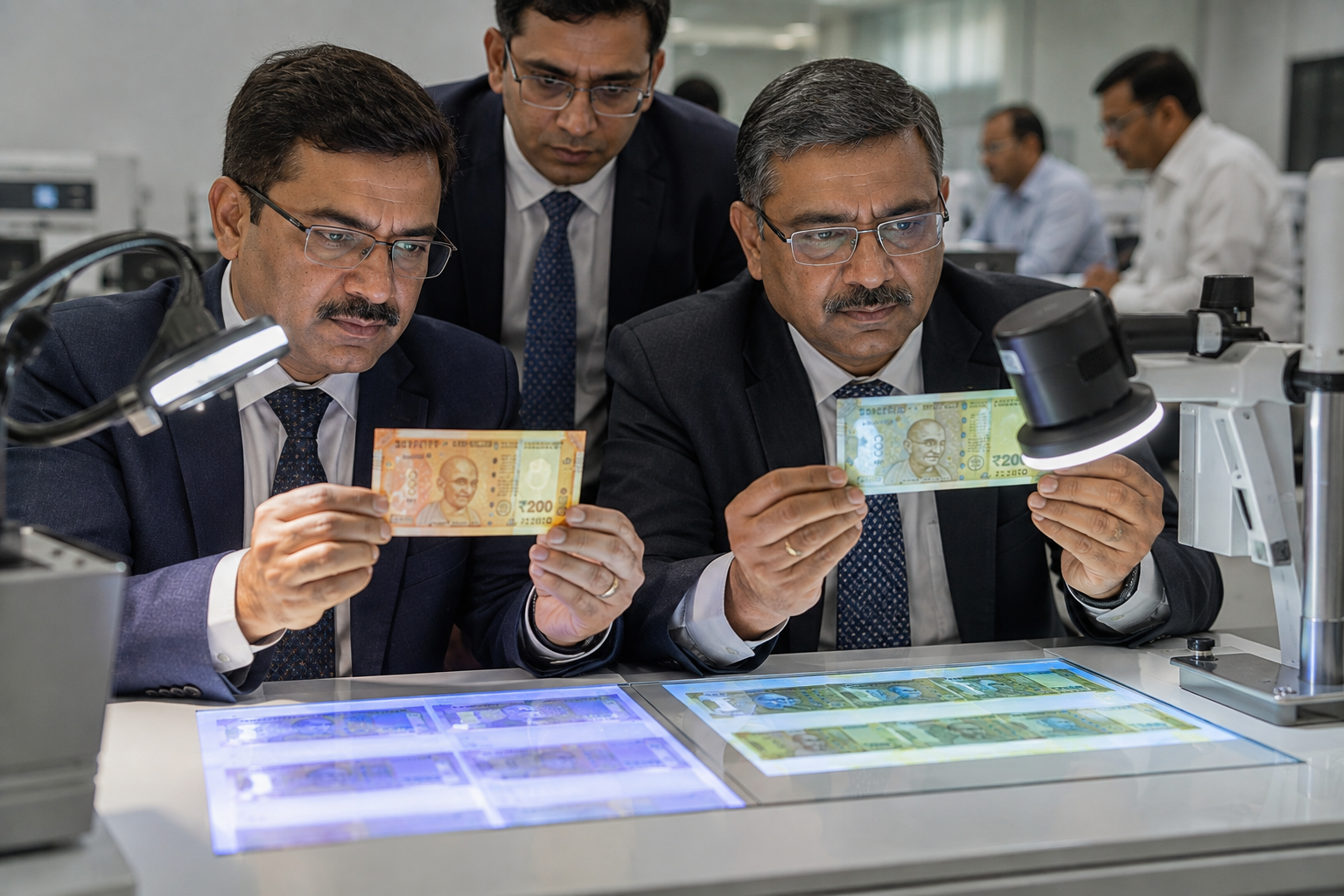
RBI Governor Sanjay Malhotra has announced that India’s first polymer currency notes are expected to enter circulation at the beginning of the next financial year.
Key Highlights
- RBI targets polymer note rollout next financial year.
- ₹10 and ₹20 notes to be introduced under pilot project.
- Polymer notes expected to last 2–4 times longer than paper notes.
- Enhanced security features to help curb counterfeiting.
- Paper and polymer notes will coexist during the trial phase.
India is set to introduce its first polymer currency notes, with the Reserve Bank of India (RBI) targeting their circulation at the beginning of the next financial year. RBI Governor Sanjay Malhotra shared the timeline while addressing the media after the latest monetary policy announcement, confirming that the initiative is currently in the pilot phase.
The government has authorized the RBI to print up to two billion polymer banknotes, including one billion ₹10 notes and one billion ₹20 notes, for field trials. The pilot will evaluate how polymer currency performs under India’s diverse climatic conditions before any decision is taken to expand the programme.
According to the RBI Governor, the primary objective of introducing polymer notes is to improve the durability of lower denomination currency, which experiences the highest circulation and wears out quickly. Polymer banknotes are estimated to last two to four times longer than traditional paper notes, reducing replacement costs for the central bank.
Another major advantage is enhanced security. Polymer notes can incorporate advanced security features that make counterfeiting significantly more difficult. Countries including the United Kingdom, Canada and Australia have successfully adopted polymer banknotes, reporting longer lifespan and a noticeable decline in fake currency.
The RBI has initiated a global procurement process through Bharatiya Reserve Bank Note Mudran Pvt Ltd (BRBNMPL) to source polymer substrate sheets embedded with advanced security technologies. Interested suppliers must meet strict security and eligibility requirements before participating in the project.
The central bank has clarified that there is currently no proposal to completely replace paper currency. Both polymer and conventional paper notes will remain legal tender and circulate simultaneously during the testing phase.
If the pilot proves successful, polymer notes could become a key part of India’s future currency management strategy by improving note quality, reducing maintenance costs and strengthening protection against counterfeit currency.