Sub-headline:
Private companies are expanding manufacturing capacity to reduce import dependence.
Railways expects higher domestic output to support future demand and exports.
Highlights:
- Private investment is set to accelerate India’s rail wheel manufacturing.
- Rail wheel imports are expected to decline as domestic production rises.
- Jupiter Wagons and Titagarh Rail Systems are expanding manufacturing capacity.
- Public sector RWF produced over 2.1 lakh wheels in FY26.
- India imported over 50,000 wheelsets, mainly from China, last year.
- Annual demand for wheelsets could cross 4 lakh units by 2030.
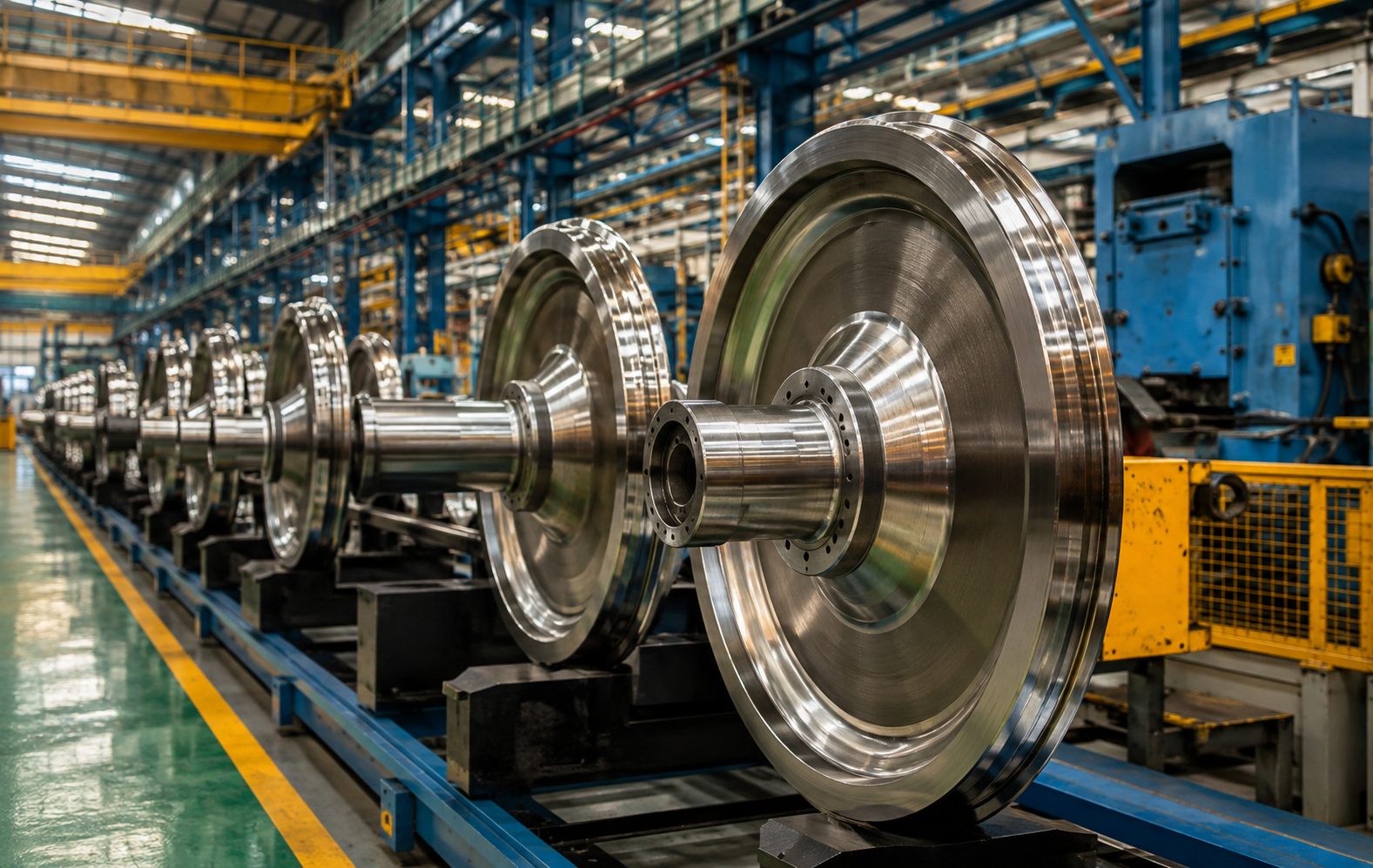
India’s rail wheel manufacturing sector is entering a new phase of expansion as private investments begin complementing public sector production. The move is expected to reduce the country’s dependence on imports while helping India emerge as a competitive exporter of rail wheels and wheelsets in the coming years.
At present, rail wheel production is largely dominated by public sector units, particularly the Rail Wheel Factory (RWF), which produced a record 2.1 lakh wheels in FY26. However, rising demand from Indian Railways and metro projects has encouraged private companies to invest heavily in manufacturing facilities.
Companies such as Jupiter Wagons and Titagarh Rail Systems are significantly expanding their production capacities. Jupiter Wagons is setting up a forged rail wheel manufacturing plant in Odisha with an annual capacity of around 20,000 wheelsets. The company also plans to export nearly 50-60% of its production, helping position India as a global manufacturing hub.
Titagarh Rail Systems is also establishing a modern rail wheel manufacturing facility that is expected to become operational in the first quarter of the next financial year. The investment comes as Indian Railways continues to increase procurement for passenger coaches, freight wagons, metro trains and Vande Bharat trains.
Industry estimates suggest that India imported more than 50,000 wheelsets, largely from China, during the previous year. Expanding domestic manufacturing is expected to gradually replace these imports and strengthen supply chain security.
Experts believe annual demand for wheelsets could exceed 4 lakh units by 2030, driven by railway expansion, high-speed corridors, metro rail projects and exports. With increasing private participation and government support under the Make in India initiative, the rail wheel sector is expected to become more self-reliant while creating new export opportunities for Indian manufacturers.