Honouring Weavers And Heritage
Key Highlights
- India celebrates National Handloom Day 2026 on August 7.
- The day commemorates the Swadeshi Movement launched in 1905.
- Events across the country honour weavers and promote traditional textiles.
- Handloom sector supports millions of livelihoods and rural employment.
- Government continues initiatives to strengthen sustainable handloom production.
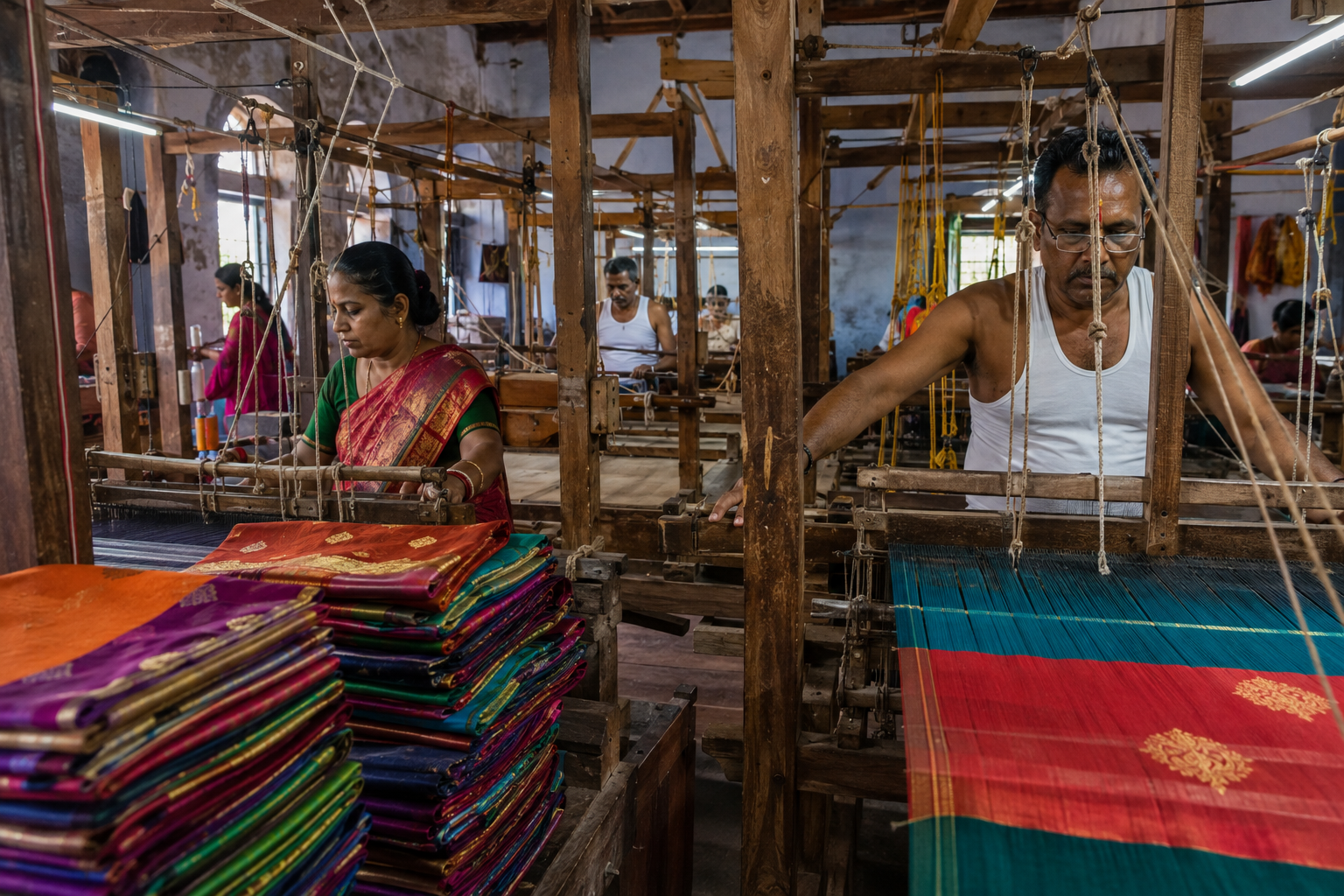
India is celebrating National Handloom Day 2026 with exhibitions, cultural programmes, artisan fairs and awareness campaigns across the country to recognise the invaluable contribution of handloom weavers and artisans. Observed every year on August 7, the occasion highlights India’s rich textile heritage while promoting sustainable fashion and indigenous craftsmanship.
National Handloom Day commemorates the launch of the Swadeshi Movement on August 7, 1905, when Indians embraced locally produced goods as a symbol of self-reliance during the freedom struggle. Since the Government of India instituted the annual observance in 2015, the day has become an important platform for celebrating traditional weaving practices and encouraging the use of handwoven textiles.
This year’s celebrations include handloom exhibitions, live weaving demonstrations, textile festivals, workshops, fashion showcases and cultural performances organised by central and state governments, handloom development agencies, educational institutions and artisan cooperatives. Several designers and fashion brands are also promoting handcrafted fabrics through special campaigns encouraging consumers to support locally made products.
India is home to one of the world’s richest handloom traditions, with iconic textiles such as Banarasi Silk, Kanchipuram Silk, Pochampally Ikat, Chanderi, Paithani, Jamdani, Muga Silk, Bhagalpuri Silk and Kota Doria representing the country’s diverse cultural heritage. These handcrafted fabrics continue to preserve centuries-old weaving techniques while showcasing regional craftsmanship.
The handloom sector remains one of India’s largest sources of rural employment after agriculture, providing livelihoods to millions of weavers, artisans, designers and small entrepreneurs. As global demand for sustainable and eco-friendly fashion grows, handwoven textiles are gaining increasing recognition for their low environmental impact. Through financial assistance, design innovation, digital marketing and infrastructure support, the government continues to strengthen the sector while encouraging consumers to embrace India’s rich textile legacy.