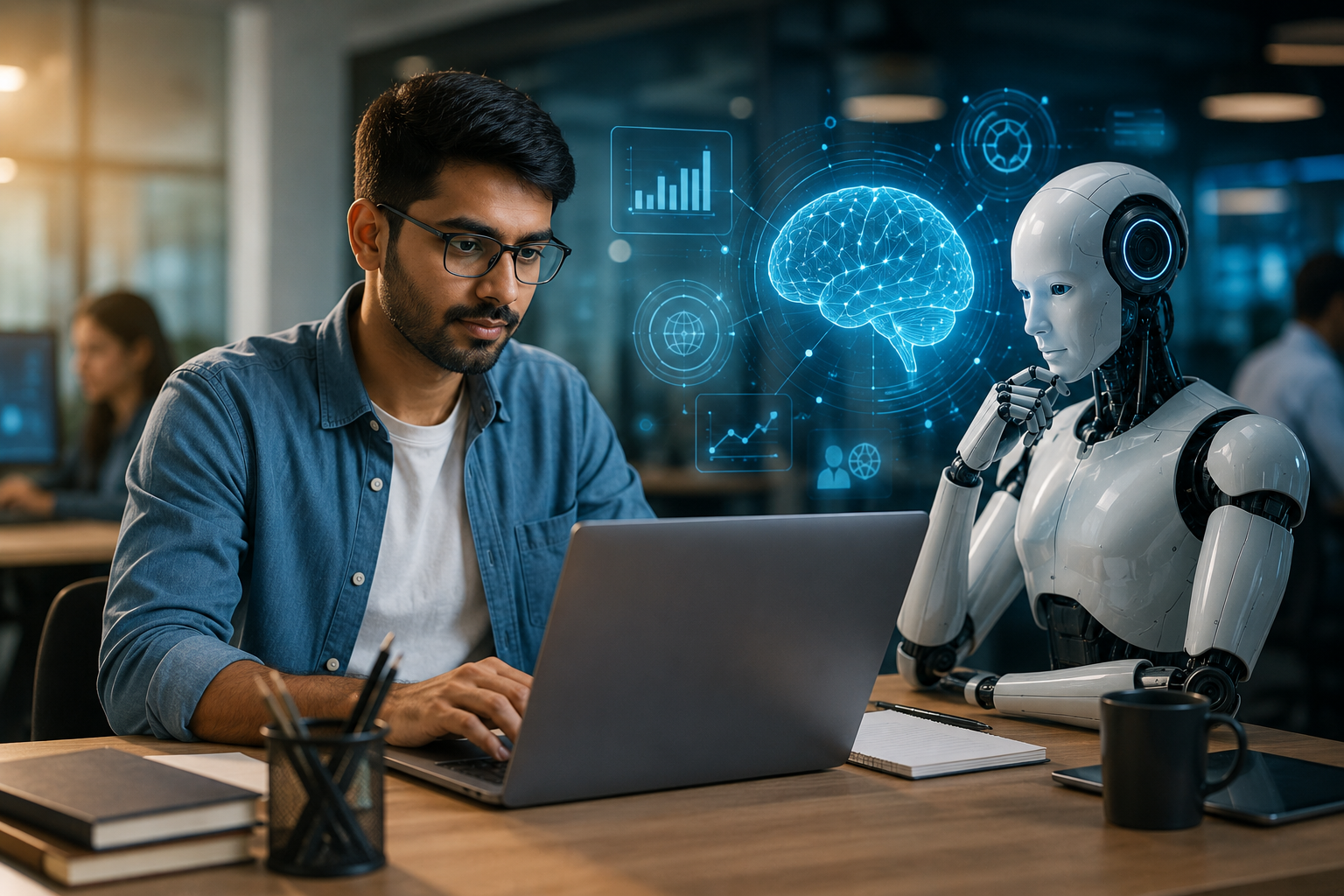
Artificial intelligence is changing the job market, but the bigger risk may be falling behind workers who know how to use AI tools.
Employees who combine professional expertise with AI skills could gain an advantage in hiring, productivity and career growth.
Highlights
- AI is increasingly becoming a workplace tool rather than simply a job replacement.
- Employees who learn to work with AI could gain an edge over those who do not.
- Routine and repetitive tasks are more exposed to automation.
- AI skills can help workers improve productivity and complete tasks faster.
- Reskilling and continuous learning will become increasingly important.
- Human skills such as judgement, creativity and communication will remain valuable.
New Delhi: Worried that artificial intelligence could take away your job? The bigger career risk may come from another direction—a colleague or job applicant who knows how to use AI more effectively than you.
As artificial intelligence becomes part of everyday business operations, companies are increasingly looking for workers who can combine their existing professional knowledge with new AI capabilities. This means the future workplace may not simply be a contest between humans and machines, but between employees with different levels of AI proficiency.
AI tools can already assist with activities such as research, data analysis, coding, presentations, customer support, content creation and routine administrative work. As these systems improve, employees could use them to complete some tasks faster and devote more time to work requiring human judgement.
This also means workers performing repetitive or predictable tasks could face greater disruption. Some responsibilities may be automated, while many existing jobs could be redesigned around AI-assisted workflows.
For employees, learning how to use AI effectively could therefore become an important career skill. Workers do not necessarily need to become artificial intelligence engineers. Depending on their profession, knowing how to use relevant AI tools, verify their outputs and combine them with domain expertise could be enough to improve productivity.
Companies are also likely to place greater importance on reskilling and upskilling. As technology changes job requirements, employees who continuously learn could find it easier to move into new roles or take on more valuable responsibilities.
At the same time, AI still has limitations. Human abilities including critical thinking, communication, leadership, creativity, empathy and accountability remain difficult to automate completely. These skills could become even more valuable as machines handle a larger share of routine work.
For India’s large workforce, the AI transition therefore presents both risk and opportunity. Some jobs and tasks may disappear, but new roles and responsibilities are also likely to emerge.
The key message for employees is increasingly clear: rather than competing directly with AI, learning how to work effectively with AI could become one of the most important ways to remain competitive in the job market.