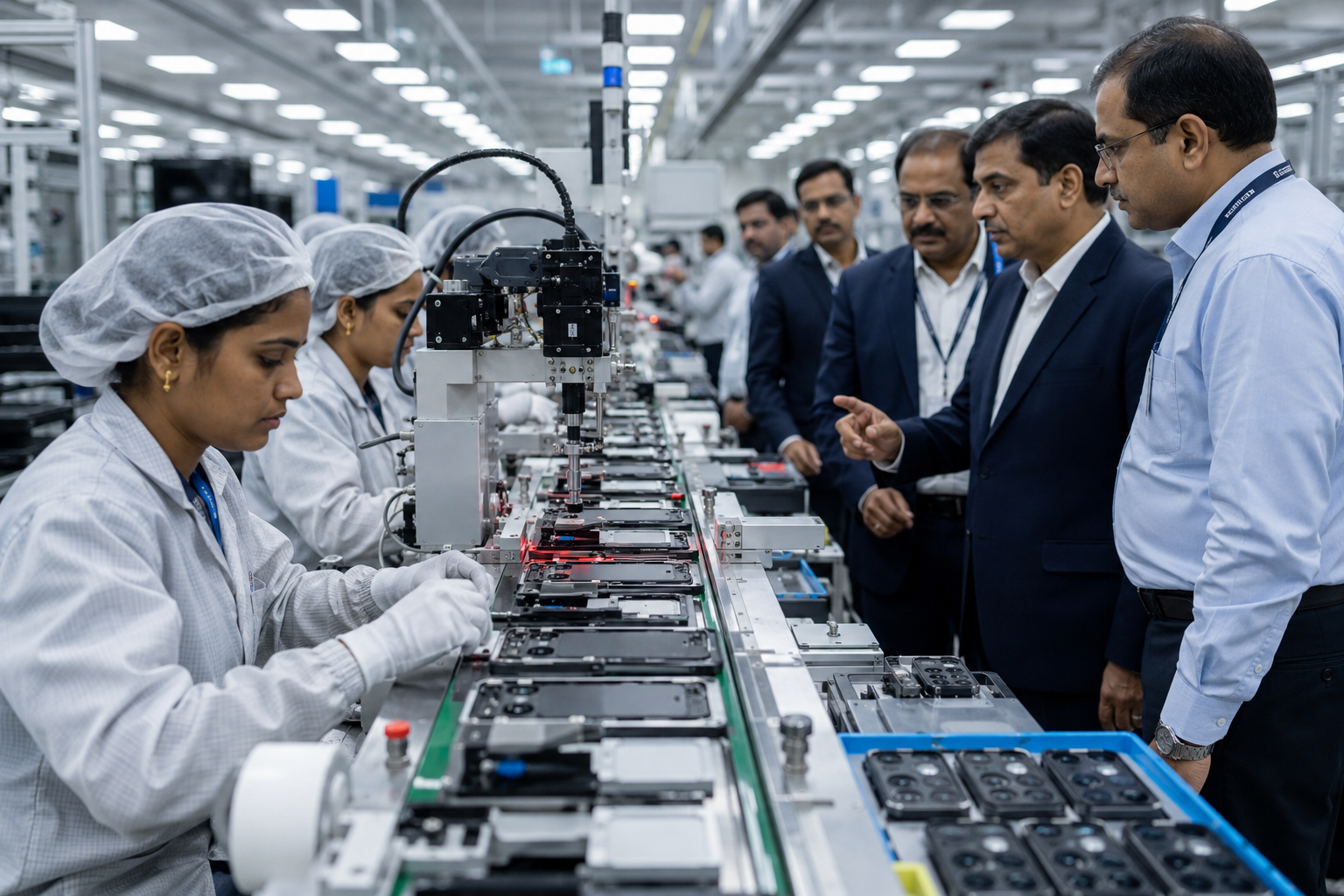
Dixon Technologies expects to complete its joint venture with Chinese smartphone maker Vivo within two months, with the partnership’s financial impact expected to start reflecting from the October-December quarter.
Key Highlights
- Dixon Technologies expects to complete the Vivo joint venture within two months.
- Revenue from the JV is expected to reflect from Q3 FY27.
- The partnership was approved by the government in July.
- The JV is expected to significantly increase Dixon’s mobile production capacity.
- Dixon currently produces around 3.2-3.3 crore mobile phones annually.
- Q Tech’s camera module capacity is being expanded from 7 crore to 18-19 crore units annually.
Dixon Technologies expects to complete its proposed joint venture with Chinese smartphone manufacturer Vivo within the next two months, with the partnership’s financial contribution expected to start reflecting in the company’s books from the October-December quarter.
Dixon CEO Atul Lall said the transaction is expected to be concluded within the next two months, following government approval for the joint venture in July. The two companies had originally signed a term sheet on December 15, 2024, to establish the partnership.
The proposed joint venture is expected to significantly expand Dixon Technologies’ mobile phone manufacturing capacity while reducing Vivo’s risk exposure in India. Vivo plans to transfer its manufacturing operations into the new venture.
Dixon currently produces around 3.2-3.3 crore mobile phones annually, a level the company expects to maintain in the current financial year. Vivo remains India’s leading smartphone brand by volume, with the company estimated to have sold around 3.5 crore handsets in 2025.
The partnership comes as Dixon continues to expand its electronics manufacturing capabilities. Its subsidiary Q Tech is increasing annual camera module production capacity from 7 crore units to 18-19 crore units over the next 15 to 18 months. The additional capacity is expected to largely support smartphone production while also enabling deeper levels of manufacturing.
Dixon has also completed construction of its display manufacturing facility, with machinery installation currently underway. The facility will cater to mobile phones, IT hardware products and automotive displays.
According to Lall, trials at the display facility are expected to begin at the start of the third quarter, while mass production is targeted for the end of the third quarter or the beginning of the fourth quarter of the current financial year.
Dixon Technologies reported a 3% decline in profit after tax to ₹273 crore in the first quarter. The company attributed the decline mainly to the expiry of the mobile production-linked incentive scheme in March 2026, higher selling prices caused by elevated input costs and broader supply-chain inflation.
The completion of the Vivo partnership could provide a significant boost to Dixon’s consolidated mobile manufacturing operations as the company continues to expand its position in India’s electronics manufacturing ecosystem.