The Karnataka government has revised pollution testing charges for different vehicle categories from August 15, 2026.
Two-wheeler PUC testing will now cost Rs 80, while diesel vehicle owners will have to pay Rs 200.
Highlights
- Karnataka’s revised PUC testing fees came into effect on August 15, 2026.
- Two-wheeler pollution testing charges have increased from Rs 65 to Rs 80.
- Auto-rickshaw PUC fees have been raised from Rs 75 to Rs 80.
- Petrol, LPG and CNG car testing charges have increased from Rs 115 to Rs 150.
- Diesel vehicle PUC testing will now cost Rs 200, up from Rs 160.
- The government cited higher operating and maintenance costs at authorised testing centres.
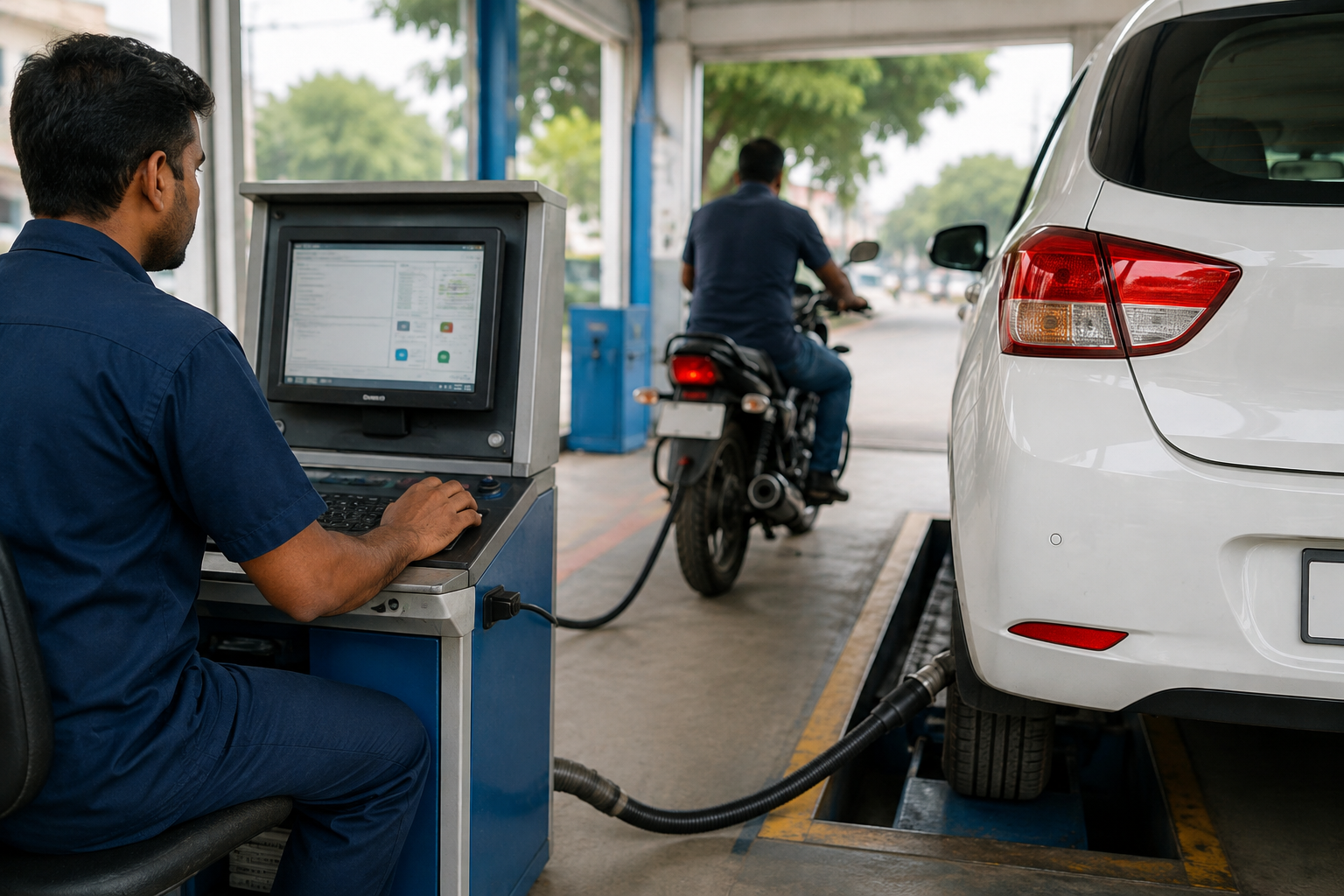
Vehicle owners in Karnataka will now have to pay more for getting a Pollution Under Control (PUC) certificate after the state government revised pollution testing charges across different vehicle categories. The new rates came into effect on August 15, 2026.
Under the revised fee structure, the pollution testing charge for two-wheelers has increased from Rs 65 to Rs 80. Auto-rickshaw owners will now also pay Rs 80, compared with the earlier charge of Rs 75.
Owners of petrol, LPG and CNG-powered cars will see a bigger increase. Their PUC testing fee has been revised from Rs 115 to Rs 150. For diesel-powered vehicles, the charge has gone up from Rs 160 to Rs 200.
The Karnataka government issued the order on August 13 following a proposal from the Transport Commissioner and the Road Safety Commissioner. The revision also came after a long-standing demand from the Karnataka Emission Testing Centre Owners’ Association for an increase in the existing testing charges.
The government said higher operating expenses made the revision necessary. These costs include rent for pollution testing centres, fuel expenses, electricity bills, salaries of employees, printer ink, maintenance of internet-connected equipment and other operational requirements.
The revised rates have been introduced under Rule 231-B(13) of the Karnataka Motor Vehicles Rules, 1989. Only authorised computerised pollution testing centres are permitted to collect the prescribed fees for checking vehicle emissions and issuing PUC certificates.
The order has also laid down conditions for testing centres. They must employ trained and qualified staff and ensure regular recalibration of gas analysers used for emission testing. The date and time of the latest recalibration must also be displayed prominently at the centre.
PUC certificates cannot contain handwritten entries or manual alterations. Under the Central Motor Vehicles Rules, a certificate can be issued only when a vehicle’s emission levels remain within the prescribed limits.
PUC validity can differ depending on the type of vehicle and applicable emission norms. In many cases, certificates are valid for six months, while vehicles meeting certain BS-IV and BS-VI requirements may qualify for longer validity under applicable rules.