Copper prices have climbed sharply as manufacturers compete to secure immediate supplies amid tight global availability. Demand from power grids, electric vehicles, renewable energy and data centres is adding pressure on the metal.
Highlights
- Copper futures in India have climbed to around Rs 1,400 per kg in August.
- MCX copper contracts were trading around Rs 1,400 per kg on August 17.
- Global copper prices on the London Metal Exchange (LME) remain close to record-high levels.
- Manufacturers are paying premiums to secure immediate copper supplies.
- EVs, renewable energy, power grids and data centres are driving demand.
- Tight global supply is adding further upward pressure on copper prices.
Story
Copper prices in India have climbed sharply as manufacturers pay higher premiums to secure immediate supplies amid tightening global availability and strong demand from emerging industries.
Copper futures in the domestic market have risen to around Rs 1,400 per kg in August. On August 17, copper contracts on the Multi Commodity Exchange (MCX) were trading at around Rs 1,400 per kg. Global copper prices on the London Metal Exchange (LME) have also remained close to record-high levels.
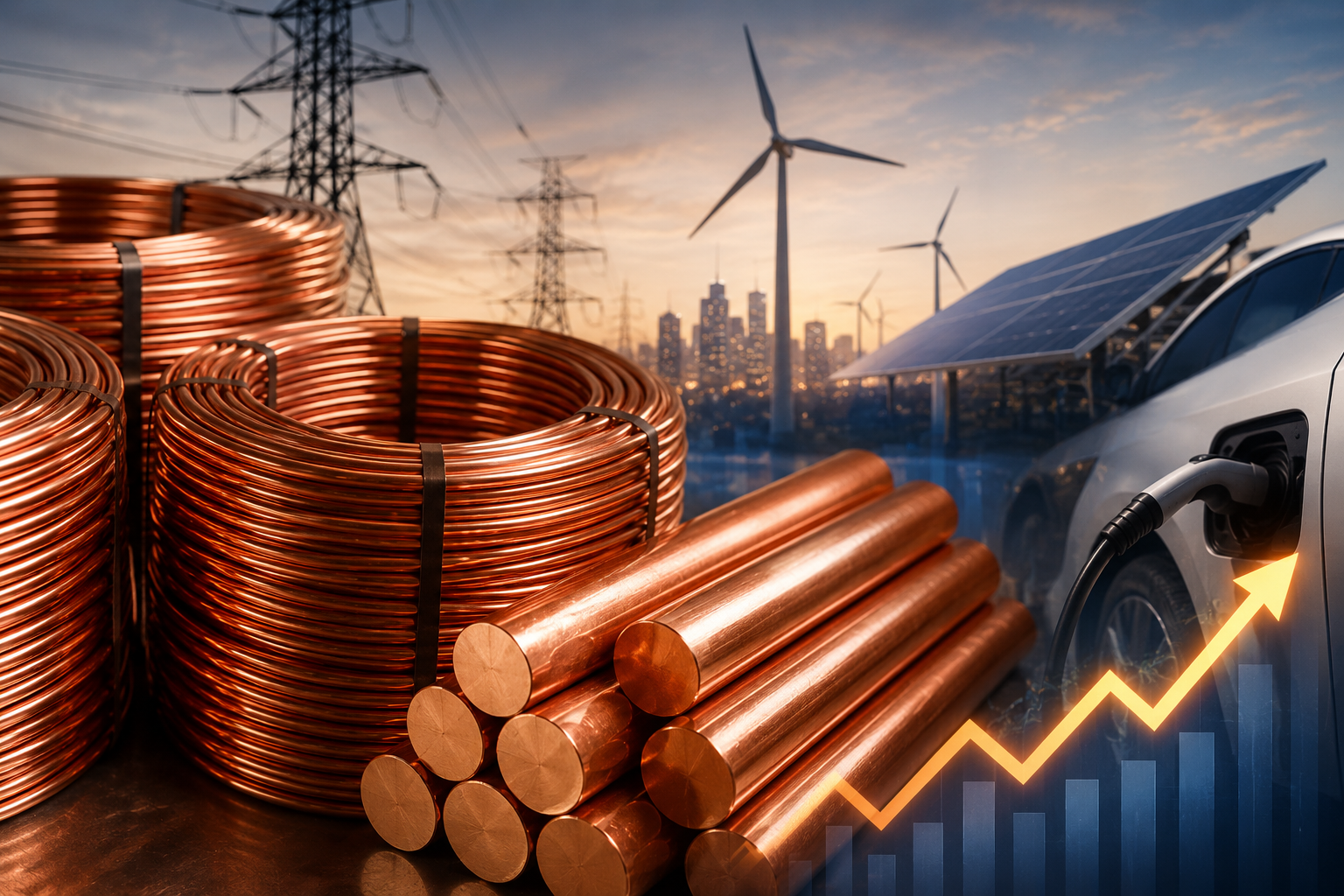
The rise reflects copper’s growing importance in the global transition towards cleaner energy. The metal is widely used in electricity networks, electric vehicles, renewable energy projects and data centres, making it an important raw material for both industrial expansion and electrification.
India’s growing infrastructure and clean-energy requirements are adding to demand. Expansion of power grids requires large quantities of copper for cables, transformers and other electrical equipment. At the same time, increasing adoption of electric vehicles and renewable energy is creating additional consumption.
Data centres are another source of rising copper demand. These facilities require significant power infrastructure and electrical equipment to operate, increasing their dependence on copper.
However, demand is rising at a time when global copper supplies are relatively tight. Increasing mine production is a lengthy process, meaning supply cannot always respond quickly to sudden growth in consumption.
A key indicator of the tight market is the premium that manufacturers are willing to pay to obtain copper for immediate delivery. This suggests that the pressure is not limited to futures prices but is also visible in the physical market.
Higher copper prices could raise costs for several industries in India, including electrical equipment, automobiles, construction and renewable energy. Companies may have to absorb these additional costs or eventually pass some of them on to customers.
With India expanding its power infrastructure, electric mobility, renewable-energy capacity and digital infrastructure, copper demand is likely to remain strong. Global supply conditions will now play a crucial role in determining whether prices remain elevated.