Applications Open as Verification Scope Widens to 23 Categories
Key Highlights
- The government has invited applications for recognition as Government Approved Test Centres.
- Industries, laboratories, engineering colleges, polytechnics, ITIs and testing facilities can apply subject to eligibility conditions.
- Applications are open until August 31, 2026, at 5 PM.
- The application process is being conducted completely online.
- India currently has 51 recognised Government Approved Test Centres.
- The verification and re-verification scope has been expanded to 23 categories of weights and measures.
- The categories span healthcare, energy, transport, retail, manufacturing and infrastructure.
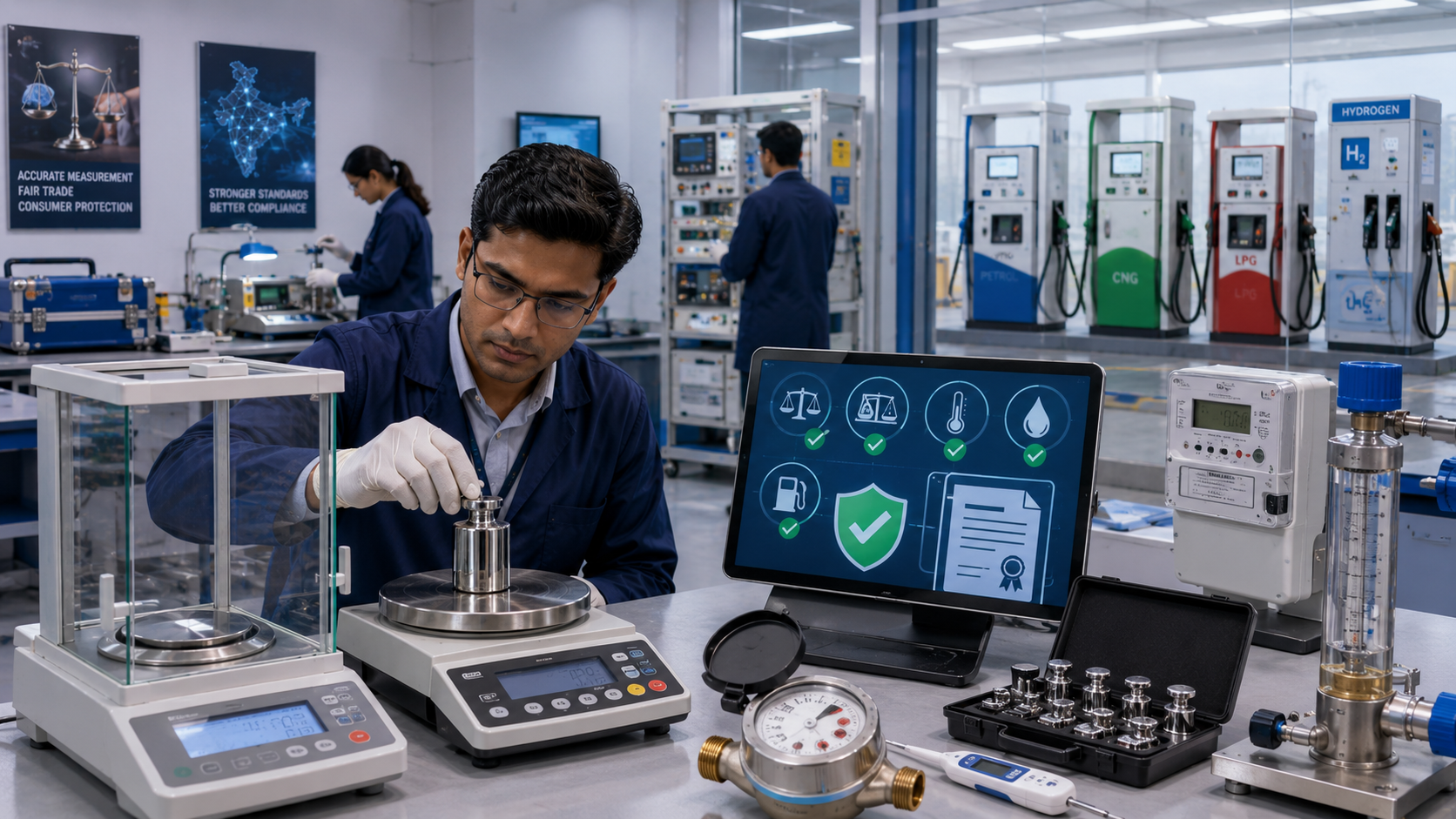
- Petrol, diesel, CNG, LPG, LNG and hydrogen dispensers are now covered under the expanded framework.
- The government expects more centres to reduce verification turnaround times and make compliance easier for businesses.
- Wider private-sector participation is also expected to allow State Legal Metrology officials to focus more on enforcement, market surveillance and consumer grievances.
- Applicants must have prescribed testing and calibration equipment, qualified technical personnel and required infrastructure.
New Delhi, August 20: The Department of Consumer Affairs has invited eligible industries, laboratories, engineering colleges, polytechnics, ITIs and testing facilities to apply for recognition as Government Approved Test Centres as it seeks to expand India’s measurement-verification infrastructure and improve access to compliance services.
Applications under the Legal Metrology (Government Approved Test Centre) Rules, 2013, are open until August 31, 2026, at 5 PM.
The government said 51 GATCs have already been recognised, while recent changes have expanded the range of weights and measures these centres can verify and re-verify to 23 categories.
Application process goes fully digital
Eligible organisations can submit applications through the Department of Consumer Affairs’ online portal.
The digital system covers application submission, payment of fees, status tracking and communication with applicants.
By moving the process online, the government aims to make recognition simpler, more transparent and business-friendly while reducing the need for repeated visits to government offices.
The current application period runs from August 17 to August 31.
51 test centres already recognised
The government has so far recognised 51 GATCs.
It now plans to expand this network by allowing more technically competent private-sector and institutional facilities to participate in verification and re-verification activities.
A larger network is expected to give manufacturers, traders and other businesses access to approved verification facilities closer to their locations.
This could reduce turnaround times and accelerate compliance with Legal Metrology requirements.
Verification expanded to 23 categories
Following amendments to the GATC framework, approved centres can undertake verification and re-verification across 23 categories of weights and measures.
These include water meters, sphygmomanometers, clinical thermometers, automatic rail weighbridges, tape measures and specified non-automatic weighing instruments.
The expanded list also covers load cells, beam scales, counter machines, different categories of weights, gas meters, energy meters and moisture meters.
Vehicle speed meters, breath analysers, multi-dimensional measuring instruments and flow meters are also included.
Fuel dispensers brought under framework
The expanded framework covers several types of fuel-dispensing equipment.
GATCs can now handle specified verification requirements for petrol and diesel dispensers as well as CNG, LPG, LNG and hydrogen dispensers.
Expanding testing capacity for these systems is particularly relevant to consumers because accurate dispensing measurements determine the quantity of fuel delivered in commercial transactions.
The government expects greater verification capacity to improve accessibility while supporting transparency and accuracy in fuel sales.
Faster compliance for industry
The expansion of the GATC network is also being positioned as an Ease of Doing Business reform.
Instead of depending only on limited departmental infrastructure, businesses will increasingly be able to use approved technical facilities for verification requirements.
Greater availability of centres can reduce travel, waiting periods and compliance turnaround times for manufacturers and users of regulated measuring equipment.
Applicants seeking recognition must possess prescribed testing and calibration equipment traceable to national standards, qualified technical personnel and infrastructure required under the applicable rules.
State officials can focus on enforcement
The government expects the expanded GATC network to complement the work of State Legal Metrology Departments rather than replace regulatory oversight.
With more approved centres handling routine verification services, State Legal Metrology Officers could devote greater attention to market surveillance, enforcement and consumer grievance redressal.
The model therefore combines private and institutional testing capacity with continued government supervision.
Accurate measurement protects consumers
Legal metrology plays a direct role in commercial transactions because consumers and businesses depend on measuring instruments to accurately determine quantities.
Incorrect weighing machines, meters or fuel dispensers can lead to financial losses and undermine consumer confidence.
Expanding access to reliable verification and re-verification services is intended to ensure that measuring equipment used in trade remains accurate and compliant.
The government said the reforms seek to balance easier compliance for legitimate businesses with stronger consumer protection.
Part of broader quality infrastructure push
The GATC framework forms part of wider efforts to strengthen India’s quality and measurement infrastructure.
By involving technically capable laboratories, industries and educational institutions, the government aims to create a larger and more responsive verification network while retaining regulatory oversight.
The initiative is also aligned with digital governance and Ease of Doing Business objectives as well as efforts to strengthen domestic technical capabilities and align measurement practices with internationally accepted standards.
Eligible organisations have until 5 PM on August 31, 2026, to submit applications under the current window.