India and Morocco aim to double bilateral trade within five year
Key Highlights
- India and Morocco agreed to work towards doubling bilateral trade over the next five years.
- Bilateral trade stood at around $4 billion in 2025.
- A new Joint Working Group will explore opportunities for expanding trade between the two countries.
- The group will assess the feasibility of a preferential trade agreement.
- Both sides plan to address tariff, non-tariff and market-access barriers.
- Pharmaceuticals, fertilisers, agriculture, mining, energy and digital transformation are major cooperation areas.
- Moroccan businesses were invited to invest in India and explore joint ventures.
- The countries welcomed a new food-safety cooperation agreement.
- Fertiliser and phosphate supply-chain cooperation remains a strategic component of bilateral ties.
New Delhi: India and Morocco have agreed to work towards doubling bilateral trade over the next five years as the two countries seek to deepen economic cooperation across pharmaceuticals, fertilisers, agriculture, mining, energy and digital transformation.
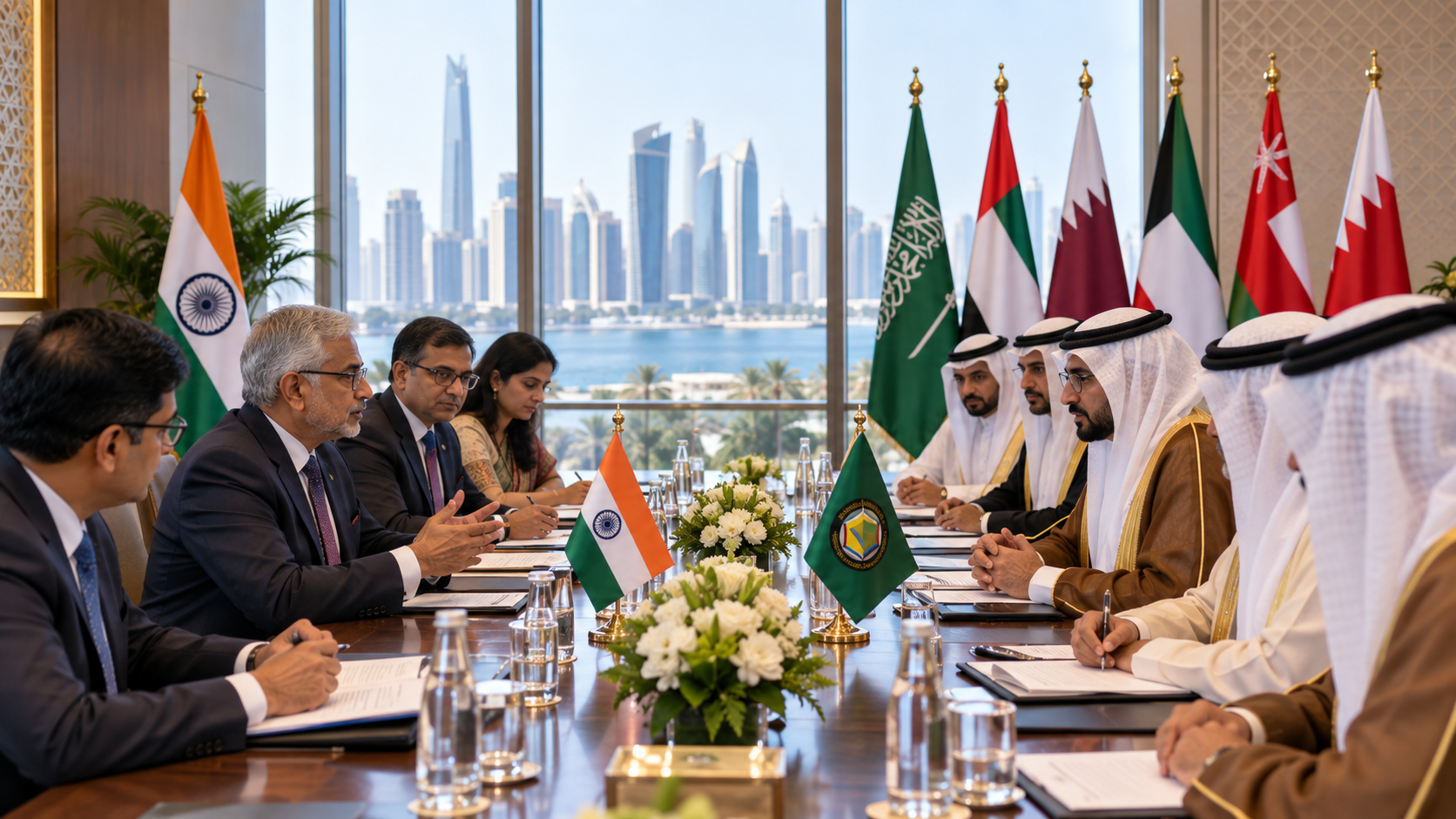
The understanding emerged during the seventh session of the India-Morocco Joint Commission, co-chaired by Minister of State for Commerce and Industry and Electronics & Information Technology Jitin Prasada and Morocco’s Secretary of State for Foreign Trade Omar Hejira.
Prasada visited Morocco on August 24-25 as the two countries explored opportunities to expand their trade and investment relationship. Bilateral trade stood at around $4 billion in 2025, with both sides identifying diversification and improved market access as important steps towards further growth.
Preferential Trade Agreement Explored
India and Morocco agreed to establish a Joint Working Group that will identify opportunities to increase bilateral trade and assess the feasibility of a preferential trade agreement.
The group is expected to examine tariff and non-tariff barriers while exploring measures to improve market access and trade facilitation.
Potential areas for increased commerce include fertilisers and chemicals, mineral resources, machinery, electrical equipment, automotive components and vehicles, building materials, polymers, agri-food products, tea and metals.
Both countries also agreed to address regulatory and market-access challenges affecting pharmaceutical trade.
Investment Opportunities Across Sectors
Addressing the Morocco-India Business Forum in Casablanca, Prasada highlighted opportunities for partnerships in automotive manufacturing, artificial intelligence, renewable energy, startups, finance, fertilisers, chemicals, healthcare and pharmaceuticals.
Moroccan businesses were encouraged to invest in India and explore joint ventures with Indian companies.
Food trade is another area where cooperation is expanding. The two sides welcomed a memorandum of understanding between Morocco’s National Office of Food Safety and India’s Food Safety and Standards Authority. The arrangement covers technical information exchange, capacity building and measures intended to facilitate safe and sustainable food trade.
Fertiliser Partnership Remains Strategic
Fertiliser cooperation remains particularly important to India-Morocco economic relations. During the visit, Prasada toured India-Maroc Phosphore, or IMACID, a joint venture involving Morocco’s OCP Group and Indian partners.
The partnership supports India’s phosphate and fertiliser supply chains and highlights Morocco’s strategic importance as a source of raw materials for Indian agriculture.
The broader trade push now seeks to build on such existing partnerships while expanding economic engagement into manufacturing, technology, healthcare, renewable energy and other emerging sectors.
Image Generation Prompt
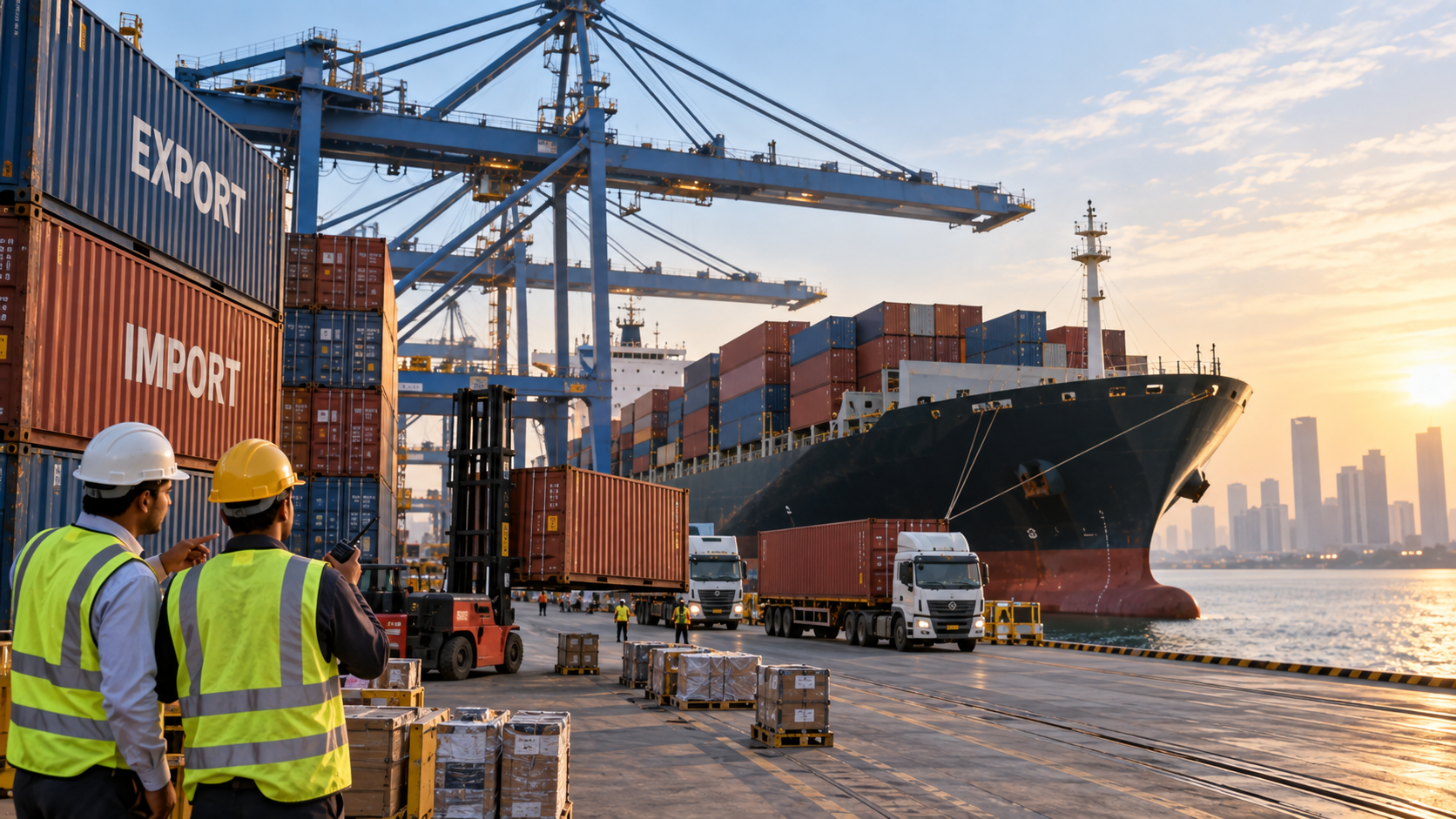
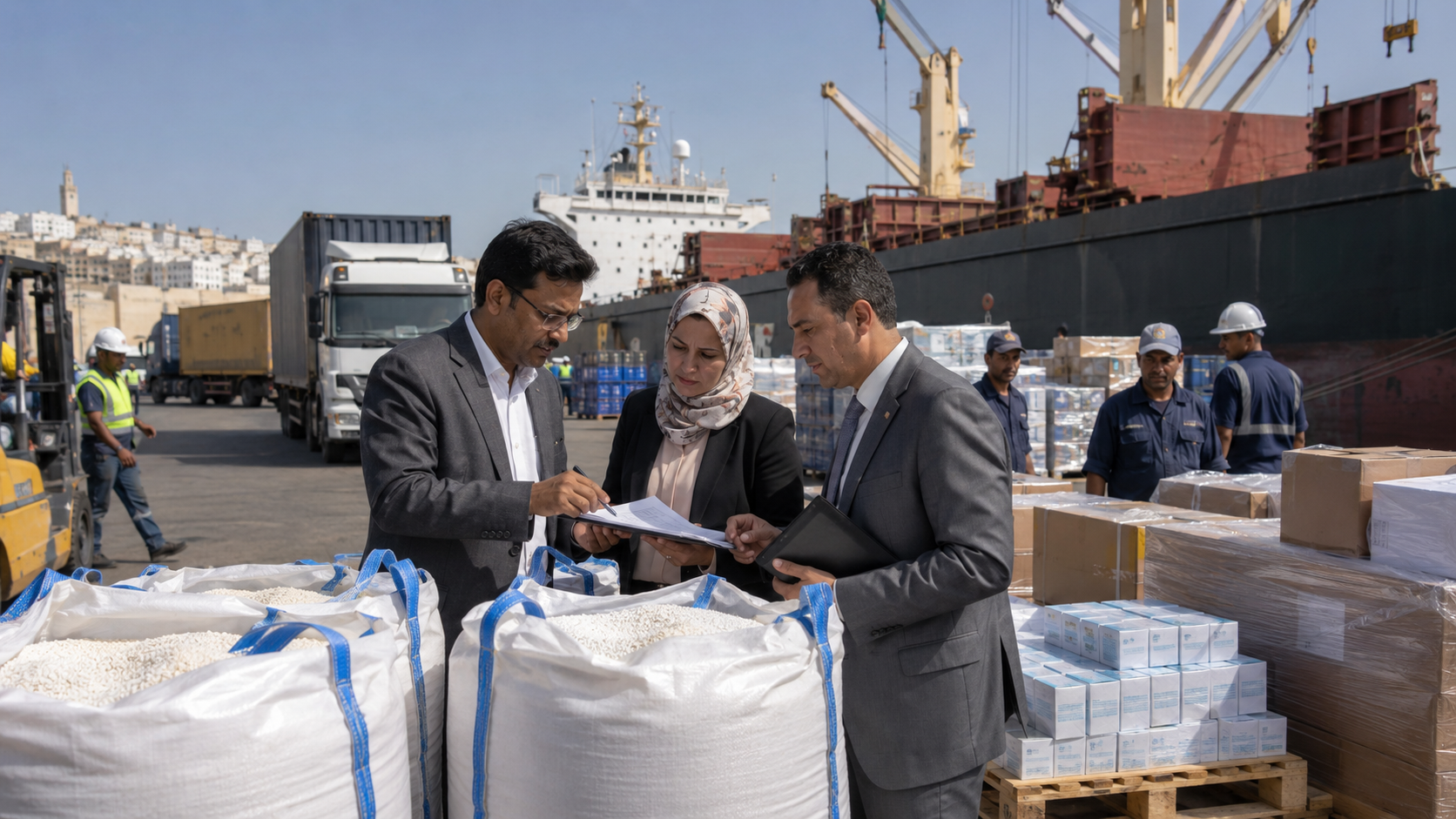
Create a highly realistic editorial international trade photograph illustrating expanding economic ties between India and Morocco. Show an authentic commercial port environment in Morocco with cargo operations actively taking place: real shipping containers, port cranes, freight trucks and a cargo vessel being loaded or unloaded in the background.
In the foreground, show a small group of Indian and Moroccan trade or logistics professionals naturally reviewing cargo documentation and inspecting a shipment together near a working port or logistics terminal. Their interaction should feel candid and practical, not like a staged diplomatic handshake.
Use visible cargo to subtly represent major areas of India-Morocco trade: sealed industrial fertiliser or phosphate bulk bags, agricultural produce crates, pharmaceutical shipping cartons and machinery components. Keep all packaging generic with no readable branding or artificial labels.
The location should feel authentically North African, with realistic Moroccan port architecture, dry warm daylight, industrial surfaces, working vehicles and ordinary port personnel in the background. Include subtle visual differences in Indian and Moroccan professional attire without using exaggerated cultural costumes.
Capture the scene like a Reuters or AFP photographer covering a real bilateral trade story: full-frame camera, 35mm lens, documentary composition, natural midday light, realistic skin texture, slightly dusty atmospheric conditions, imperfect cargo placement, authentic shadows and restrained colour grading.
Prioritise photographic realism over symbolism. Do not use floating maps, giant flags, glowing trade routes, holograms, currency symbols, artificial graphs, oversized shipping containers with INDIA or MOROCCO written on them, posed handshakes or futuristic interfaces. No company logos, no readable text, no watermark, no glossy advertisement aesthetic. Landscape 16:9 composition suitable for a professional business-news website.