Sub-headline: India aims to become a global source of skilled automotive talent as EVs, automation and advanced manufacturing reshape the industry. ASDC impacted more than 5 lakh learners in FY 2025–26.
Highlights:
- India aims to develop a globally competitive automotive workforce
- EVs, automation and Industry 4.0 are creating new skill requirements
- Industry urged to play a bigger role in designing training programmes
- ASDC impacted 5,08,173 learners during FY 2025–26
- Over 2.88 lakh apprenticeship contracts generated across 3,700 establishments
- 43 skilled Indian candidates flagged off for jobs in Romania
India should aim to become a global source of skilled automotive talent rather than limiting its workforce development efforts to domestic requirements, Union Minister for Heavy Industries H.D. Kumaraswamy said at the Automotive Skills Development Council Annual Conclave 2026 in New Delhi.
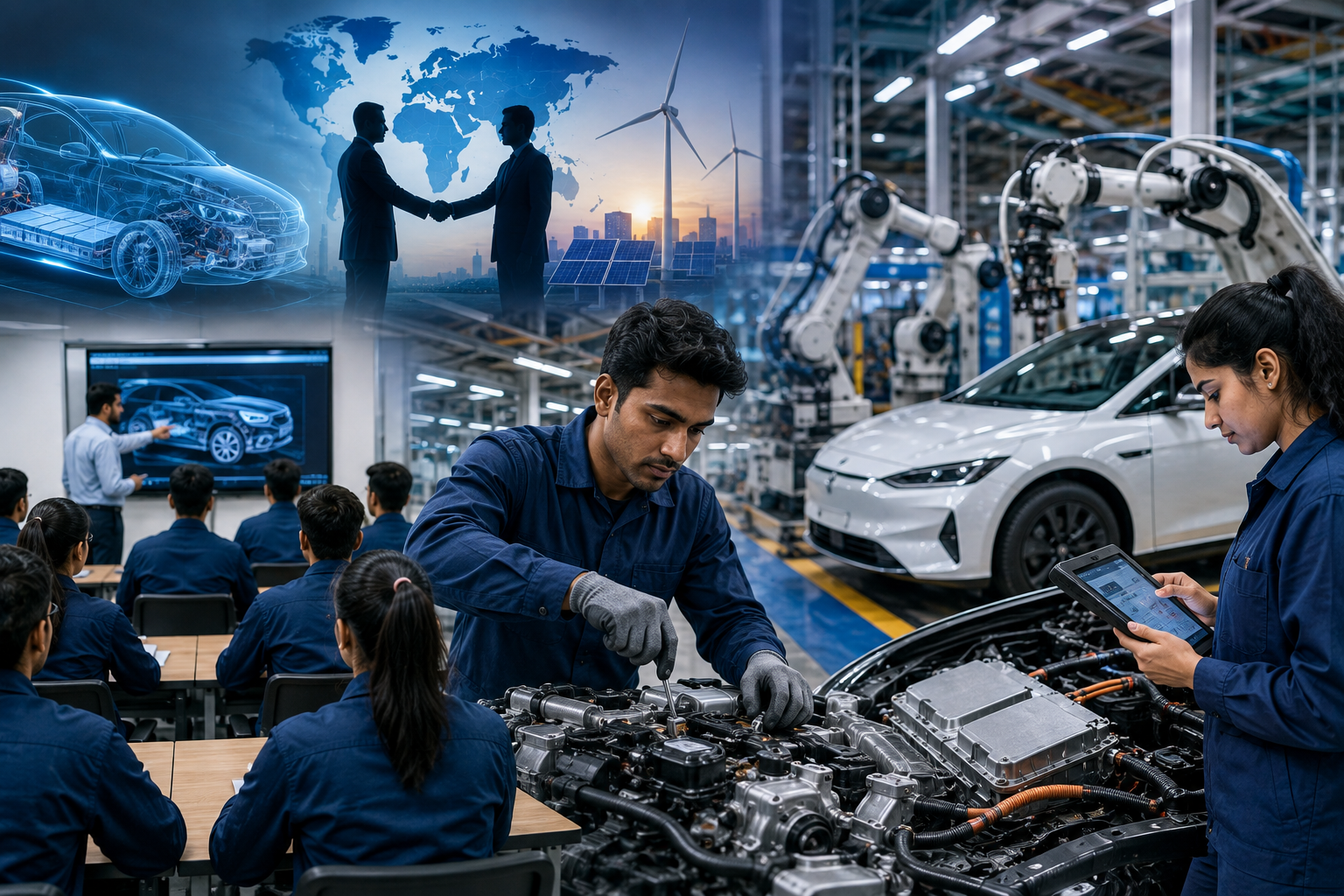
Kumaraswamy said the automotive industry is undergoing rapid transformation as electric mobility, automation, connected technologies, advanced manufacturing and Industry 4.0 become increasingly important.
These changes are creating demand for specialised skills across vehicle manufacturing, battery production, EV charging infrastructure, servicing and after-sales support.
The Minister called for greater involvement of automobile manufacturers, component makers, dealerships and other industry stakeholders in identifying future skill requirements and aligning training programmes with actual workplace needs.
He stressed that skilling programmes need strong industry participation to remain relevant as automotive technologies evolve.
Kumaraswamy also called for closer integration between education, skill development and employment. Curricula, training methodologies and assessment systems should be regularly updated in consultation with industry to reflect changing requirements.
Institutions such as ASDC, he said, have an important role in anticipating emerging skill requirements and preparing workers to meet both Indian and international standards.
Continuous upskilling and reskilling will also become increasingly important as new technologies transform traditional automotive roles and create new categories of jobs.
During the conclave, Kumaraswamy launched the ASDC Annual Report and flagged off 43 candidates who have secured placements in Romania, highlighting the potential for skilled Indian workers to access overseas employment opportunities.
ASDC significantly expanded its activities during FY 2025–26. The council impacted 5,08,173 learners and conducted 1,53,240 assessments. It also generated 2,88,756 apprenticeship contracts across approximately 3,700 establishments.
The growing adoption of EVs, automation and advanced automotive technologies is expected to generate new employment opportunities. However, Kumaraswamy said stronger coordination among government, industry, academia and skilling institutions will be necessary to ensure young people can benefit from these opportunities.
India’s large young population could become a major economic advantage if workers are equipped with relevant skills and connected to employment opportunities both within India and overseas.