Private Capital Drives Emerging Sector Growth
Key Highlights:
- India is entering a new phase of industrialisation.
- Private capital is flowing into emerging strategic sectors.
- Space economy could reach USD 40–45 billion by 2030.
- Around USD 20 billion in semiconductor investments are announced or underway.
- Data-centre capacity could reach about 10 GW.
- Electronics schemes aim to increase domestic component production.
- Solar and aerospace are emerging as major manufacturing opportunities.:
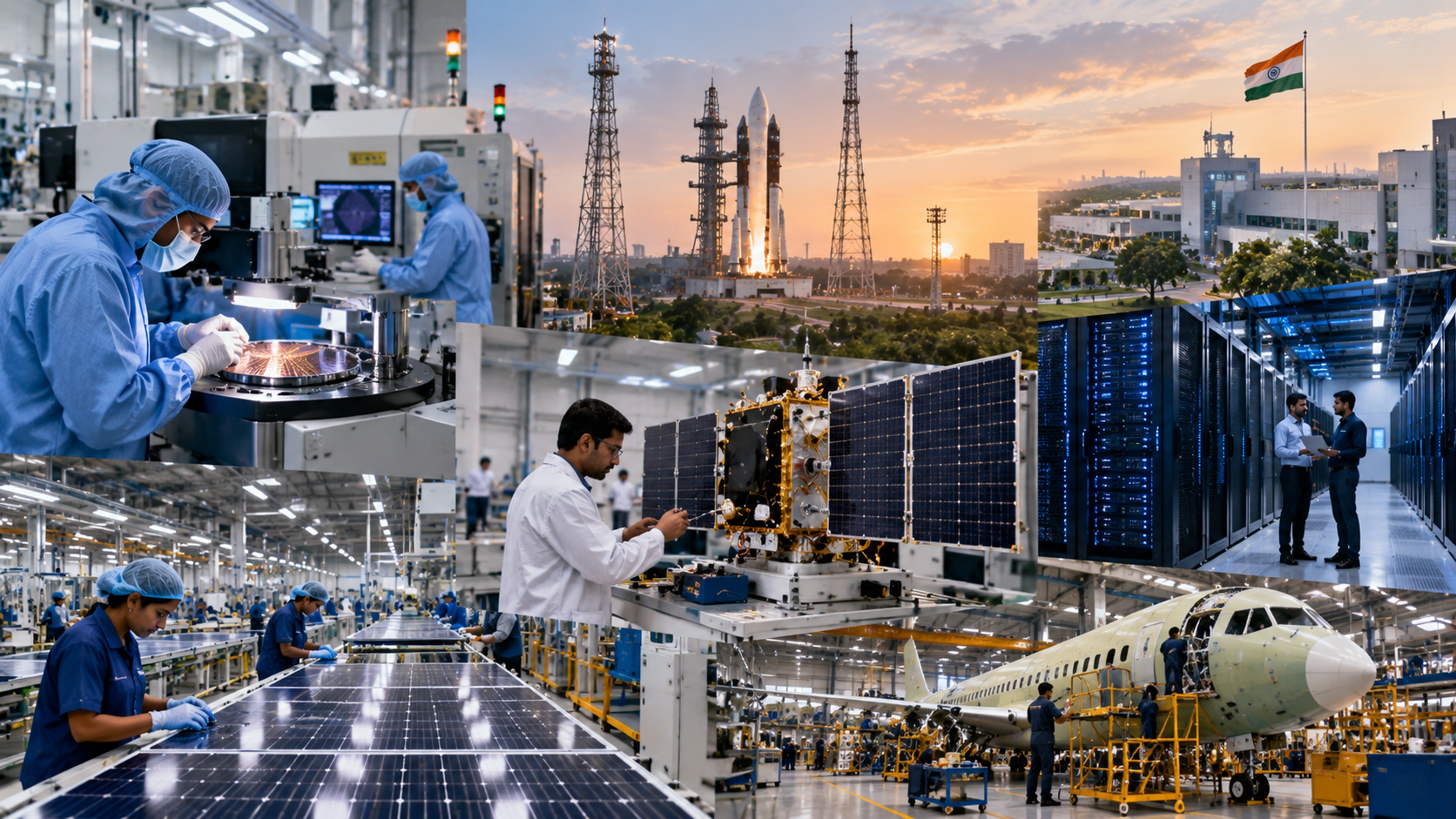
New Delhi, Sep 10 — India is entering a new phase of industrialisation as rising domestic demand and government support attract private capital into emerging sectors such as space, semiconductors, data centres, electronics and solar manufacturing, brokerage Jefferies said in a report.
The government has supported this transition through measures including opening the space sector to private companies, tax incentives for data centres, production-linked incentive schemes for semiconductors, electronics and solar, localisation requirements and GPU purchases.
According to Jefferies, the resulting investment cycle is creating opportunities beyond end-product manufacturing, extending into domestic supply chains, components, infrastructure and engineering services.
India’s space sector is one of the key areas of expansion. After opening the sector to private participation in 2020, the government is targeting an almost five-fold expansion of the space economy between 2023 and 2030 to around USD 40–45 billion. Startups including Skyroot, Pixxel, Agnikul and Digantara are expanding into launch vehicles, earth observation, propulsion and space-surveillance technologies.
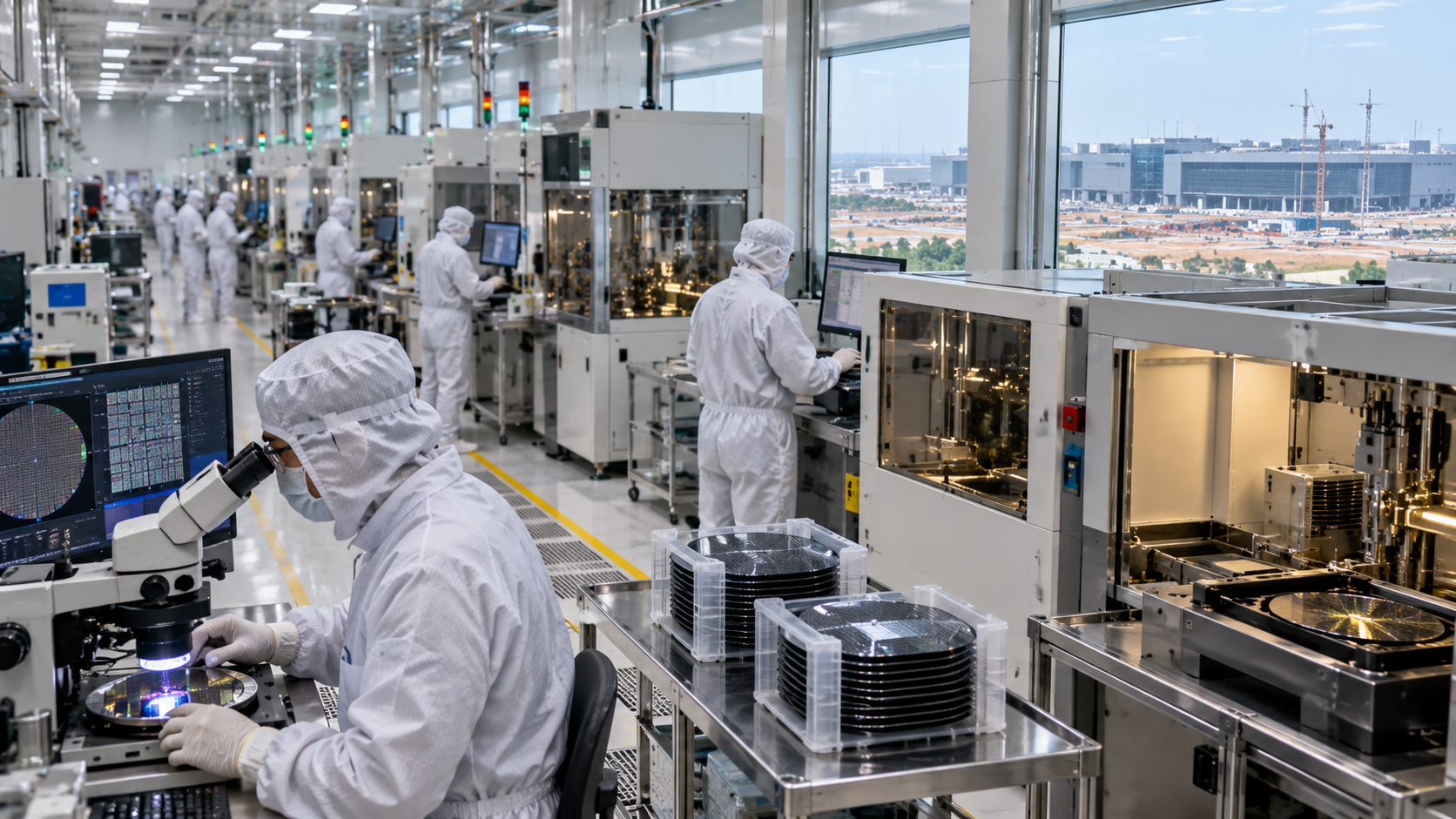
The semiconductor sector is also moving from policy planning toward execution, with around USD 20 billion of investments announced or underway. These include a chip fabrication plant and several outsourced semiconductor assembly and test projects. A new incentive plan worth about USD 13 billion is expected to further expand the ecosystem and domestic value addition.
India’s data-centre sector has also expanded rapidly, with co-location capacity increasing five-fold over the past five years to about 2 GW. Jefferies expects capacity to potentially rise another five-fold to around 10 GW over the next five years, representing roughly USD 9 billion in operator revenue and around USD 45 billion of investment across supporting infrastructure.
In electronics, schemes such as the Electronics Components Manufacturing Scheme and Mobile 2.0 are aimed at strengthening domestic value addition and reducing import dependence. The report estimates that ECMS could cover around 50 per cent of the bill of materials for mobile components within six years, compared with less than 20 per cent currently.
Solar manufacturing is another major opportunity. India has around 35 GW of operational solar-cell capacity, with another 100 GW under construction. Jefferies expects around 90 per cent of the solar manufacturing value chain to be localised by 2030.
The aerospace sector could also benefit from India’s competitive manufacturing costs and engineering talent. Boeing and Airbus already source an estimated USD 1.4–1.6 billion annually from India, while domestic companies are expanding their supply to global original-equipment manufacturers and Tier-1 suppliers.
Jefferies said the common theme across these sectors is India’s effort to move higher up global supply chains by combining domestic demand, government incentives, localisation and private investment.