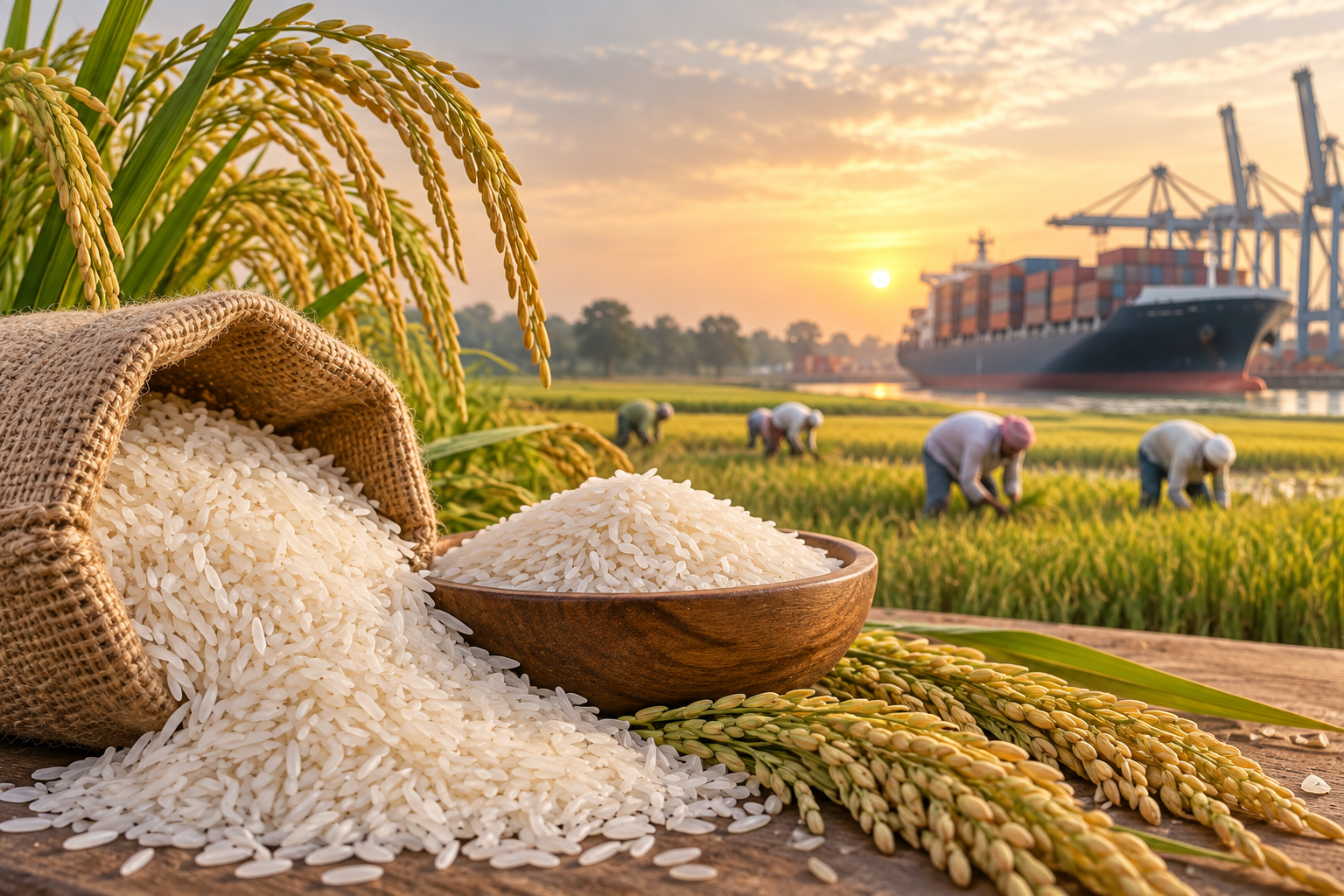
Basmati cultivation is expected to decline around 4% this year in western Uttar Pradesh and Haryana, while firm export prices could provide some support to farmers.
Highlights
- India’s basmati rice acreage is estimated to decline around 4% this year.
- The fall is expected to be mainly concentrated in western Uttar Pradesh and Haryana.
- Basmati production last year stood at around 10 million tonnes.
- Basmati acreage had already fallen 7.5% year-on-year in 2025 to 42.10 lakh acres.
New Delhi: India’s basmati rice acreage is likely to decline for the second consecutive year, even as firm global prices and export demand are expected to provide support to domestic prices.
According to industry estimates cited in the report, basmati rice production in the country is expected to fall as acreage may decline by around 4% this year, mainly in western Uttar Pradesh and Haryana.
Last year, India’s domestic basmati rice production was around 10 million tonnes. Industry sources said the acreage under basmati is likely to remain below the 24.9 lakh hectares recorded in 2025. However, the decline in area may not necessarily translate into an equivalent drop in production because yields could be higher than last year.
The report said basmati acreage had already declined 7.5% year-on-year in the 2025 kharif season, when it stood at 42.10 lakh acres. In Madhya Pradesh, the industry estimates basmati acreage at around 6–7 lakh acres this kharif season.
Despite the expected decline in acreage, the outlook for prices remains supportive. Exporters are seeking better prices from overseas buyers amid ongoing tensions in West Asia. Firm global prices could help strengthen domestic basmati prices as well.
The report noted that India exported basmati rice worth $5.67 billion in 2025-26, with average realisation of nearly $870 per tonne. During April-June of the current fiscal, exports were valued at $1.44 billion, with average realisation of about $938 per tonne, according to APEDA data cited in the report.
Prices of some basmati varieties have already started strengthening. In Karnal, Haryana, farmers have reportedly begun bringing early varieties to markets. The shorter-duration Pusa 1509 variety was recently selling at around ₹3,950 a quintal.
With lower acreage on one side and firm overseas prices on the other, export demand and crop yields are likely to be key factors determining the basmati market trend this season.