
“Agri-product storage is part of marketing strategy, not just infrastructure”

Dr. Basanta K. Sahu, Faculty, IIFT, argues that foodgrain storage should be more in the purview of the private sector, while the government should continue to play the key role and remain committed to ensuring food security. Moreover, he feels that policy must not ignore institutions and traditional means of storage at sub-nation, community and household level, which have worked well even before centralized public storage came into existence.

Dr. B K Sahu

India is one of the few countries that produces many agri-products in huge quantities (one of the largest producers in the world – either ranked 1st or second). However, for a more productive and remunerative agriculture economy, it is important to ensure higher value addition, for which proper post-harvest and storage capacities to ensure minimum wastage are essential.

Unfortunately, storage and warehousing continue to be among the major constraints in Indian agriculture. From a policy prospective, storage is often taken as an infrastructure issue, but it is largely a marketing strategy where the private sector’s role is very important. Agri-market functioning, market volatility and market clearing prices considerable depend on the nature, size and options of storage capacity available. Agri-commodities’ prices will be stable, when there is very good stock in your storage and good and dependable storage facilities are available and affordable. It has implications on food price rise, inflation and volatility issues.

The basic question is who should be taking responsibility for storage – government, private sector, farmers or someone else? If you look at the past, before the Food Corporation of India or Central Warehousing Corporation came into the picture during the 1960s, there was no centralized institutional storage facility. How was it happening then?

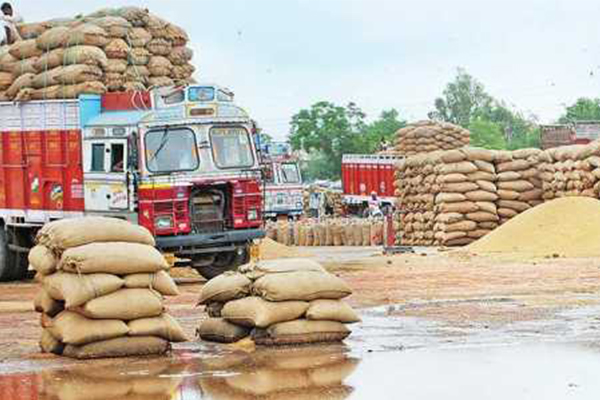
Local people, i.e. farmers, shopkeepers, agents and others had to follow their own arrangements to store agri-commodities for self-uses and commercial purposes. Local and regional-level foodgrain storage methods are still in practice and well documented. In many areas, people know foodgrain management better – which commodity requires what kind of storage, cost implications, duration of storage, etc. Though some of them are efficient and their timing also matches harvesting, procurement and selling cycles, the size and scale of operations are very small and not economical.
Foodgrain

During the five years plan period more policy focus was given on food production and centralized foodgrain storage to ensure food security and improve distribution. India has created a big buffer stock of storage – whether it is Central Warehousing Corporation or Food Corporation of India – but this approach has not proved to be very efficient for multiple reasons. However, in our public policy interventions into storage, we have ignored that.

Firstly, when FCI was set up in 1965, the objective was to store enough foodgrains to meet our huge food deficit and strengthen food distribution through public distribution system in the country. Other food policy objectives were effective price support operations for safeguarding the interests of the farmers. But even after India had attained higher degrees of self-sufficiency in food production, our approach towards storage of grains has not changed much.

The major focus of FCI is to procure foodgrains at the Minimum Support Price (MSP) designed by CACP for buffer stock and allocate foodgrains to the states at Central Issue Prices (CIP). FCI has to strictly ensure that procurement is based on storage capacity, but sometime it procures more than its capacity.

Most of the times, especially since 1997, the procurement has been much higher than the storage capacity. One of the reasons is that foodgrain storage and procurement have political implications. FCI is using short-term storage options like cover & plinth (CAP). But that can only last upto 3 months. And since there is no other provision on how to store, it becomes a problem. Use of silos by FCI has its own problems, as most of them are supplied by the private sector on rent.

When storage capacity is less than procurement, that leads to double leakage. When you procure from the farmer at MSP, it is much higher than the market price. Then you sell it to the state government at the central issue price. The net of the two is the subsidy being paid by the government. With less storage, leakage increases even further – first in terms of the wastage, and if you keep it in relatively unguarded areas, that also leads to pilferage.

The third problem comes when you store rice in a place where it will not be consumed. Again you have to transport it to another place, where it will be finally distributed and consumed. This leads to the third leakage, thereby making the entire procurement system more inefficient. Then the states will have their own storage, from where it goes through multiple levels to the final consumer. At each and every stage, there is possible leakage and it will get pronounced with more and more transportation of foodgrains under the existing practice.

The other reason we are not able to tackle the issue is because India is committed to different agreements and treaties at the international level, particularly with regard to the WTO Agreement on Agriculture (AoA). There are provisions in the WTO against trade distorting agriculture subsidies. You cannot give subsidies to your farmers, producers or those engaged in agricultural activity (production, storage or distribution); that will lead to distortions in trade in agri-commodities.

For instance, if the government procures rice and wheat at a high price (MSP) and sells in the market at a low price, that will affect rice and wheat prices elsewhere. Conversely, the government may not sell many products, which are high priced, but release them when the price is low. If more rice and wheat is released in this manner, it will further depress prices and give a wrong market signal.

However, if India spends on agriculture R&D and extension services, which will ultimately help agricultural price, production and storage, that is not objectionable. Direct farm subsidies are a problem, but one can export at world market prices or distribute it in own economy.

What is the solution?

From the supply side, farmers with no or low market options (production and storage) are at the receiving end. Current policy focus and the public centralized storage seems inadequate and inefficient. Low participation of private sector in storage activities accentuates the problem. So decentralizing agri-commodities storage is very important. In this context, the recently proposed amendment in Essential Commodity Act, APMC and other measures are welcome steps towards improving agri-storage facilities.

Given the diverse nature of agriculture production and products across the countries, the new policy measures relating to storage should be region-specific, product-specific and season-specific. The private sector should be allowed to store, while the government’s role should primarily be to the extent of ensuring food security.

Since Essential Commodities Act has been a major obstacle, the government’s initiative to amend it and exempt commodities like cereals, pulses, oilseeds, etc. will help farmers and other stakeholders. The original Act did not allow private parties, farmers, traders, etc. to store specific agri-products beyond certain limit.

Dependence on the centralize storage by FCI, CWC etc. should be reduced. Moreover, FCI is storing rice and wheat, which constitute 70% of our foodgrain. But focus is also needed on other important agricultural commodities like pulses. Policy focus should be on revival of traditional and local storage practices (village food banks, community grain storage, SHG) and encouraging new storage activities at segregate level.

Advanced storage technologies like silos are available, but again, it has limited use due to cost and availability factors. Though many large and progressive farmers prefer to sell it in the mandis, they should be incentivized and promoted for new storage practices and technology. Small and medium farmers need storage, but their nature and size of crop production, market orientation and remote location may hinder their individual participation in new storage activities. But conducting these activities in a group and at village or panchayat level with nominal storage & maintenance charges can make it success. Households in rural areas use traditional underground systems and these practices were prevalent before FCI. More policy focus on decentralized storage should be a strategy of agriculture marketing to minimize cost and leakages, expand storage capacity, smoothen supply of agri-commodities, stabilize prices and improve market functioning.


Dr. Basanta K. Sahu is currently a Faculty (Economics Area) at Indian Institute of Foreign Trade, Delhi. He has more than 20 years of professional experience in teaching, policy research, consultancy and training in economics and development policy. His past academic positions include visiting Professor, National Institute of Food Technology Entrepreneurship & Management (NIFTEM), Chair Professor, Tel Aviv University, Israel. Fellow, S. Daniel Abraham Centre for International and Regional Studies; Visiting Professor, Indian Institute of Management (Lucknow); Visiting Professor, Institute of Food Security (FCI), Sr Researcher, at NABARD; Faculty, at Sambalpur University; Research Analyst, Institute of Economic Growth

His recent research projects include household risk coping, drought policy, water, food insecurity, agriculture, trade & development, gender relations, microfinance etc. and sponsored by the World Bank, Asian Development Bank, International Rice Research Institute, ICSSR, NABARD, Govt. of India etc. Dr. Sahu has published numbers of policy research papers in several reputed referred journals and edited books. He has been actively participating in many major development policy forums in India and abroad. Dr. Sahu has been honoured/awarded by different institutions/organizations in India & abroad. He may be contacted at bksgps@gmail.com / bksahu@iift.edu

Previous Post
Next Post

Most Recent Posts

  • All Post
  • 8th Pay Commission
  • Aadhar
  • Aditya Birla Capital
  • Advertising Standards
  • Affordable Housing
  • Agriculture
  • Agriculture & Food
  • AI in Healthcare
  • AI Technology
  • Airlines
  • alcohol industry
  • Android
  • APEDA
  • Apple
  • Artificial Intelligence
  • Ashwini Vaishnaw
  • Asset Management
  • Atmanirbhar Bharat
  • Audio Devices
  • Audio Products
  • Auto Industry
  • Automobile
  • Automobiles
  • Automotive
  • Automotive Industry
  • Aviation
  • Bain Healthcare Report 2026
  • Bank
  • Banking
  • Banking Technology
  • Battery Industry
  • Beverage Industry
  • Beverages
  • Bihar
  • biotechnology
  • Bitcoin
  • BMW Group India
  • Brand Insight
  • BRICS
  • Bullion Market
  • Business
  • Business & Economy
  • Business & Trade
  • Business Leadership Post COVID-19
  • Business News
  • Business Terminology
  • Business Utilities
  • Buyback
  • Capital Goods
  • Capital Markets
  • CarsBusiness
  • CBIC
  • CCI
  • Child Investment
  • China
  • China technology news
  • Citizen Services
  • Clean Energy
  • Clean Technology
  • Cloud Computing
  • coal
  • Commerce
  • Commerce and Industry
  • Commercial Real Estate
  • Commercial Vehicles
  • Commodities
  • Communications
  • Companies
  • Competition Law
  • Compliance
  • Computer Accessories
  • connected cars
  • Consumer
  • Consumer Affairs
  • Consumer Electronics
  • Consumer Finance
  • Consumer Goods
  • Consumer Health
  • Consumer Markets
  • Consumer News
  • Consumer Protection,
  • Consumer Rights
  • Consumer Spending
  • Consumer Trends
  • Content Creation
  • Copper
  • Corporate
  • corporate affairs
  • Corporate Earnings
  • Corporate Governance
  • Corporate News
  • Corporate Social Responsibility
  • Cost of Living
  • Country
  • CRED
  • Credit Cards
  • CREDIT RATING
  • Crude Oil
  • Cryptocurrency
  • CSR
  • Culture
  • Currency
  • Customs Duty
  • Cyber Security
  • Cybersecurity
  • Dairy Industry
  • Data & Analytics
  • Defence
  • Delhi Government
  • Delhi-NCR
  • Demographics
  • Derivatives
  • DGCA
  • DGFT
  • DigiLocker
  • Digital Assets
  • Digital Economy
  • Digital Health India
  • Digital Identity
  • Digital India
  • Digital Infrastructure
  • Digital passport for robots
  • Digital Payments
  • Digital Platforms
  • digital services
  • Diplomacy
  • Dixon Technologies
  • DPIIT
  • E Commerce
  • E-commerce
  • E-Governance
  • Ease of Doing Business
  • Economic Growth
  • Economy
  • Edible Oil Industry
  • Editor Choice
  • EdTech
  • Education
  • Electric Mobility
  • Electric Vehicles
  • Electronics
  • Employment
  • ENERGY
  • Engineering
  • Entertainment
  • Environment
  • EPFO
  • Ethanol Economy
  • EV Industry
  • EV Technology
  • Exports
  • EXTER
  • Farmers
  • Fashion
  • FINANCE
  • Finance Ministry,
  • Financial Marketing
  • Financial Markets
  • Financial News
  • Financial Planning
  • Financial Results
  • Financial Services
  • Fintech
  • FnTech
  • Food & Beverage
  • Food & Beverages
  • Food Exports
  • Food Industry
  • Food Manufacturing
  • Food Processing
  • Food Regulations
  • food safety
  • Foreign Exchange
  • Foreign Investment
  • Foreign Policy
  • Foreign Trade
  • Forex Reserves
  • fssai
  • FTA
  • Fuel
  • Fuel Prices
  • Future Energy
  • Gadgets
  • Gadgets & Apps
  • Gaming
  • GDP
  • Generative AI Healthcare
  • Geopolitics
  • GI Products
  • Global Brand Alliance
  • Global Economy
  • Global Markets
  • Global Politics
  • Global Tech
  • Global Trade Policy
  • Global Trends\
  • Gold
  • Gold Market
  • Gold Prices
  • Gols & Silver
  • Government
  • Government & Policy
  • Government Affairs
  • Government Bonds
  • Government Data
  • Government Initiatives
  • Government Policy
  • Government Policy & Regulation
  • Government Scheme
  • Government Schemes
  • Government Services
  • Green Energy
  • Green Mobility
  • GroupGlobal
  • GST
  • GST Council
  • GST Counsil
  • Hair Care
  • Hardware
  • Hatchback Segment
  • Health Supplements,
  • Horticulture
  • Housing
  • HSBC
  • Human Resources
  • humanoid robot market
  • Hyundai
  • IBT Infographics
  • iinvestment
  • Imports & Exports
  • Income Tax
  • India
  • India Auto Market
  • India Business News
  • India Inc
  • India News
  • India Retail
  • India-Canada Relations
  • India-China
  • India-Japan Relations
  • India-Russia Relations
  • India-South Korea Relations
  • India-US Relations
  • Indian Economy
  • Indian Navy
  • Industrial Pollution
  • Inflation
  • Infra
  • Infrastructure
  • Innovation
  • Instagram
  • Insurance
  • international
  • International Affairs
  • International Cooperation
  • International Relations
  • International Trade
  • Internet & Connectivity
  • Internet Policy
  • Internet Regulation
  • Interview
  • Investing
  • Investment News
  • Investments
  • iPhone News
  • IPO
  • IT Industry
  • Jewellery
  • Jio Platforms
  • JioBlackRock
  • Jobs & Careers
  • Joint Ventures
  • Kim Kardashian
  • Labour
  • Latest
  • Launches
  • Leadership
  • Leaderspeak
  • Lending
  • Lifestyle
  • Lifestyle Tech
  • List
  • Loans & Credit
  • Local News
  • Logistics
  • LPG
  • Luxury Cars
  • Machinery
  • Macroeconomics
  • Macroeconomy
  • maharashtra
  • Maharashtra News
  • Make in India
  • Makhana
  • Manufacturing
  • Market Outlook
  • Markets
  • Maruti Suzuki
  • Mergers & Acquisitions
  • Meta
  • Microsoft
  • Middle East
  • Mobile Apps
  • Mobile Industry
  • Mobile Launch
  • Mobility
  • Monetary Policy
  • Monsoon
  • MoSPI
  • MSME
  • Mutual Funds
  • Nano Tech
  • National
  • National news
  • NEET 2026
  • NewsElectric
  • NewsTata
  • NPCI
  • NPS Vatsalya
  • Office Market
  • Oil & Gas
  • Oil and Gas
  • Others
  • OTT
  • Packaged Drinking Water
  • Packaged Foods
  • Packaging Industry
  • Packaging Innovation
  • Passenger Vehicles
  • Paytm
  • Pension & Retirement
  • Pensions
  • Personal Care
  • Personal Finance
  • Perspectives
  • Petroleum
  • PFRDA
  • Pharmaceuticals
  • PM Modi
  • PMAY-G
  • PMAY-U
  • PMAY,
  • PMI
  • policy
  • Population
  • PORTS
  • Positive News
  • PPF
  • Precious Metals
  • Pricing
  • Product Labeling
  • Product Labelling
  • Product Launch
  • Property Market
  • PSU
  • PSU Banks
  • Public Health
  • Public Policy
  • Public Safety
  • Public Sector
  • Public Services
  • Public Welfare
  • Quarterly Results
  • Railways
  • Rajasthan
  • Raksha Bandhan
  • Raksha Bandhan Gifts
  • Rare Earths
  • RBI
  • Real Estate & Realty Sector
  • Recycling
  • Regulation
  • Regulatory Action
  • Regulatory Affairs
  • Regulatory Updates
  • REIT
  • Reliance Industries
  • Renewable Energy
  • RERA
  • Research
  • Retail
  • Retirement Planning
  • Road Infrastructure
  • Robotics & Automation
  • robotics standards
  • Rupee
  • Rural Development
  • Rural Housing
  • SAIL
  • Salaries
  • Samsung
  • Savings
  • Science & Technology
  • Sebi
  • Security
  • Semiconductor
  • Services Sector,
  • SHIPPING
  • Silver Prices
  • Skill Development
  • Skills Development
  • Small Business
  • Smart Devices
  • Smart Home
  • Smart Mobility
  • Smartphones
  • Social Impact
  • Social Media
  • Society
  • Software Development
  • Solar Energy
  • Space Technology
  • Startups
  • Statistics
  • Steel Industry
  • Stock Market
  • stocks
  • streaming
  • Sugar Industry
  • Sukanya Samriddhi Yojana
  • Sustainability
  • SUV
  • Tamil Nadu Pollution Board
  • Tariffs
  • Tariffs & Duties
  • Tata Group
  • Tata Motors
  • Tata Sons
  • Tax Planning
  • Taxation
  • Tech
  • Tech Branding
  • Technology
  • Telecom & Technology
  • Telecom Industry
  • Top Story
  • Tourism
  • Trade
  • Trade Agreement
  • Trade Basket
  • Trade Partner
  • Trade Policy,
  • Transportation
  • Travel
  • Trending
  • Two-Wheelers
  • UIDAI
  • UPI
  • Urban Development
  • US-Iran Conflict Economic Impact
  • US–India Relations
  • Uttar Pradesh
  • VehiclesLuxury
  • vivo
  • Wastewater Management
  • Water Quality,
  • Wealth Management
  • Wearables
  • Wellness
  • WhatsApp
  • Wheat
  • Workplace
  • World
  • World News
  • Worldview
  • Yamaha
  • zLead Slider
    •   Back
    • Healthcare
    • Auto
    • Fmcg
    • Hospitality
    •   Back
    • Cash Crop
    • Organic
    • New Era Agri
    • Processed Food
    •   Back
    • Construction
    • Power
    • Mining
    • Telecom
    •   Back
    • ENERGY
    •   Back
    • Export/Import
    • Trade Deal
    • Trade Fair
    •   Back
    • Policies
    • Industry
    • Finance
    •   Back
    • Others technology
    • Mobile phone
    • Gadgets
    •   Back
    • Manufacturing
    • Services
    • Startup

India Business & Trade is a national media platform decoding the ideas, decisions and shifts shaping India’s growth story—across plicy, business, global commerce and a rapidly evolving marketplace.

Reach Us

India Business & Trade
M-62, Saket, New Delhi-110064, India

Subscribe To Newsletter

Stay ahead in the dynamic world of trade and commerce with India Business & Trade’s weekly newsletter.

Copyright © 2026 India Business & Trade. All Rights Reserved


Fatal error: Uncaught TypeError: Unsupported operand types: string * int in /var/www/sites/indiabusinesstrade.in/wp-content/plugins/royal-elementor-addons/admin/includes/wpr-templates-modal-popups.php:192 Stack trace: #0 /var/www/sites/indiabusinesstrade.in/wp-content/plugins/royal-elementor-addons/admin/includes/wpr-templates-modal-popups.php(128): WprAddons\Admin\Includes\WPR_Templates_Modal_Popups::get_template_settings() #1 /var/www/sites/indiabusinesstrade.in/wp-content/plugins/royal-elementor-addons/admin/includes/wpr-templates-modal-popups.php(106): WprAddons\Admin\Includes\WPR_Templates_Modal_Popups::render_popup_content() #2 /var/www/sites/indiabusinesstrade.in/wp-content/plugins/royal-elementor-addons/admin/includes/wpr-templates-modal-popups.php(64): WprAddons\Admin\Includes\WPR_Templates_Modal_Popups::display_popups_by_location() #3 /var/www/sites/indiabusinesstrade.in/wp-includes/class-wp-hook.php(341): WprAddons\Admin\Includes\WPR_Templates_Modal_Popups->render_popups() #4 /var/www/sites/indiabusinesstrade.in/wp-includes/class-wp-hook.php(365): WP_Hook->apply_filters() #5 /var/www/sites/indiabusinesstrade.in/wp-includes/plugin.php(522): WP_Hook->do_action() #6 /var/www/sites/indiabusinesstrade.in/wp-includes/general-template.php(3224): do_action() #7 /var/www/sites/indiabusinesstrade.in/wp-content/plugins/royal-elementor-addons/admin/templates/wpr-canvas.php(64): wp_footer() #8 /var/www/sites/indiabusinesstrade.in/wp-includes/template-loader.php(132): include('...') #9 /var/www/sites/indiabusinesstrade.in/wp-blog-header.php(19): require_once('...') #10 /var/www/sites/indiabusinesstrade.in/index.php(17): require('...') #11 {main} thrown in /var/www/sites/indiabusinesstrade.in/wp-content/plugins/royal-elementor-addons/admin/includes/wpr-templates-modal-popups.php on line 192