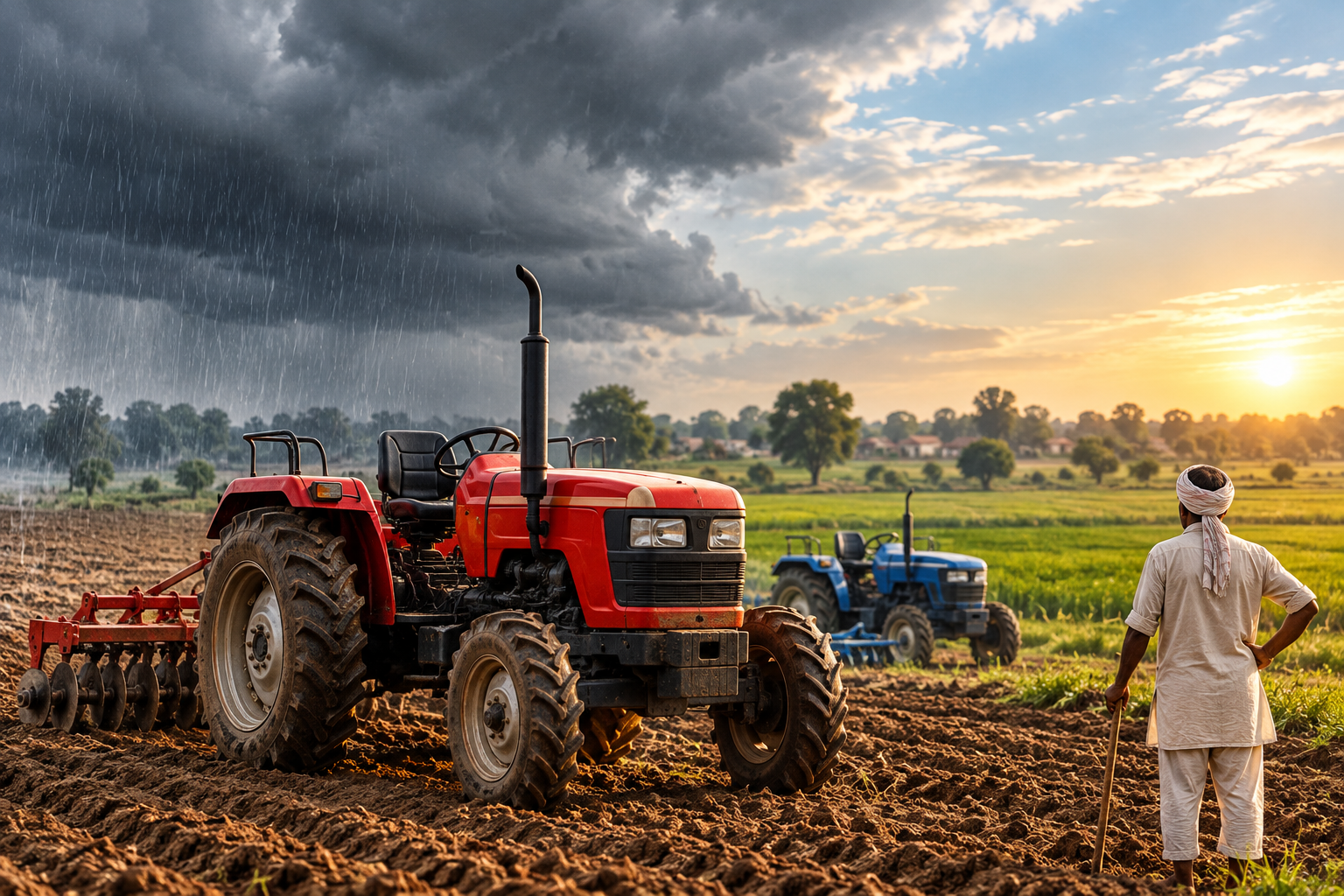
Tractor wholesale volume growth is expected to moderate sharply in FY27 after a strong performance last year. Uneven monsoon rainfall and pressure on rural incomes could weigh on demand.
Highlights
- Tractor wholesale volumes are projected to grow only 1-4% in FY27, according to Icra.
- This compares with a strong 23.5% YoY expansion in FY26.
- Wholesale volumes rose 6.5% YoY in August, while retail registrations increased just 0.8%.
- Uneven and deficient monsoon rainfall could weigh on agricultural activity and rural incomes.
India’s tractor industry could witness a sharp moderation in growth during FY27 as an uneven monsoon, pressure on rural incomes and a high base from the previous year weigh on demand.
According to ratings agency Icra, tractor wholesale volumes are projected to grow by only 1-4% in FY27, significantly lower than the 23.5% year-on-year expansion recorded in FY26.
The slowdown is expected to be driven by a high base and downside risks arising from an uneven and deficient monsoon, which could affect agricultural activity and rural incomes.
The impact is already becoming visible in recent industry data. Tractor wholesale volumes increased 6.5% year-on-year in August, while retail registrations grew by just 0.8%, indicating moderation in end-user demand.
Icra said retail demand is beginning to reflect an unfavourable base after nearly 18 months of strong double-digit growth. In addition, rainfall stress in some regions is adding to the pressure on the farm sector.
Monsoon performance remains one of the key factors determining tractor demand in India because it influences crop production, farm incomes and farmers’ ability to invest in tractors and other agricultural machinery.
However, tractor manufacturers are expected to remain relatively resilient despite the anticipated slowdown in volumes. Icra expects operating margins to remain stable, supported by operating leverage and relatively stable raw-material procurement costs.
Rural cash flows, particularly those linked to agricultural activity, will remain under pressure if monsoon conditions continue to affect crop prospects. This could delay replacement demand for tractors and other farm machinery during the remainder of FY27.
The industry’s performance in the coming months will therefore depend heavily on rainfall distribution, kharif crop output, rural income trends and the pace of recovery in retail tractor demand.