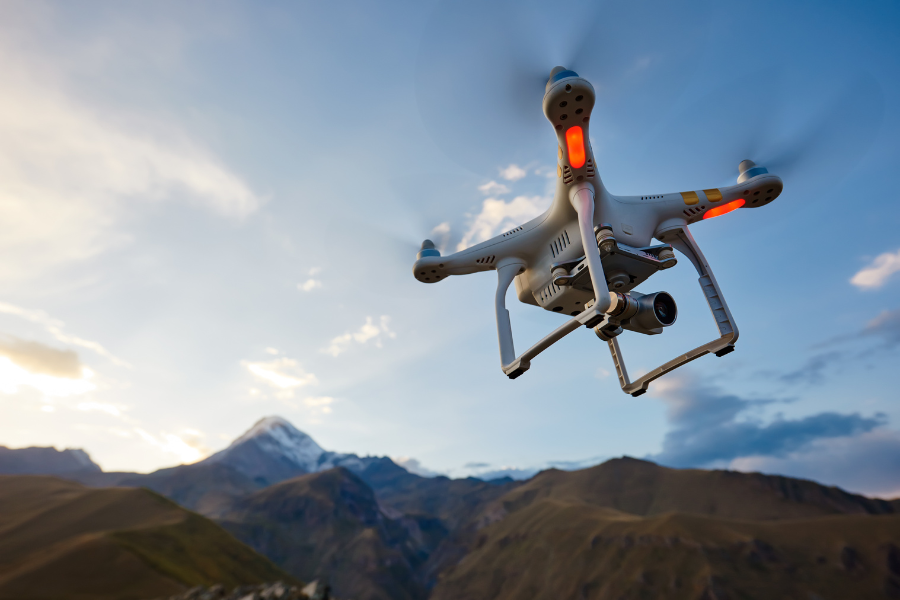
How drones are transforming Indian farming

Agricultural drones are transforming Indian farming by delivering real-time, high-resolution data on crop health and soil conditions. This technology enhances productivity, promotes sustainable practices, and is supported by government initiatives like the Sub-Mission on Agricultural Mechanization and the NAMO Drone Didi scheme, which provide financial assistance and training to integrate drones into farming effectively. With the Indian drone market expected to grow significantly, these advancements promise to revolutionize crop management and boost agricultural efficiency.

drones_tpci

Agriculture plays a crucial role in India’s economy, providing the main source of income for many rural families. Despite significant growth in the farming sector, Indian agriculture has historically been slow to adopt modern technology. As a result, crop failures caused by unpredictable weather and pest outbreaks have often affected both the quality and quantity of the produce. Traditionally, Indian farmers have relied on monsoon rains for irrigation and used conventional farming methods, which can sometimes limit their productivity.

In recent years, agricultural drones have gained popularity, providing farmers with numerous benefits such as increased efficiency, higher crop yields, reduced farming costs, and enhanced precision. These Agri-Drones are becoming increasingly vital in India’s agriculture sector, with over 220 drone startups active as of February 2022. 

According to Mr. Prem Kumar Vislawath, Founder and CEO of Marut Drones, drones are tackling critical issues such as labor shortages and health risks by drastically cutting water usage—from 100-200 liters per acre to just 8-10 liters.

“Drone technology in agriculture is in its nascent phase, much like how tractors transformed farming two decades ago. Today’s drones are tackling critical issues such as labor shortages and health risks by drastically cutting water usage—from 100-200 liters per acre to just 8-10 liters. This remarkable efficiency is making farming more accessible and attractive, drawing people back into agriculture. Furthermore, educated rural youth, who might have otherwise migrated to cities, are now staying in their villages and earning Rs 50,000 to 75,000 a month operating drones. This shift is not only revitalizing rural employment but also helping to sustain local economies.”

Utilizing Drones for Crop Monitoring

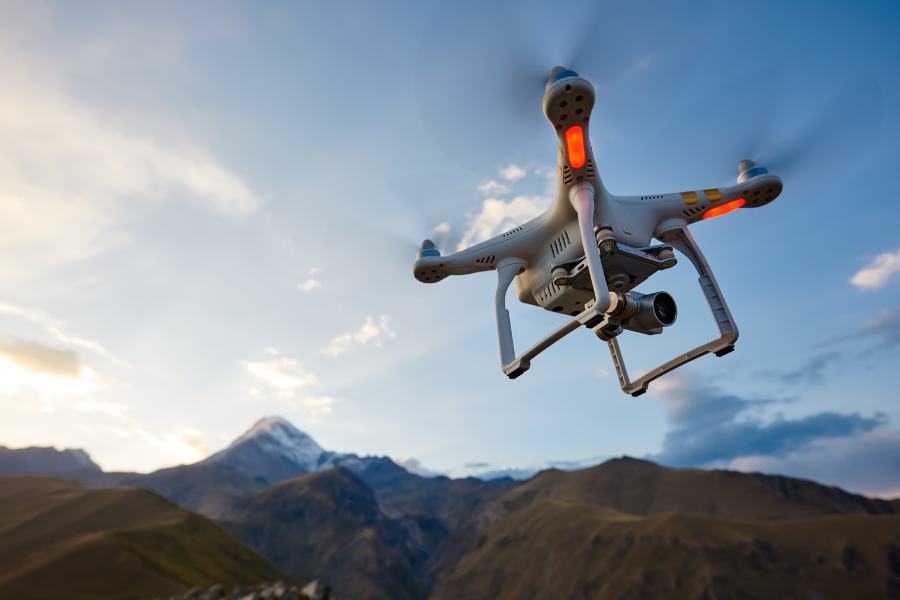
Drones, also referred to as unmanned aerial vehicles (UAVs) or micro aerial vehicles (MAVs), were initially designed for long-distance surveillance and weapon deployment. These drones are capable of flying over vast areas, navigating through confined spaces, and operating autonomously without a pilot. Equipped with various sensors, they can collect data from multiple angles and sustain this process for extended durations.

In recent times, Drones have moved from their traditional roles into commercial sectors, especially in agriculture. 

Agricultural drones offer real-time images and sensor data from farm fields that are difficult to reach on foot or with traditional vehicles. This makes them a highly cost-effective and efficient method for regular crop monitoring. The technology allows farmers to promptly identify and address issues, optimizing crop conditions by applying fertilizers or insecticides as needed. 

Drone technology is thereby changing the way farmers monitor their crops. Being equipped with advanced cameras and sensors, drones can fly over fields, providing detailed insights into crop health and development. This early detection of pests and diseases helps farmers take prompt action to protect their crops and enhance yields. Agri-drones can:

  • gather data on soil conditions, water levels, and other key factors, giving farmers a thorough overview of their fields;
  • they aid in resource optimization by giving farmers valuable insights into their crops’ specific needs;
  • whether it is water, fertilizers, or pesticides, the data captured by drones enables precise and efficient application, reducing waste and minimizing the environmental impact of excessive input use.

Distinct types of agri-drones that are presently being used include: 

  1. Fixed-Wing Drones: Fixed-wing drones, resembling miniature airplanes, are renowned for their endurance and ability to cover vast areas. These drones are particularly well-suited for large-scale farms, as they can survey extensive fields in a single flight. Their longer flight times and systematic coverage make them ideal for crop monitoring.
  2. Multirotor Drones: Multirotor drones, equipped with multiple rotors, offer agility and versatility, making them ideal for smaller farms and irregularly shaped fields. These drones excel in close-range crop monitoring, capturing detailed images, and data with precision.
  3. Hybrid Drones: Hybrid drones merge the attributes of fixed-wing and multirotor designs, providing the convenience of vertical take-off and landing (VTOL) combined with the endurance of fixed-wing drones. This adaptability makes them suitable for various farm sizes and offers a balanced approach to crop monitoring.

Government is actively promoting the use of drones in agriculture

The use of drones in agriculture has launched a new era of precision farming, with crop monitoring at the forefront. These drones or UAVs have become indispensable tools for farmers aiming to monitor their crops with greater efficiency and accuracy. 

Recognizing the importance of unmanned aerial vehicles (UAVs), the Indian government has launched many initiatives to promote the use of drones for precision farming, crop monitoring, and input management. With these initiatives, the Government seeks to integrate advanced technology, increase efficiency, improve crop yields, and lower operational costs. Key schemes introduced towards supporting this effort include Sub-Mission on Agricultural Mechanization (SMAM), and Namo Drone Didi. 

Under the Sub-Mission on Agricultural Mechanization (SMAM)-

  • Financial assistance covering 100% of the drone’s cost, up to a maximum of Rs. 10 lakhs per drone, is provided for its purchase and demonstration on farmers’ fields by the institutes under Indian Council of Agricultural Research (ICAR), Farm Machinery Training & Testing Institutes, Krishi Vigyan Kendras (KVKs), State Agriculture Universities (SAUs), State and other Central Government Agricultural Institutions/Departments, and Public Sector Undertakings (PSUs) engaged in agricultural activities. 
  • Farmers Producers Organizations (FPOs) receive grants covering up to 75% of the cost of Kisan Drones for demonstrations on farmers’ fields. 
  • Implementing agencies that choose to hire drones for demonstrations from Custom Hiring Centres (CHCs), Hi-tech Hubs, drone manufacturers, and start-ups are provided with a contingency expenditure of Rs. 6000 per hectare. For those agencies that purchase drones for demonstrations, the contingent expenditure is capped at Rs. 3000 per hectare.
  • To make drone services available for rent, financial assistance of 40% (up to Rs. 4 lakhs) is provided to Custom Hiring Centres (CHCs) under Cooperative Societies, FPOs, and rural entrepreneurs. 
  • Agriculture graduates establishing CHCs can receive 50% assistance, up to Rs. 5 lakhs per drone. 
  • For individual ownership, Small and Marginal, SC/ST, Women, and North Eastern farmers are eligible for 50% assistance (up to Rs. 5 lakhs), while other farmers receive 40% (up to Rs. 4 lakhs).

An amount of Rs. 141.39 crores has been allocated to promote Kisan Drones. This includes Rs. 52.50 crores granted to the ICAR for the purchase of drones and the organization of demonstrations on farmers’ fields through 100 KVKs, 75 ICAR institutions, and 25 SAUs. 

Funds have also been provided to State Governments to supply 461 Kisan Drones to farmers at a subsidized rate and to establish 1,585 Custom Hiring Centres (CHCs) for drone services. 

Nationwide, 193 ICAR institutions have procured 263 Agri-Drones, and 260 personnel have completed Drone Pilot Training. To raise awareness about the benefits of drones in agriculture, these institutions have conducted 15,075 drone demonstrations, covering 16,471 hectares, focusing on the application of nutrients, fertilizers, and chemicals for insect and pest control, following Standard Operating Procedures (SOPs).

Recently, the Government has also introduced the “NAMO DRONE DIDI” Central Sector Scheme, with an allocation of Rs. 1,261 crores, to provide drones to 15,000 Women Self Help Groups (SHGs). The scheme will enable these SHGs to offer rental drone services to farmers for agricultural tasks such as applying fertilizers and pesticides.

Initially, 500 drones will be acquired by Lead Fertilizer Companies (LFCs) in 2023-24 for distribution to selected SHGs. The remaining 14,500 drones will be distributed during 2024-25 and 2025-26. Women SHGs will receive 80% Central Financial Assistance, up to Rs. 8 lakhs per drone, for purchasing the drones. The Cluster Level Federations (CLFs) of SHGs can secure the remaining amount through loans under the National Agriculture Infra Financing Facility (AIF), with a 3% interest subsidy on these loans. 

The scheme aims to bring advanced technology into agriculture, enhancing efficiency, increasing crop yields, and reducing operational costs for farmers, while also providing SHGs with sustainable business opportunities and an additional income of at least Rs. 1 lakh per year.

The central government has also launched the ‘Digital Sky Platform’. It is an online platform hosted by the Directorate General of Civil Aviation (DGCA) for various activities related to the management of unmanned aircraft system activities in India. Drone startups in the country have leveraged this platform to advance their technological capabilities.

The government is boosting the drone industry through initiatives such as the PLI scheme, which encourages self-reliance and innovation. The Drone Shakti Scheme supports startups, while streamlined regulations under the Drone Rules, 2021 simplify processes. Additionally, skill development programs are training farmers to effectively use drones.

Challenges and Future Prospects

Despite several benefits, the adoption of drone technology in crop monitoring faces certain challenges such as need for technical expertise, high initial costs and regulatory constraints (the use of drones in agriculture is governed by region-specific regulations, including airspace restrictions, flight permits, and data privacy).

However, with technological advancements making drones more affordable and increasing government support, these barriers are likely to diminish. As per industry estimates, the Indian agricultural drone market is anticipated to grow at a 38.5% CAGR, reaching a value of US$ 121.43 million by 2030. That said, the future of drone technology in Indian agriculture looks promising, with the potential to significantly enhance crop management practices and contribute to more sustainable farming.

Drones are revolutionizing crop monitoring and management in India by providing detailed, real-time data and enabling more precise interventions. As technology continues to evolve, it holds the promise of transforming agricultural practices, improving productivity, and supporting sustainable farming in the country.


Previous Post
Next Post

Most Recent Posts

  • All Post
  • 8th Pay Commission
  • Aadhar
  • Aditya Birla Capital
  • Advertising Standards
  • Affordable Housing
  • Agriculture
  • Agriculture & Food
  • AI in Healthcare
  • AI Technology
  • Airlines
  • alcohol industry
  • Android
  • APEDA
  • Apple
  • Artificial Intelligence
  • Ashwini Vaishnaw
  • Asset Management
  • Atmanirbhar Bharat
  • Audio Devices
  • Audio Products
  • Auto Industry
  • Automobile
  • Automobiles
  • Automotive
  • Automotive Industry
  • Aviation
  • Bain Healthcare Report 2026
  • Bank
  • Banking
  • Banking Technology
  • Battery Industry
  • Beverage Industry
  • Beverages
  • Bihar
  • biotechnology
  • Bitcoin
  • BMW Group India
  • Brand Insight
  • BRICS
  • Bullion Market
  • Business
  • Business & Economy
  • Business & Trade
  • Business Leadership Post COVID-19
  • Business News
  • Business Terminology
  • Business Utilities
  • Buyback
  • Capital Goods
  • Capital Markets
  • CarsBusiness
  • CBIC
  • CCI
  • Child Investment
  • China
  • China technology news
  • Citizen Services
  • Clean Energy
  • Clean Technology
  • Cloud Computing
  • coal
  • Commerce
  • Commerce and Industry
  • Commercial Real Estate
  • Commercial Vehicles
  • Commodities
  • Communications
  • Companies
  • Competition Law
  • Compliance
  • Computer Accessories
  • connected cars
  • Consumer Affairs
  • Consumer Electronics
  • Consumer Finance
  • Consumer Goods
  • Consumer Health
  • Consumer Markets
  • Consumer News
  • Consumer Protection,
  • Consumer Rights
  • Consumer Spending
  • Consumer Trends
  • Content Creation
  • Copper
  • Corporate
  • corporate affairs
  • Corporate Earnings
  • Corporate Governance
  • Corporate News
  • Corporate Social Responsibility
  • Cost of Living
  • Country
  • CRED
  • Credit Cards
  • CREDIT RATING
  • Crude Oil
  • Cryptocurrency
  • CSR
  • Culture
  • Currency
  • Customs Duty
  • Cyber Security
  • Cybersecurity
  • Dairy Industry
  • Data & Analytics
  • Defence
  • Delhi Government
  • Delhi-NCR
  • Demographics
  • Derivatives
  • DGCA
  • DGFT
  • DigiLocker
  • Digital Assets
  • Digital Economy
  • Digital Health India
  • Digital Identity
  • Digital India
  • Digital Infrastructure
  • Digital passport for robots
  • Digital Payments
  • Digital Platforms
  • digital services
  • Diplomacy
  • Dixon Technologies
  • DPIIT
  • E Commerce
  • E-commerce
  • E-Governance
  • Ease of Doing Business
  • Economic Growth
  • Economy
  • Edible Oil Industry
  • Editor Choice
  • EdTech
  • Education
  • Electric Mobility
  • Electric Vehicles
  • Electronics
  • Employment
  • ENERGY
  • Engineering
  • Entertainment
  • Environment
  • EPFO
  • Ethanol Economy
  • EV Industry
  • EV Technology
  • Exports
  • EXTER
  • Farmers
  • Fashion
  • FINANCE
  • Finance Ministry,
  • Financial Marketing
  • Financial Markets
  • Financial News
  • Financial Planning
  • Financial Results
  • Financial Services
  • Fintech
  • FnTech
  • Food & Beverage
  • Food & Beverages
  • Food Exports
  • Food Industry
  • Food Manufacturing
  • Food Processing
  • Food Regulations
  • food safety
  • Foreign Exchange
  • Foreign Investment
  • Foreign Policy
  • Foreign Trade
  • Forex Reserves
  • fssai
  • FTA
  • Fuel
  • Fuel Prices
  • Future Energy
  • Gadgets
  • Gadgets & Apps
  • Gaming
  • GDP
  • Generative AI Healthcare
  • Geopolitics
  • GI Products
  • Global Brand Alliance
  • Global Economy
  • Global Markets
  • Global Politics
  • Global Tech
  • Global Trade Policy
  • Global Trends\
  • Gold
  • Gold Market
  • Gold Prices
  • Gols & Silver
  • Government
  • Government & Policy
  • Government Affairs
  • Government Bonds
  • Government Data
  • Government Initiatives
  • Government Policy
  • Government Policy & Regulation
  • Government Scheme
  • Government Schemes
  • Government Services
  • Green Energy
  • Green Mobility
  • GroupGlobal
  • GST
  • GST Council
  • GST Counsil
  • Hair Care
  • Hardware
  • Hatchback Segment
  • Health Supplements,
  • Horticulture
  • Housing
  • HSBC
  • Human Resources
  • humanoid robot market
  • Hyundai
  • IBT Infographics
  • iinvestment
  • Imports & Exports
  • Income Tax
  • India
  • India Auto Market
  • India Business News
  • India Inc
  • India News
  • India Retail
  • India-Canada Relations
  • India-China
  • India-Japan Relations
  • India-Russia Relations
  • India-South Korea Relations
  • India-US Relations
  • Indian Economy
  • Indian Navy
  • Industrial Pollution
  • Inflation
  • Infra
  • Infrastructure
  • Innovation
  • Instagram
  • Insurance
  • international
  • International Affairs
  • International Cooperation
  • International Relations
  • International Trade
  • Internet & Connectivity
  • Internet Policy
  • Internet Regulation
  • Interview
  • Investing
  • Investment News
  • Investments
  • iPhone News
  • IPO
  • IT Industry
  • Jewellery
  • Jio Platforms
  • JioBlackRock
  • Jobs & Careers
  • Joint Ventures
  • Kim Kardashian
  • Labour
  • Latest
  • Launches
  • Leadership
  • Leaderspeak
  • Lending
  • Lifestyle
  • Lifestyle Tech
  • List
  • Loans & Credit
  • Local News
  • Logistics
  • LPG
  • Luxury Cars
  • Machinery
  • Macroeconomics
  • Macroeconomy
  • maharashtra
  • Maharashtra News
  • Make in India
  • Makhana
  • Managed Workspaces
  • Manufacturing
  • Market Outlook
  • Markets
  • Maruti Suzuki
  • Mergers & Acquisitions
  • Meta
  • Microsoft
  • Middle East
  • Mobile Apps
  • Mobile Industry
  • Mobile Launch
  • Mobility
  • Monetary Policy
  • Monsoon
  • MoSPI
  • MSME
  • Mutual Funds
  • Nano Tech
  • National
  • National news
  • NEET 2026
  • NewsElectric
  • NewsTata
  • NPCI
  • NPS Vatsalya
  • Office Market
  • Oil & Gas
  • Oil and Gas
  • Others
  • OTT
  • Packaged Drinking Water
  • Packaged Foods
  • Packaging Industry
  • Packaging Innovation
  • Passenger Vehicles
  • Paytm
  • Pension & Retirement
  • Pensions
  • Personal Care
  • Personal Finance
  • Perspectives
  • Petroleum
  • PFRDA
  • Pharmaceuticals
  • PM Modi
  • PMAY-G
  • PMAY-U
  • PMAY,
  • PMI
  • policy
  • Population
  • PORTS
  • Positive News
  • PPF
  • Precious Metals
  • Pricing
  • Product Labeling
  • Product Labelling
  • Product Launch
  • Property Market
  • PSU
  • PSU Banks
  • Public Health
  • Public Policy
  • Public Safety
  • Public Sector
  • Public Services
  • Public Welfare
  • Quarterly Results
  • Railways
  • Rajasthan
  • Raksha Bandhan
  • Raksha Bandhan Gifts
  • Rare Earths
  • Ratings Agencies
  • RBI
  • Real Estate & Realty Sector
  • Recycling
  • Regulation
  • Regulatory Action
  • Regulatory Affairs
  • Regulatory Updates
  • REIT
  • Reliance Industries
  • Renewable Energy
  • RERA
  • Research
  • Retail
  • Retirement Planning
  • Road Infrastructure
  • Robotics & Automation
  • robotics standards
  • Rupee
  • Rural Development
  • Rural Housing
  • SAIL
  • Salaries
  • Samsung
  • Savings
  • Science & Technology
  • Sebi
  • Security
  • Semiconductor
  • Semiconductors
  • Services Sector,
  • SHIPPING
  • Silver Prices
  • Skill Development
  • Skills Development
  • Small Business
  • Smart Devices
  • Smart Home
  • Smart Mobility
  • Smartphones
  • Social Impact
  • Social Media
  • Society
  • Software Development
  • Solar Energy
  • Space Technology
  • Startups
  • Statistics
  • Steel Industry
  • Stock Market
  • stocks
  • streaming
  • Sugar Industry
  • Sukanya Samriddhi Yojana
  • Sustainability
  • SUV
  • Tamil Nadu Pollution Board
  • Tariffs
  • Tariffs & Duties
  • Tata Group
  • Tata Motors
  • Tata Sons
  • Tax Planning
  • Taxation
  • Tech
  • Tech Branding
  • Technology
  • Telecom & Technology
  • Telecom Industry
  • Top Story
  • Tourism
  • Trade
  • Trade Agreement
  • Trade Basket
  • Trade Partner
  • Trade Policy,
  • Transportation
  • Travel
  • Trending
  • Two-Wheelers
  • UIDAI
  • UPI
  • Urban Development
  • US-Iran Conflict Economic Impact
  • US–India Relations
  • Uttar Pradesh
  • Vaccines
  • VehiclesLuxury
  • vivo
  • Wastewater Management
  • Water Quality,
  • Wealth Management
  • Wearables
  • Wellness
  • WhatsApp
  • Wheat
  • Workplace
  • World
  • World News
  • Worldview
  • Yamaha
  • zLead Slider
    •   Back
    • Healthcare
    • Auto
    • Fmcg
    • Hospitality
    •   Back
    • Cash Crop
    • Organic
    • New Era Agri
    • Processed Food
    •   Back
    • Construction
    • Power
    • Mining
    • Telecom
    •   Back
    • ENERGY
    •   Back
    • Export/Import
    • Trade Deal
    • Trade Fair
    •   Back
    • Policies
    • Industry
    • Finance
    •   Back
    • Others technology
    • Mobile phone
    • Gadgets
    •   Back
    • Manufacturing
    • Services
    • Startup

India Business & Trade is a national media platform decoding the ideas, decisions and shifts shaping India’s growth story—across plicy, business, global commerce and a rapidly evolving marketplace.

Reach Us

India Business & Trade
M-62, Saket, New Delhi-110064, India

Subscribe To Newsletter

Stay ahead in the dynamic world of trade and commerce with India Business & Trade’s weekly newsletter.

Copyright © 2026 India Business & Trade. All Rights Reserved


Fatal error: Uncaught TypeError: Unsupported operand types: string * int in /var/www/sites/indiabusinesstrade.in/wp-content/plugins/royal-elementor-addons/admin/includes/wpr-templates-modal-popups.php:192 Stack trace: #0 /var/www/sites/indiabusinesstrade.in/wp-content/plugins/royal-elementor-addons/admin/includes/wpr-templates-modal-popups.php(128): WprAddons\Admin\Includes\WPR_Templates_Modal_Popups::get_template_settings() #1 /var/www/sites/indiabusinesstrade.in/wp-content/plugins/royal-elementor-addons/admin/includes/wpr-templates-modal-popups.php(106): WprAddons\Admin\Includes\WPR_Templates_Modal_Popups::render_popup_content() #2 /var/www/sites/indiabusinesstrade.in/wp-content/plugins/royal-elementor-addons/admin/includes/wpr-templates-modal-popups.php(64): WprAddons\Admin\Includes\WPR_Templates_Modal_Popups::display_popups_by_location() #3 /var/www/sites/indiabusinesstrade.in/wp-includes/class-wp-hook.php(341): WprAddons\Admin\Includes\WPR_Templates_Modal_Popups->render_popups() #4 /var/www/sites/indiabusinesstrade.in/wp-includes/class-wp-hook.php(365): WP_Hook->apply_filters() #5 /var/www/sites/indiabusinesstrade.in/wp-includes/plugin.php(522): WP_Hook->do_action() #6 /var/www/sites/indiabusinesstrade.in/wp-includes/general-template.php(3224): do_action() #7 /var/www/sites/indiabusinesstrade.in/wp-content/plugins/royal-elementor-addons/admin/templates/wpr-canvas.php(64): wp_footer() #8 /var/www/sites/indiabusinesstrade.in/wp-includes/template-loader.php(132): include('...') #9 /var/www/sites/indiabusinesstrade.in/wp-blog-header.php(19): require_once('...') #10 /var/www/sites/indiabusinesstrade.in/index.php(17): require('...') #11 {main} thrown in /var/www/sites/indiabusinesstrade.in/wp-content/plugins/royal-elementor-addons/admin/includes/wpr-templates-modal-popups.php on line 192