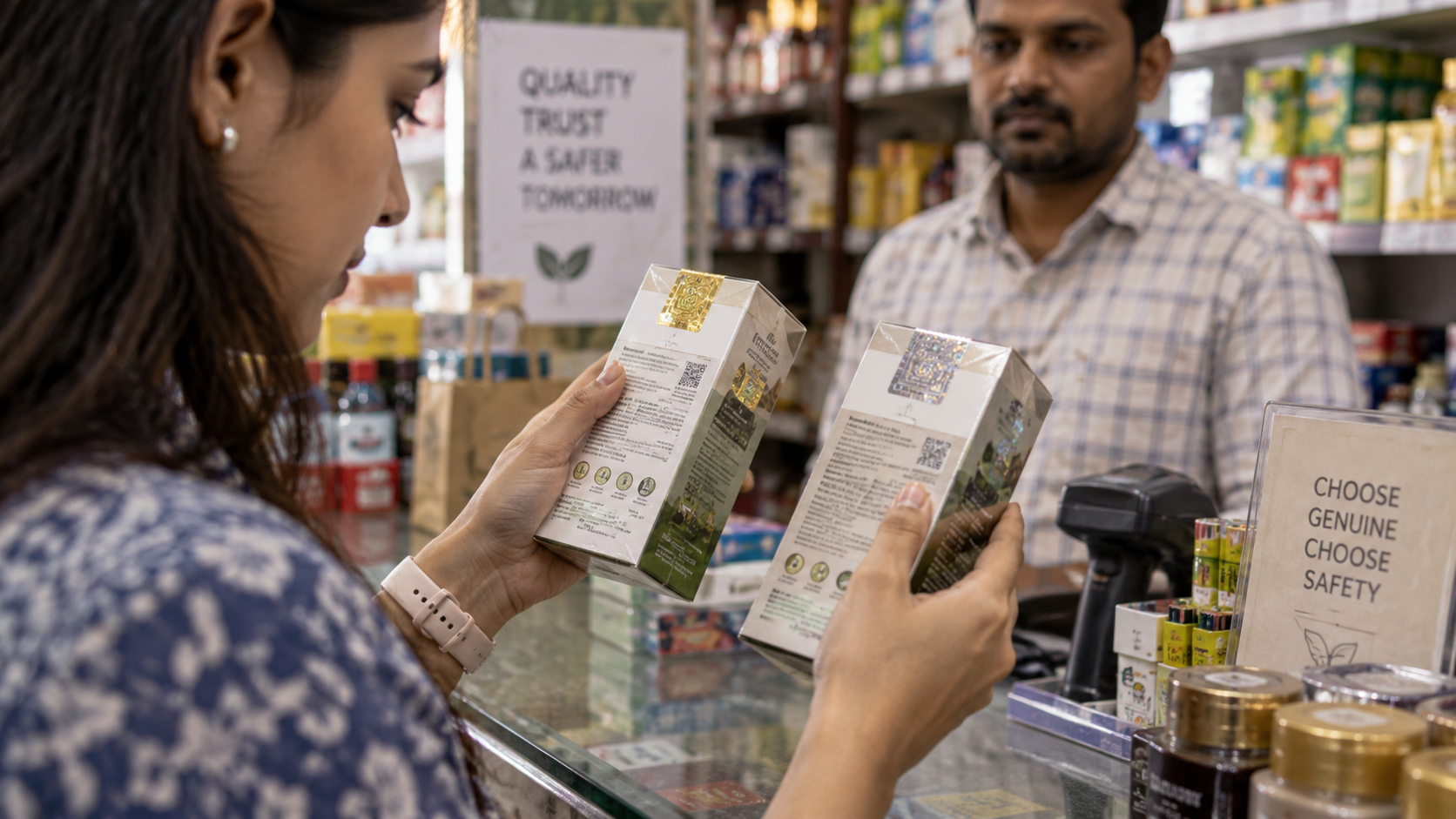
Crisis of faith: The math behind ghee adulteration

Ghee, often referred to as liquid gold in Indian kitchens, is much more than just a cooking fat; it’s a symbol of tradition, health, and culinary richness. With its deep roots in Indian culture and its growing popularity in global wellness trends, ghee has become a beloved staple in many households. However, as its demand surges, so do the risks associated with its purity.

Recent reports of adulterated ghee have raised serious alarms, revealing a troubling underbelly in the dairy industry. How can we ensure that the ghee we use in our homes is genuine and beneficial? To combat adulteration, a multifaceted approach is essential, including stringent regulations imposed by the Food Safety and Standards Authority of India (FSSAI), regular inspections, and consumer education on identifying authentic ghee. 

This article dives deep into the alarming prevalence of food fraud, the mathematics behind ghee production. 

Ghee adulteration in India

Ghee, a staple in Indian kitchens and a key part of cultural rituals, holds a cherished place for its rich flavor, health benefits, and versatility. People use it not only in cooking but also in Ayurveda, where it’s valued for its healing properties. Recently, ghee has also gained popularity in global wellness trends and skincare products. However, as demand grows, the challenge of maintaining its purity and authenticity becomes more urgent.

A recent case of adulterated ghee in Thiruvananthapuram has raised serious concerns among consumers and industry stakeholders. The Tirumala Tirupati Devasthanams (TTD) found that A.R. Dairy Food Private Limited, a major supplier from Tamil Nadu, had supplied substandard ghee for temple Prasadams. This incident exposes the darker side of the dairy industry, where fraudulent practices threaten consumer trust and public health.

Food fraud, particularly in the dairy sector, has far-reaching impacts on consumer trust, market dynamics, and public health. The global food industry suffers an estimated annual loss of US$ 30 to 40 billion due to food fraud, a phenomenon that is disappointingly prevalent in Indian markets.

J. Shyamala Rao, Executive Officer of the Tirumala Tirupati Devasthanams (TTD), announced that A.R. Dairy Food Private Limited, a major ghee supplier from Tamil Nadu, has been blacklisted for providing highly adulterated ghee. He emphasized that if the company fails to offer a satisfactory explanation in response to the issued show cause notice, it will face criminal proceedings.

Mr. Rao expressed disappointment regarding the purity levels, noting that the ghee’s S value or saponification value—a crucial quality indicator—was a mere 19.72, significantly lower than the acceptable range of 98.68 to 104.32. This revelation confirms that the ghee is unfit for use in Prasadams.

The Ghee Market Overview

The demand for authentic ghee products is on the rise considering its nutritional value and India’s rich culinary heritage. The global ghee market was valued at US$ 52.6 billion in 2023 and is expected to reach US$ 90.5 billion by 2032, exhibiting a CAGR of 6% from 2024 to 2032. 

The Indian ghee market was valued at US$ 41.82 billion in 2024 and is projected to reach US$ 68.54 billion by 2030, growing at a CAGR of 8.58% from 2024 to 2030. This growth is being driven by increased health awareness, product availability, and rising disposable incomes of individuals. In India alone, pure ghee sells for between ₹500 and ₹600 per litre, while its adulterated versions can be found for as little as ₹300 to ₹350 per litre.

Pure ghee requires approximately 25 to 30 liters of milk to produce about 1 litre of ghee. Each liter of milk contains around 150 grams of cream and 850 grams of skimmed milk, with the cream having about 40% fat content. Given that the procurement cost for quality milk ranges from ₹50 to ₹70 per litre, genuine producers spend around ₹1,500 to ₹2,100 just on the milk alone only for 1 litre ghee, excluding other operational expenses. Considering the fat content and the milk required, this raises questions about how producers can offer pure ghee for just ₹500 to ₹600, which is significantly lower than the cost of quality milk needed to produce it.

Unscrupulous producers can generate profits of up to 40% by mixing cheaper vegetable oils or animal fats into the ghee, thereby increasing their margins while compromising quality. For example, producing adulterated ghee can cost as little as ₹80 per litre, making it highly profitable to deceive consumers.

The impact of fraudulent practices extends beyond immediate financial gains; it erodes consumer trust, which can take generations to rebuild. Following the ghee fraud incident, consumers may increasingly turn towards branded ghee products, reminiscent of the shifts seen after the infamous 1998 mustard oil contamination scandal.

Traditional vs. Modern Methods of Ghee Preparation

Understanding the differences between traditional and modern methods of ghee preparation is crucial for reassessing authenticity and nutritional quality.

Traditional Methods

  • Procurement: Milk sourced from pasture-fed cows, boiled to eliminate bacteria.
  • Curdling and Churning: Boiled milk is allowed to cool and then churned using a bilona, resulting in the separation of butter from buttermilk.
  • Clarification: The butter is melted slowly in clay pots, where milk solids caramelise, imparting distinctive flavours and aromas.
  • Nutritional Benefits: Traditional ghee is lauded for its health benefits; it is rich in vitamins A, D, E, and K, along with healthy fats like CLA and butyric acid. These nutrients contribute to overall well-being, positively affecting metabolism and immune function.

Modern Methods

  • The Direct Cream Method: This method involves mechanically separating cream, which reduces production time, followed by curdling, churning, and clarification of cream directly.
  • Continuous Method: Fully automated systems for large-scale production, sacrificing some sensory qualities for efficiency.
  • Quality Concerns: While modern methods can enhance scalability, they often lead to a product lacking the nuanced flavours and nutrients of traditionally made ghee. Studies show adulterated ghee can contain over 50% vegetable oils, adversely affecting its health benefits.

Additionally, in the process of making ghee, manufacturers get skimmed or low-fat milk and buttermilk, which they sell at ₹58 per litre and ₹44 per litre, respectively. From 700 litres of milk, we get 40 to 42 kg of cream. From 40 kg of cream, we get 25 kg of butter. From 25 kg of butter, we get 20 litres of ghee. 

Future Measures for Quality and Authenticity

Preventing ghee adulteration requires a multi-faceted approach that includes regulatory reforms, consumer education, and industry collaboration.

  • Regulations: The Food Safety and Standards Authority of India (FSSAI) should impose stricter regulations on ghee production and marketing to eliminate adulteration. Increased penalties for guilty manufacturers could deter unethical practices.
  • Authenticity Testing: Implementing regular inspections and laboratory testing can ensure compliance with safety standards, thereby restoring consumer trust. 
  • Public Awareness: Educating consumers about how to discern pure ghee from adulterated varieties can empower them to make informed purchasing decisions.
  • Market Incentives: Providing financial support or subsidies to small-scale producers who uphold traditional practices ensures the preservation of cultural heritage while maintaining product authenticity.
  • Brand Promotion: Large brands like Amul and Mother Dairy, which offer authentic products, should promote their manufacturing processes to build consumer confidence.

Elements That Cheapen Ghee Production

Adulteration often involves the addition of low-cost ingredients that mimic the appearance of genuine ghee while compromising quality.

  • Common Adulterants Include: Palm oil, coconut oil, and partially hydrogenated fats are frequently mixed with ghee to reduce production costs and increase shelf life.
  • Synthetic Additives: Other synthetic ingredients that are difficult to visually detect can be introduced to ghee, posing health risks.
  • Starch and Flour: Starch and flour are also used for adultration of ghee to make its thickness and texture pure-like.
  • Animal Fats: such as lard and beef tallow, which lower the market price but compromise quality.

Future Action

Ghee is an essential ingredient in Indian cuisine, deeply rooted in our culinary traditions and culture. However, recent concerns about adulteration have highlighted a critical challenge that affects our health, economic integrity, and consumer trust. Addressing these issues requires a comprehensive strategy that emphasizes strict regulatory measures, public education, support for traditional production methods, and collaboration across the entire supply chain.

Restoring consumer confidence and ensuring access to high-quality ghee is important for the future of production in India. By focusing on authenticity and quality, we can protect not only consumer health but also the livelihoods of genuine producers, enriching India’s culinary heritage for generations to come.

With the combined efforts of manufacturers, government initiatives, regular checks by the FSSAI, and increased consumer awareness, we can create a promising path forward. This journey prioritizes both authenticity and quality while aiming to eradicate fraudulent practices. It has to be a combined effort to ensure that ghee remains the pure and cherished staple it’s meant to be.


Previous Post
Next Post

Most Recent Posts

  • All Post
  • 8th Pay Commission
  • Aadhar
  • Aditya Birla Capital
  • Advertising Standards
  • Affordable Housing
  • Agriculture
  • Agriculture & Food
  • AI in Healthcare
  • AI Technology
  • Airlines
  • alcohol industry
  • Android
  • APEDA
  • Apple
  • Artificial Intelligence
  • Ashwini Vaishnaw
  • Asset Management
  • Atmanirbhar Bharat
  • Audio Devices
  • Audio Products
  • Auto Industry
  • Automobile
  • Automobiles
  • Automotive
  • Automotive Industry
  • Aviation
  • Bain Healthcare Report 2026
  • Bank
  • Banking
  • Banking Technology
  • Battery Industry
  • Beverage Industry
  • Beverages
  • Bihar
  • biotechnology
  • Bitcoin
  • BMW Group India
  • Brand Insight
  • BRICS
  • Bullion Market
  • Business
  • Business & Economy
  • Business & Trade
  • Business Leadership Post COVID-19
  • Business News
  • Business Terminology
  • Business Utilities
  • Buyback
  • Capital Goods
  • Capital Markets
  • CarsBusiness
  • CBIC
  • CCI
  • Child Investment
  • China
  • China technology news
  • Citizen Services
  • Clean Energy
  • Clean Technology
  • Cloud Computing
  • coal
  • Commerce
  • Commerce and Industry
  • Commercial Real Estate
  • Commercial Vehicles
  • Commodities
  • Communications
  • Companies
  • Competition Law
  • Compliance
  • Computer Accessories
  • connected cars
  • Consumer
  • Consumer Affairs
  • Consumer Electronics
  • Consumer Finance
  • Consumer Goods
  • Consumer Health
  • Consumer Markets
  • Consumer News
  • Consumer Protection,
  • Consumer Rights
  • Consumer Spending
  • Consumer Trends
  • Content Creation
  • Copper
  • Corporate
  • corporate affairs
  • Corporate Earnings
  • Corporate Governance
  • Corporate News
  • Corporate Social Responsibility
  • Cost of Living
  • Country
  • CRED
  • Credit Cards
  • CREDIT RATING
  • Crude Oil
  • Cryptocurrency
  • CSR
  • Culture
  • Currency
  • Customs Duty
  • Cyber Security
  • Cybersecurity
  • Dairy Industry
  • Data & Analytics
  • Defence
  • Delhi Government
  • Delhi-NCR
  • Demographics
  • Derivatives
  • DGCA
  • DGFT
  • DigiLocker
  • Digital Assets
  • Digital Economy
  • Digital Health India
  • Digital Identity
  • Digital India
  • Digital Infrastructure
  • Digital passport for robots
  • Digital Payments
  • Digital Platforms
  • digital services
  • Diplomacy
  • Dixon Technologies
  • DPIIT
  • E Commerce
  • E-commerce
  • E-Governance
  • Ease of Doing Business
  • Economic Growth
  • Economy
  • Edible Oil Industry
  • Editor Choice
  • EdTech
  • Education
  • Electric Mobility
  • Electric Vehicles
  • Electronics
  • Employment
  • ENERGY
  • Engineering
  • Entertainment
  • Environment
  • EPFO
  • Ethanol Economy
  • EV Industry
  • EV Technology
  • Exports
  • EXTER
  • Farmers
  • Fashion
  • FINANCE
  • Finance Ministry,
  • Financial Marketing
  • Financial Markets
  • Financial News
  • Financial Planning
  • Financial Results
  • Financial Services
  • Fintech
  • FnTech
  • Food & Beverage
  • Food & Beverages
  • Food Exports
  • Food Industry
  • Food Manufacturing
  • Food Processing
  • Food Regulations
  • food safety
  • Foreign Exchange
  • Foreign Investment
  • Foreign Policy
  • Foreign Trade
  • Forex Reserves
  • fssai
  • FTA
  • Fuel
  • Fuel Prices
  • Future Energy
  • Gadgets
  • Gadgets & Apps
  • Gaming
  • GDP
  • Generative AI Healthcare
  • Geopolitics
  • GI Products
  • Global Brand Alliance
  • Global Economy
  • Global Markets
  • Global Politics
  • Global Tech
  • Global Trade Policy
  • Global Trends\
  • Gold
  • Gold Market
  • Gold Prices
  • Gols & Silver
  • Government
  • Government & Policy
  • Government Affairs
  • Government Bonds
  • Government Data
  • Government Initiatives
  • Government Policy
  • Government Policy & Regulation
  • Government Scheme
  • Government Schemes
  • Government Services
  • Green Energy
  • Green Mobility
  • GroupGlobal
  • GST
  • GST Council
  • GST Counsil
  • Hair Care
  • Hardware
  • Hatchback Segment
  • Health Supplements,
  • Horticulture
  • Housing
  • HSBC
  • Human Resources
  • humanoid robot market
  • Hyundai
  • IBT Infographics
  • iinvestment
  • Imports & Exports
  • Income Tax
  • India
  • India Auto Market
  • India Business News
  • India Inc
  • India News
  • India Retail
  • India-Canada Relations
  • India-China
  • India-Japan Relations
  • India-Russia Relations
  • India-South Korea Relations
  • India-US Relations
  • Indian Economy
  • Indian Navy
  • Industrial Pollution
  • Inflation
  • Infra
  • Infrastructure
  • Innovation
  • Instagram
  • Insurance
  • international
  • International Affairs
  • International Cooperation
  • International Relations
  • International Trade
  • Internet & Connectivity
  • Internet Policy
  • Internet Regulation
  • Interview
  • Investing
  • Investment News
  • Investments
  • iPhone News
  • IPO
  • IT Industry
  • Jewellery
  • Jio Platforms
  • JioBlackRock
  • Jobs & Careers
  • Joint Ventures
  • Kim Kardashian
  • Labour
  • Latest
  • Launches
  • Leadership
  • Leaderspeak
  • Lending
  • Lifestyle
  • Lifestyle Tech
  • List
  • Loans & Credit
  • Local News
  • Logistics
  • LPG
  • Luxury Cars
  • Machinery
  • Macroeconomics
  • Macroeconomy
  • maharashtra
  • Maharashtra News
  • Make in India
  • Makhana
  • Manufacturing
  • Market Outlook
  • Markets
  • Maruti Suzuki
  • Mergers & Acquisitions
  • Meta
  • Microsoft
  • Middle East
  • Mobile Apps
  • Mobile Industry
  • Mobile Launch
  • Mobility
  • Monetary Policy
  • Monsoon
  • MoSPI
  • MSME
  • Mutual Funds
  • Nano Tech
  • National
  • National news
  • NEET 2026
  • NewsElectric
  • NewsTata
  • NPCI
  • NPS Vatsalya
  • Office Market
  • Oil & Gas
  • Oil and Gas
  • Others
  • OTT
  • Packaged Drinking Water
  • Packaged Foods
  • Packaging Industry
  • Packaging Innovation
  • Passenger Vehicles
  • Paytm
  • Pension & Retirement
  • Pensions
  • Personal Care
  • Personal Finance
  • Perspectives
  • Petroleum
  • PFRDA
  • Pharmaceuticals
  • PM Modi
  • PMAY-G
  • PMAY-U
  • PMAY,
  • PMI
  • policy
  • Population
  • PORTS
  • Positive News
  • PPF
  • Precious Metals
  • Pricing
  • Product Labeling
  • Product Labelling
  • Product Launch
  • Property Market
  • PSU
  • PSU Banks
  • Public Health
  • Public Policy
  • Public Safety
  • Public Sector
  • Public Services
  • Public Welfare
  • Quarterly Results
  • Railways
  • Rajasthan
  • Raksha Bandhan
  • Raksha Bandhan Gifts
  • Rare Earths
  • RBI
  • Real Estate & Realty Sector
  • Recycling
  • Regulation
  • Regulatory Action
  • Regulatory Affairs
  • Regulatory Updates
  • REIT
  • Reliance Industries
  • Renewable Energy
  • RERA
  • Research
  • Retail
  • Retirement Planning
  • Road Infrastructure
  • Robotics & Automation
  • robotics standards
  • Rupee
  • Rural Development
  • Rural Housing
  • SAIL
  • Salaries
  • Samsung
  • Savings
  • Science & Technology
  • Sebi
  • Security
  • Semiconductor
  • Services Sector,
  • SHIPPING
  • Silver Prices
  • Skill Development
  • Skills Development
  • Small Business
  • Smart Devices
  • Smart Home
  • Smart Mobility
  • Smartphones
  • Social Impact
  • Social Media
  • Society
  • Software Development
  • Solar Energy
  • Space Technology
  • Startups
  • Statistics
  • Steel Industry
  • Stock Market
  • stocks
  • streaming
  • Sugar Industry
  • Sukanya Samriddhi Yojana
  • Sustainability
  • SUV
  • Tamil Nadu Pollution Board
  • Tariffs
  • Tariffs & Duties
  • Tata Group
  • Tata Motors
  • Tata Sons
  • Tax Planning
  • Taxation
  • Tech
  • Tech Branding
  • Technology
  • Telecom & Technology
  • Telecom Industry
  • Top Story
  • Tourism
  • Trade
  • Trade Agreement
  • Trade Basket
  • Trade Partner
  • Trade Policy,
  • Transportation
  • Travel
  • Trending
  • Two-Wheelers
  • UIDAI
  • UPI
  • Urban Development
  • US-Iran Conflict Economic Impact
  • US–India Relations
  • Uttar Pradesh
  • VehiclesLuxury
  • vivo
  • Wastewater Management
  • Water Quality,
  • Wealth Management
  • Wearables
  • Wellness
  • WhatsApp
  • Wheat
  • Workplace
  • World
  • World News
  • Worldview
  • Yamaha
  • zLead Slider
    •   Back
    • Healthcare
    • Auto
    • Fmcg
    • Hospitality
    •   Back
    • Cash Crop
    • Organic
    • New Era Agri
    • Processed Food
    •   Back
    • Construction
    • Power
    • Mining
    • Telecom
    •   Back
    • ENERGY
    •   Back
    • Export/Import
    • Trade Deal
    • Trade Fair
    •   Back
    • Policies
    • Industry
    • Finance
    •   Back
    • Others technology
    • Mobile phone
    • Gadgets
    •   Back
    • Manufacturing
    • Services
    • Startup

India Business & Trade is a national media platform decoding the ideas, decisions and shifts shaping India’s growth story—across plicy, business, global commerce and a rapidly evolving marketplace.

Reach Us

India Business & Trade
M-62, Saket, New Delhi-110064, India

Subscribe To Newsletter

Stay ahead in the dynamic world of trade and commerce with India Business & Trade’s weekly newsletter.

Copyright © 2026 India Business & Trade. All Rights Reserved


Fatal error: Uncaught TypeError: Unsupported operand types: string * int in /var/www/sites/indiabusinesstrade.in/wp-content/plugins/royal-elementor-addons/admin/includes/wpr-templates-modal-popups.php:192 Stack trace: #0 /var/www/sites/indiabusinesstrade.in/wp-content/plugins/royal-elementor-addons/admin/includes/wpr-templates-modal-popups.php(128): WprAddons\Admin\Includes\WPR_Templates_Modal_Popups::get_template_settings() #1 /var/www/sites/indiabusinesstrade.in/wp-content/plugins/royal-elementor-addons/admin/includes/wpr-templates-modal-popups.php(106): WprAddons\Admin\Includes\WPR_Templates_Modal_Popups::render_popup_content() #2 /var/www/sites/indiabusinesstrade.in/wp-content/plugins/royal-elementor-addons/admin/includes/wpr-templates-modal-popups.php(64): WprAddons\Admin\Includes\WPR_Templates_Modal_Popups::display_popups_by_location() #3 /var/www/sites/indiabusinesstrade.in/wp-includes/class-wp-hook.php(341): WprAddons\Admin\Includes\WPR_Templates_Modal_Popups->render_popups() #4 /var/www/sites/indiabusinesstrade.in/wp-includes/class-wp-hook.php(365): WP_Hook->apply_filters() #5 /var/www/sites/indiabusinesstrade.in/wp-includes/plugin.php(522): WP_Hook->do_action() #6 /var/www/sites/indiabusinesstrade.in/wp-includes/general-template.php(3224): do_action() #7 /var/www/sites/indiabusinesstrade.in/wp-content/plugins/royal-elementor-addons/admin/templates/wpr-canvas.php(64): wp_footer() #8 /var/www/sites/indiabusinesstrade.in/wp-includes/template-loader.php(132): include('...') #9 /var/www/sites/indiabusinesstrade.in/wp-blog-header.php(19): require_once('...') #10 /var/www/sites/indiabusinesstrade.in/index.php(17): require('...') #11 {main} thrown in /var/www/sites/indiabusinesstrade.in/wp-content/plugins/royal-elementor-addons/admin/includes/wpr-templates-modal-popups.php on line 192