India is no longer content with being the world’s spice box. The country is stepping into a new identity—one built on wellness, functionality, and heritage-driven nutrition. As global consumers rethink their relationship with food, India’s traditional staples and botanicals are emerging as the next big wave in functional eating. Millets, turmeric, moringa, ashwagandha—ingredients rooted in centuries of Indian knowledge—are finding renewed purpose in global diets. This isn’t just a trend; it marks India’s shift from commodity exporter to wellness powerhouse.
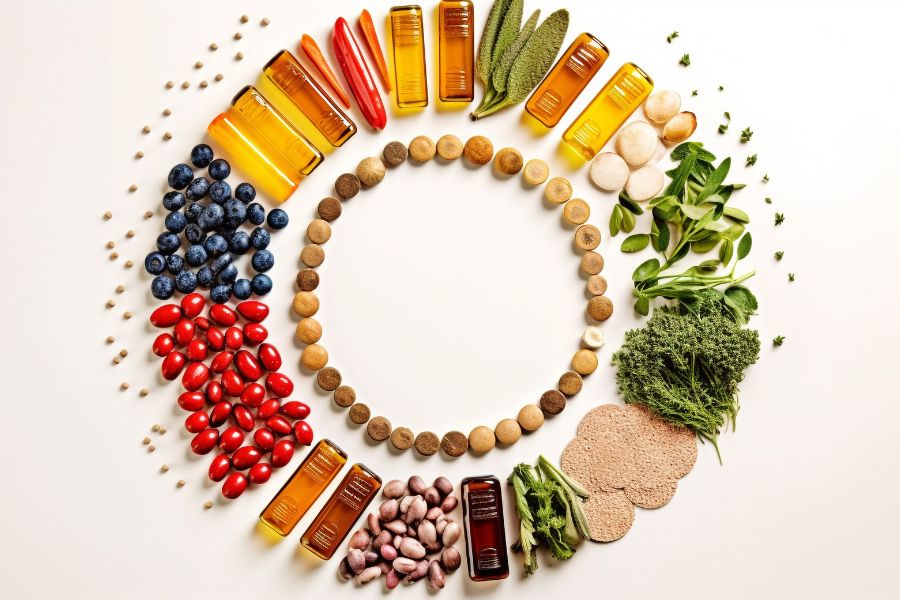
In the evolving landscape of global food trade, India is undergoing a transformation—from a bulk commodity supplier to a curator of wellness. This shift is not accidental. It is rooted in a growing global appetite for functional, plant-based, and heritage-rich foods—and in India’s own rediscovery of its nutritional legacy.
The turning point came with the United Nations declaring 2023 as the International Year of Millets, a move championed by India and endorsed by over 70 countries. As per the Ministry of Agriculture & Farmers Welfare, this global spotlight catalyzed a 30% increase in millet exports between FY23 and FY25, with countries like the USA, UAE, and Germany emerging as key buyers. But millets are just the beginning.
India’s traditional food systems—long celebrated in Ayurveda and regional cuisines—are now being reimagined as export-ready superfoods. From turmeric and moringa to amla and ashwagandha, these ingredients are finding their way into smoothies, supplements, and wellness aisles across the world. According to a 2025 report by the Indian Institute of Spices Research (IISR), turmeric exports alone crossed US$ 240 million, with the US and EU accounting for over 60% of demand, driven by interest in anti-inflammatory and immunity-boosting properties.
This surge is not just about health—it’s about heritage. India’s GI-tagged spices, ancient grains, and botanical extracts are being positioned as symbols of authenticity and sustainability. As per APEDA, the global market for nutraceuticals and functional foods is projected to reach US$ 750 billion by 2027, and India is poised to claim a larger share—if it can align its production, branding, and certification systems.
The Superfood trifecta: Millets, spices, and botanicals
India’s superfood surge is anchored in three powerful categories—millets, spices, and functional botanicals—each rooted in tradition, yet increasingly aligned with global wellness trends.
Millets: Ancient Grains, Modern Demand
Millets, once considered “coarse grains,” are now being rebranded as climate-smart, nutrient-dense superfoods. According to the Ministry of Agriculture, India is the world’s largest producer of millets, accounting for over 41% of global output in 2024. The International Year of Millets (2023) catalyzed global awareness, with exports of millets and millet-based products rising from US$ 64 million in FY22 to over US$ 107 million in FY25, as per APEDA. Countries like the USA, UAE, Germany, and Japan are emerging as key buyers, driven by demand for gluten-free, low-GI grains.
Spices: From kitchen staples to wellness catalysts
India’s spice exports have long been a strength, but the narrative is shifting from volume to value. Turmeric, for instance, is no longer just a culinary staple—it’s a global nutraceutical. As per the Indian Institute of Spices Research (IISR), turmeric exports crossed $240 million in FY25, with the US, Germany, and the UK accounting for over 60% of demand. Curcumin supplements, turmeric lattes, and golden milk mixes are now mainstream in wellness markets. Similarly, cumin, ginger, and black pepper are being positioned for their digestive and anti-inflammatory properties.
Functional botanicals: The new frontier
India’s biodiversity is a goldmine of functional botanicals—moringa, amla, ashwagandha, giloy, and more. These ingredients, once confined to Ayurveda and home remedies, are now entering global shelves as capsules, powders, and beverages. According to a 2025 report by the Federation of Indian Chambers of Commerce and Industry (FICCI), India’s exports of nutraceutical ingredients grew by 18% year-on-year, with moringa alone contributing over $80 million in export value. The US, South Korea, and Australia are leading markets, with growing interest in clean-label, plant-based immunity boosters.
Global demand & market trends
India’s superfood exports are riding a wave of global consumer shifts—toward clean-label nutrition, plant-based diets, and heritage ingredients. As per the International Trade Centre’s Trade Map (2025), global imports of functional foods and nutraceutical ingredients have grown at an annual rate of 12.4%, with the US, EU, Japan, and GCC countries leading the surge.
In the European Union, demand for organic millets and turmeric has expanded rapidly, driven by retail chains promoting gluten-free and anti-inflammatory products. Germany and the Netherlands, in particular, have seen a 40% rise in millet-based imports since 2023, according to APEDA’s export dashboard. The US market, meanwhile, is embracing Indian botanicals like moringa and ashwagandha, with moringa capsules and powders now featured in major wellness brands such as Gaia Herbs and Kuli Kuli.
Japan and South Korea are emerging as premium buyers of GI-tagged spices and Ayurvedic extracts, thanks to their focus on traceability and clean sourcing. As per a 2025 report by the Ministry of Commerce, India’s spice exports to South Korea grew 18% year-on-year, with turmeric and ginger leading the basket.
Diaspora demand is also playing a catalytic role. Indian-origin consumers in the UAE, UK, and Canada are driving retail interest in ready-to-cook millet mixes, turmeric lattes, and amla-based beverages, creating a bridge between tradition and modern convenience. E-commerce platforms like Amazon, iHerb, and BigBasket Global are amplifying this reach, offering curated “Superfoods from India” sections.
Challenges to Scale
Despite India’s natural advantage in superfood cultivation, the journey from farm to foreign shelf is riddled with structural and strategic hurdles. These challenges, if unaddressed, could limit India’s ability to claim a larger share of the global wellness economy.
- Fragmented Supply Chains: Most superfood crops—millets, turmeric, moringa—are grown by smallholder farmers across diverse agro-climatic zones. As per a 2024 report by the National Institute of Agricultural Marketing (NIAM), over 70% of millet and moringa farmers operate on less than 2 hectares, often without access to aggregation, storage, or processing facilities. This fragmentation leads to inconsistent quality, limited volumes, and weak bargaining power in export negotiations.
- Certification Barriers: Global buyers increasingly demand organic, HACCP, Fairtrade, and USDA/EU-compliant certifications. However, as per APEDA’s 2025 export audit, only 12% of India’s millet-growing area is certified organic, and less than 8% of turmeric exports carry traceability credentials. The cost and complexity of certification—especially for tribal and remote producers—remain a major bottleneck.
- Branding and Storytelling Gaps: While India has over 400 GI-tagged products, few have been successfully branded for global retail. Unlike “Quinoa from Peru” or “Matcha from Japan,” India’s superfoods often lack cohesive narratives, packaging innovation, and consumer-facing campaigns. A 2025 study by the Indian Institute of Packaging (IIP) found that less than 15% of Indian superfood exports are sold under branded labels, with most relegated to bulk commodity status.
- Infrastructure and Logistics: Cold chain gaps, limited processing units, and high inland freight costs continue to erode competitiveness. The Ministry of Food Processing Industries (MoFPI) notes that only 10% of India’s functional food exports are value-added, with the rest shipped as raw or semi-processed goods. This limits shelf life, margins, and market appeal.
Strategic Levers for Export Growth
To unlock the full potential of India’s superfood exports, a coordinated strategy is essential—one that blends infrastructure, branding, market access, and value addition. The building blocks are already in place; what’s needed is alignment and acceleration.
Infrastructure: From Farm to Shelf: India’s superfood supply chains need robust post-harvest infrastructure. As per the Ministry of Food Processing Industries (MoFPI), only 10% of functional food exports are value-added, with the rest shipped raw. Schemes like Pradhan Mantri Formalisation of Micro Food Processing Enterprises (PMFME) and the Agri Infrastructure Fund (AIF) offer financial support for packhouses, cold chains, and processing units. States like Karnataka and Tamil Nadu have begun leveraging these schemes to build millet clusters and spice drying facilities.
Branding: Storytelling for Global Shelf Appeal: India’s GI-tagged products—like Erode turmeric, Byadagi chilli, and Khapli wheat—carry rich cultural narratives. Yet, as per the Indian Institute of Packaging (IIP), less than 15% of superfood exports are sold under branded labels. A national campaign — “Superfoods from India”—could mirror Peru’s quinoa or Japan’s matcha branding success. Exporters need support in packaging innovation, digital marketing, and retail partnerships to elevate shelf presence.
Market Access: Unlocking New Corridors: India must fast-track phytosanitary protocols and FTAs with high-potential markets. The Ministry of Commerce has identified Japan, South Korea, Russia, and the EFTA bloc as priority destinations for functional foods. Trade missions and buyer-seller meets—especially under TPCI’s umbrella—can help exporters navigate regulatory landscapes and build trust.
Value Addition: Beyond Raw Commodities: Global consumers seek convenience and innovation. Millet pasta, turmeric lattes, moringa capsules, and amla gummies are gaining traction. According to a 2025 FICCI report, value-added superfood exports grew 22% year-on-year, outperforming raw commodity shipments. MSMEs and startups must be incentivized to develop shelf-ready formats, backed by R&D and export facilitation.
Together, these levers can transform India’s superfood sector from a fragmented opportunity into a structured export engine—one that blends health, heritage, and global ambition.
India’s wellness economy moment
India stands at a pivotal moment in its agri-export journey—one where heritage, health, and global ambition converge. The world is no longer just seeking food; it’s seeking meaning, sustainability, and wellness. And India, with its deep reservoir of superfoods, traditional knowledge, and biodiversity, is uniquely positioned to lead this shift.
The rise of millets, turmeric, moringa, and amla on global shelves is not just a commercial success—it’s a cultural assertion. It signals India’s ability to move beyond bulk commodities and into branded, value-rich exports that resonate with conscious consumers. As per APEDA and FICCI projections, India’s functional food exports could cross US$ 1.5 billion by 2027, provided the right ecosystem is built.
This ecosystem must be collaborative. Exporters need support in certification and branding. Farmers need access to aggregation and processing. Policymakers must fast-track FTAs and infrastructure schemes. And platforms like TPCI must continue to champion India’s superfood story—through trade missions, buyer-seller meets, and strategic outreach.
India’s superfood strategy is not just about exports—it’s about identity. It’s about telling the world that wellness is not a trend here—it’s a tradition. And that tradition, when backed by innovation and strategy, can power the next wave of India’s global food leadership.
Athul Nath MS is the State Head – Kerala at the Trade Promotion Council of India (TPCI), with over 15 years of experience in government relations, investment facilitation, and technology-driven development.