Key Highlights
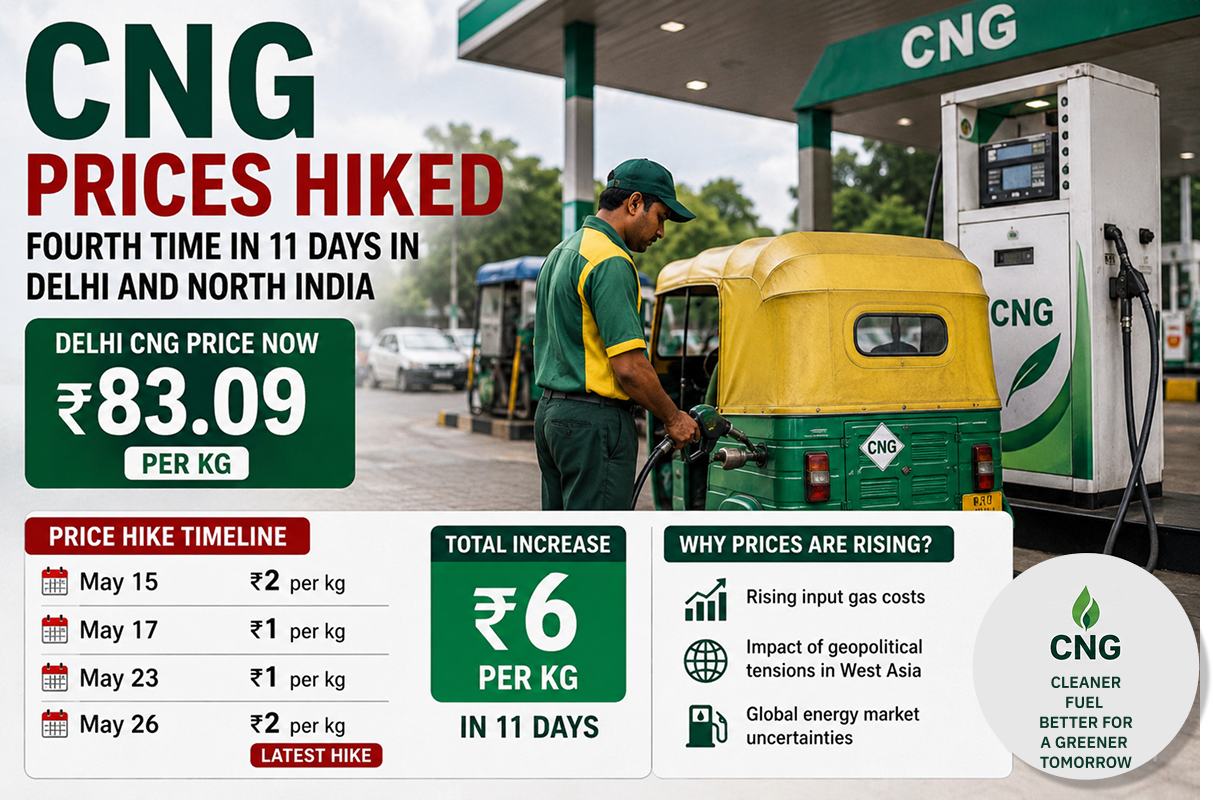
- CNG prices increased for the fourth time in 11 days
- Latest hike announced on May 26
- Delhi CNG price now stands at ₹83.09 per kg
- Total increase during this period reaches ₹6 per kg
- Rising global gas prices and West Asia tensions blamed for hikes
- Commercial vehicle operators likely to face higher operating costs
- Other gas distributors across India are also revising prices
- Mumbai-based Mahanagar Gas Limited has withdrawn subsidies for commercial users
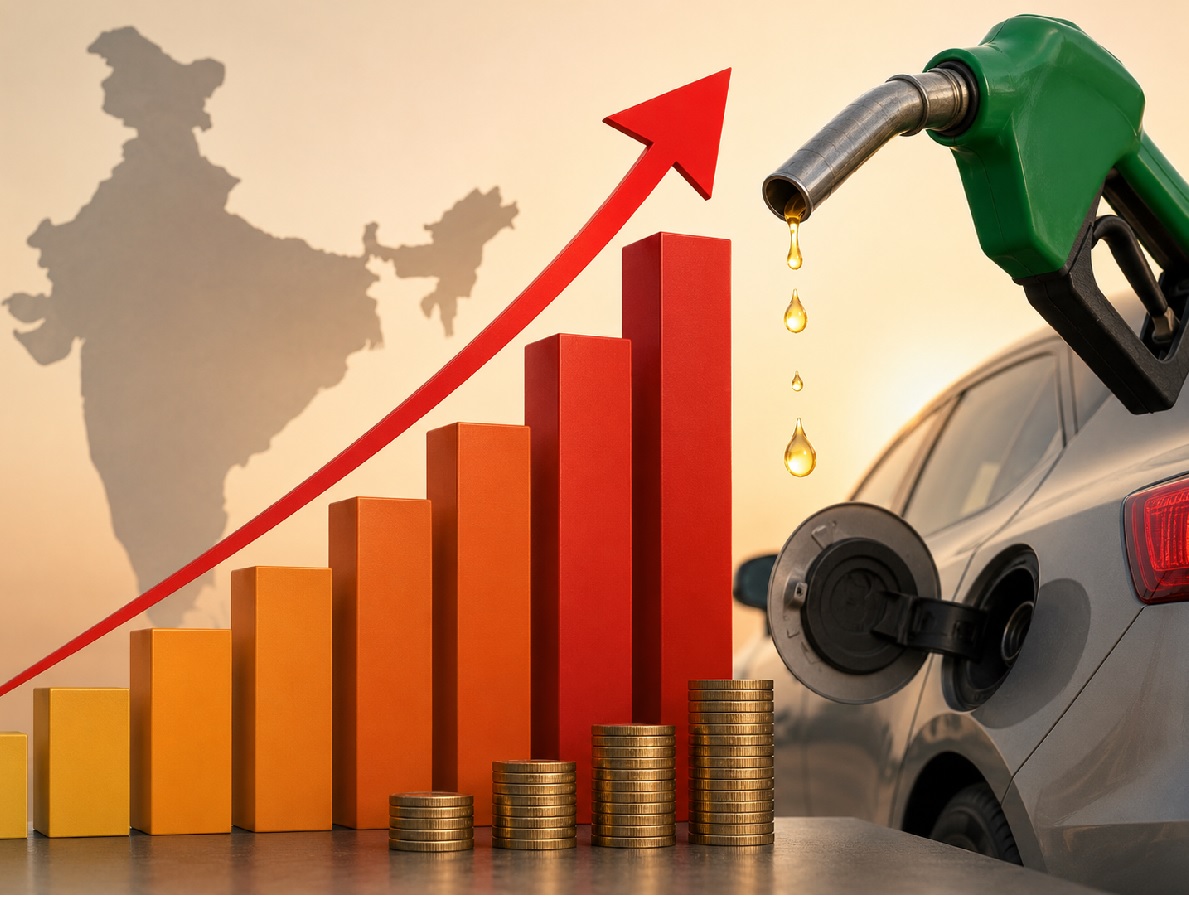
Consumers in Delhi and several parts of North India are once again facing higher fuel costs as Compressed Natural Gas (CNG) prices were increased for the fourth time in just eleven days. The latest revision, announced on Tuesday, has raised CNG prices by ₹2 per kilogram, taking the retail price in Delhi to ₹83.09 per kg.
The continuous rise in CNG prices is becoming a major concern for auto-rickshaw drivers, cab operators, commercial vehicle owners, and daily commuters who depend heavily on CNG for affordable transportation. Industry experts believe the increase is primarily linked to higher input gas costs and the impact of ongoing geopolitical tensions in West Asia, which are affecting global energy markets and fuel supply chains.
The latest hike was implemented by Indraprastha Gas Limited (IGL), one of the country’s leading city gas distributors serving Delhi and nearby regions. With this revision, the cumulative increase in CNG prices has reached ₹6 per kilogram within less than two weeks.
Sequence of Recent CNG Price Hikes
The price increase has happened in four separate phases this month:
- May 15: Prices increased by ₹2 per kg
- May 17: Another hike of ₹1 per kg
- May 23: Prices raised again by ₹1 per kg
- May 26: Latest increase of ₹2 per kg
These repeated hikes have significantly increased the operating cost for commercial transport services and are expected to indirectly impact passengers through higher fares in many cities.
Impact on Public and Commercial Transport
Delhi and NCR have one of the largest CNG-based transport networks in the country. Thousands of auto-rickshaws, taxis, buses, and private vehicles rely on CNG due to its lower cost compared to petrol and diesel. However, the recent sharp rise in prices is reducing that cost advantage.
Transport operators say the back-to-back hikes are putting pressure on their daily earnings. Many drivers are now demanding fare revisions to manage rising fuel expenses. Industry observers also warn that if global gas prices continue to remain volatile, further revisions cannot be ruled out.
Similar Trends Seen Across Other Cities
The rise in CNG prices is not limited to Delhi alone. Other city gas distribution companies across India have also started revising rates in response to increasing procurement costs.
Recently, Mahanagar Gas Limited (MGL), which supplies CNG and PNG in Mumbai and nearby areas, announced the discontinuation of support schemes and subsidies for commercial customers with immediate effect. The company cited the “ongoing geopolitical situation and its impact” as the primary reason behind the move.
Experts believe the ongoing uncertainty in international energy markets, especially due to tensions in West Asia, is increasing the cost burden on gas distribution companies, which is eventually being passed on to consumers.