Highlights:
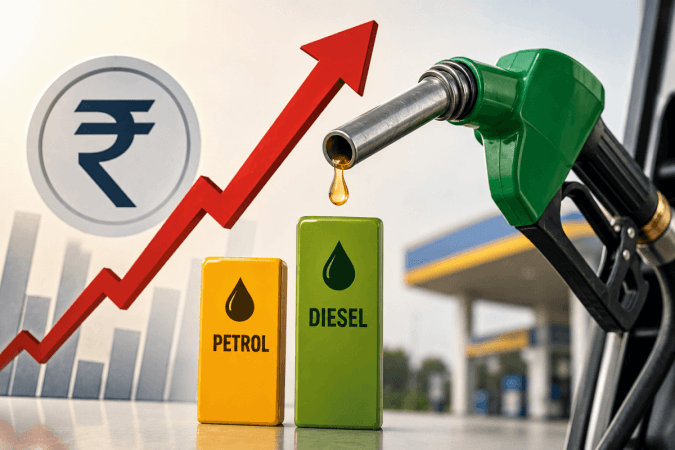
- Petrol prices increased by 87 paise
- Diesel rates hiked by 91 paise
- CNG prices also revised upward
- Third fuel price hike in recent weeks
- Rising global energy prices impact domestic market
- Consumers likely to face higher transportation costs
BHAVYA has been designed to strengthen India’s manufacturing ecosystem through development of integrated industrial infrastructure aligned with the objectives of Make in India, PM Gati Shakti, and the Government’s broader vision of positioning India as a globally competitive manufacturing destination.
The Scheme provides for development of 100 industrial parks over a period of six years from 2026-27 to 2031-32, with a total financial outlay of approximately ₹33,660 crore. In the first phase, up to 50 industrial parks will be taken up through a challenge-based competitive selection process.
The Guidelines lay down a comprehensive framework covering eligibility criteria, project selection methodology, funding structure, governance architecture, monitoring systems, and implementation modalities for industrial parks under the Scheme.
The major focus of the Scheme is on creation of “investment-ready” industrial ecosystems with plug-and-play infrastructure, multimodal logistics connectivity, reliable utility systems, worker-support infrastructure, digital governance systems, and sustainable development features.
🏗️ Infrastructure Focus Areas
- Underground utility systems
- Water and waste management infrastructure
- Common effluent treatment systems
- Renewable energy infrastructure
- Worker housing facilities
- Testing laboratories
- Digital single-window clearance systems
- Skill development facilities
The Guidelines provide for development of both greenfield and eligible brownfield industrial parks. Minimum land requirements have been prescribed at 100 acres for non-hilly states and 25 acres for hilly states, northeastern states, Union Territories, and smaller states. The Scheme also permits consideration of larger parks up to 1000 acres.
Under the challenge-based selection framework, proposals will be evaluated on objective parameters including multimodal connectivity, site suitability, quality of infrastructure, industrial ecosystem strength, policy facilitation, digital governance readiness, and long-term sustainability.
The Guidelines provide for evaluation on quality of infrastructure for components such as underground utility systems, water and waste management infrastructure, common effluent treatment systems, renewable energy infrastructure, worker housing, testing laboratories, digital single-window systems, skill development facilities and integrated common infrastructure.
Implementation of projects under BHAVYA will be undertaken through Special Purpose Vehicles (SPVs) incorporated under the Companies Act, 2013. The SPVs will be responsible for project planning, development, operation, management, investor facilitation, and long-term maintenance of assets created under the Scheme.
💰 Funding & Governance Structure
- Financial assistance will be provided as equity contribution
- Support linked to land value transferred to SPVs
- Incentives tied to achievement of project milestones
- NICDC appointed as Project Management Agency (PMA)
- GIS-based monitoring and audit systems to ensure transparency
The Scheme will provide financial assistance in the form of equity contribution linked to the value of land transferred to the SPV and achievement of prescribed project milestones. The National Industrial Corridor Development Corporation (NICDC) has been designated as the Project Management Agency (PMA) for implementation and monitoring of the Scheme.
The Guidelines additionally provide structured provisions for participation of private developers in industrial park development through project-specific SPVs with clearly defined governance frameworks, transparency safeguards, and accountability mechanisms.
To ensure effective implementation and transparency, the Guidelines incorporate GIS-based monitoring systems, periodic progress reporting, audit mechanisms, and oversight by the National Level Steering Committee chaired by the Secretary, DPIIT.
The Scheme guidelines further provide for convergence with relevant Central and State Government initiatives for logistics, skilling, sustainability, renewable energy, utility infrastructure, and industrial development.
The release of the Guidelines marks an important step towards operationalization of BHAVYA and creation of globally benchmarked industrial infrastructure capable of attracting large-scale manufacturing investment, strengthening domestic supply chains, generating employment, and enhancing India’s integration with global value chains.