Key Highlights
- India and South Korea held the 12th round of CEPA upgrade talks in New Delhi
- Discussions took place from May 25 to 27, 2026
- Both sides reviewed progress on trade and investment negotiations
- India raised concerns over the growing bilateral trade deficit
- Talks covered goods, services, investment and rules of origin
- New sub-groups to focus on digital trade and supply chains
- Both countries aim to conclude negotiations in a time-bound manner
- CEPA upgrade aims to strengthen future economic cooperation
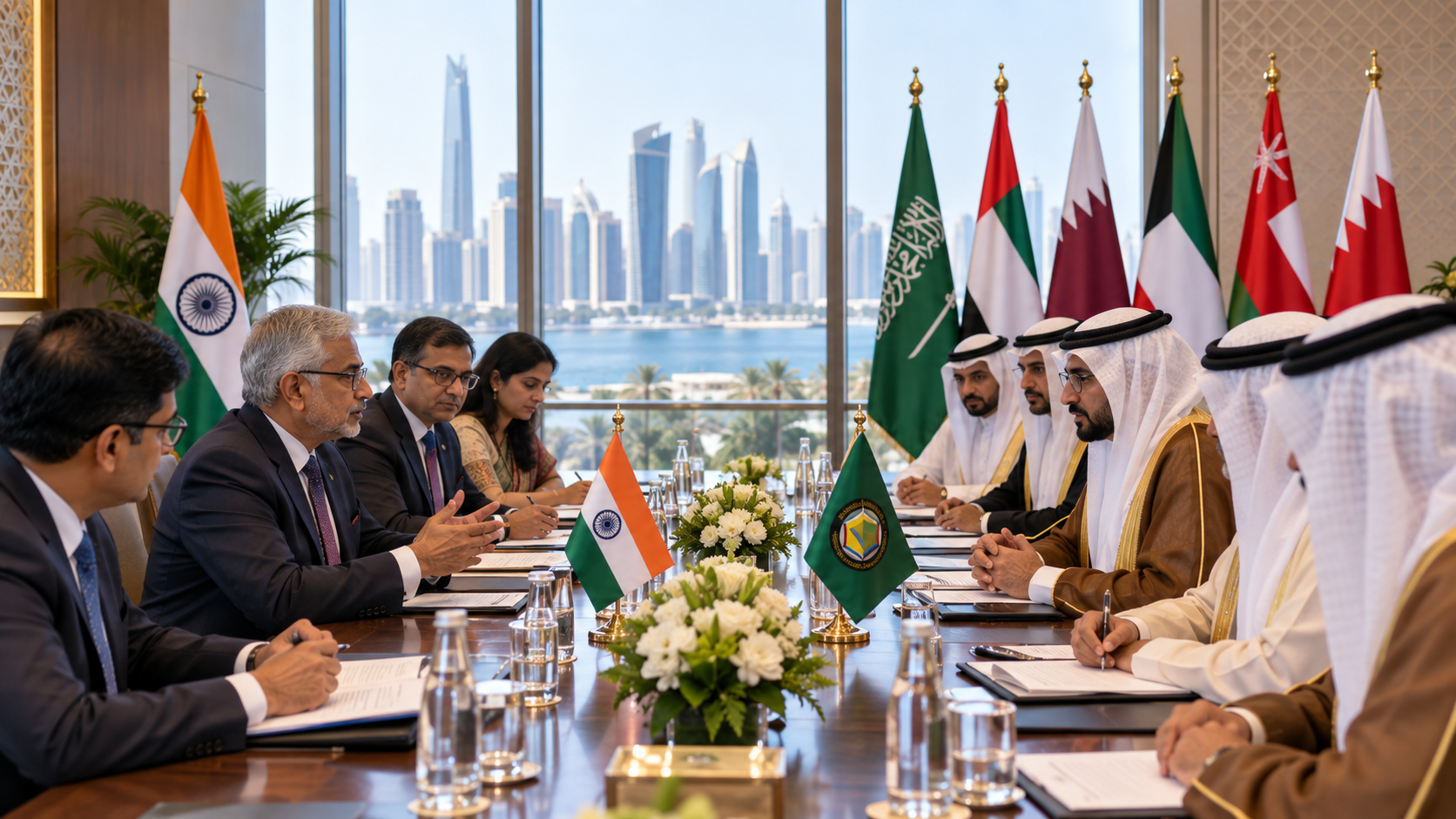
India and the Republic of Korea held the 12th round of negotiations for upgrading the India-Korea Comprehensive Economic Partnership Agreement (IK CEPA) in New Delhi from May 25 to 27, 2026, reaffirming their commitment to building a more balanced, modern and future-oriented trade partnership.
The discussions followed the Joint Declaration signed on April 20, 2026, by Union Commerce and Industry Minister Piyush Goyal and Korean Trade Minister Yeo Han-koo during the state visit of the President of South Korea to India. Both sides had agreed to accelerate negotiations aimed at upgrading the bilateral trade agreement.
The latest round of talks was co-chaired by Kapil Chaudhary, Joint Secretary in India’s Department of Commerce, and Park Geun-oh, Director General for Trade Agreement Policy at South Korea’s Ministry of Trade, Industry and Energy.
Officials from both countries reviewed the progress made so far in the CEPA upgrade negotiations and held discussions in what was described as a constructive and cooperative atmosphere, reflecting the growing strategic partnership between the two nations.
India and South Korea also acknowledged concerns over India’s rising bilateral trade deficit with Korea since the original CEPA came into effect in 2010. Both countries agreed to address the issue within the broader framework of the upgraded trade pact.
Key discussions during the latest negotiation round focused on Trade in Goods, Trade in Services, Rules of Origin, investment, origin procedures, and Sanitary and Phytosanitary standards.
The two sides additionally agreed to create dedicated sub-groups to expand negotiations in emerging sectors such as digital trade, supply chain cooperation, and strategic industrial collaboration.
Officials said the objective is to conclude the upgrade talks in a time-bound manner and develop a modernised agreement that supports balanced bilateral trade, stronger industrial cooperation, and long-term economic growth for both countries.