Highlights
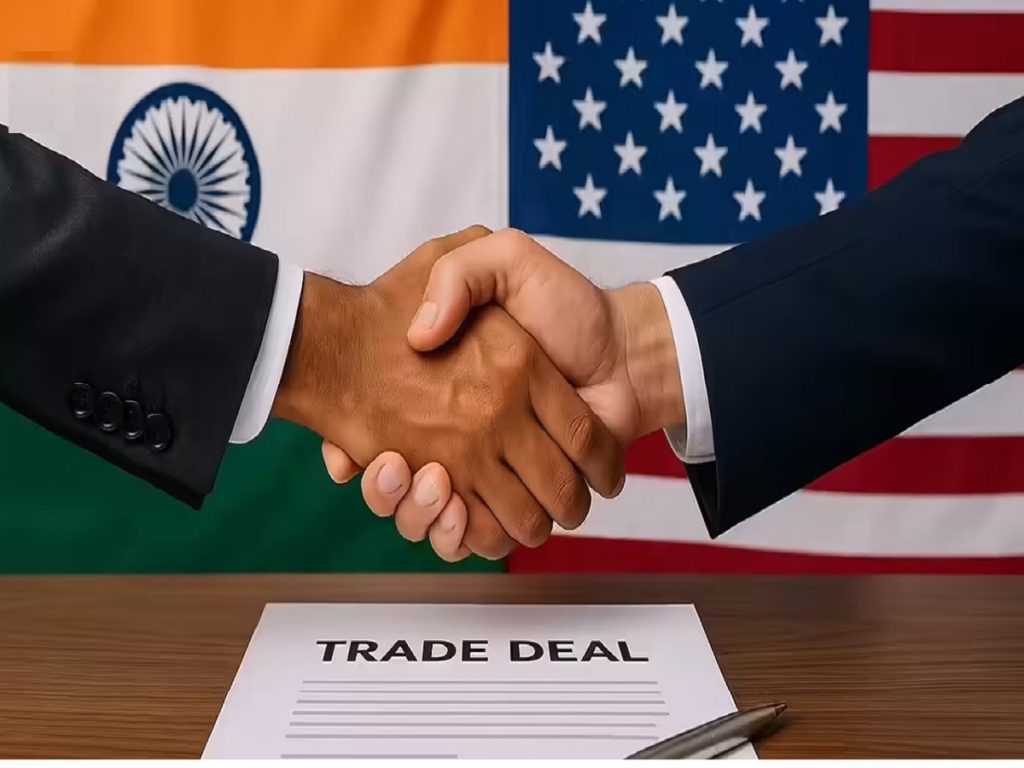
- At the Finish Line: US Ambassador Sergio Gor announced that 99% of the interim trade deal is finalized, with a formal signing expected within weeks.
- Economic Explosion: Bilateral trade has skyrocketed tenfold over the past two decades, jumping from $20 billion to more than $220 billion.
- Vital Health Interdependence: The US relies heavily on Indian healthcare, importing nearly 40% of its critical, generic life-saving medicines from India.
- Strategic Tech Alignment: The upcoming agreement launches a massive joint push into Artificial Intelligence (AI) and secures vital critical mineral supply chains.
NEW DELHI — A historic mega-trade deal between India and the United States is practically at the finish line, with 99% of the details officially settled.
US Ambassador to India Sergio Gor announced that the highly anticipated interim trade agreement is on the table and is expected to be signed within the coming weeks. Speaking at an event at IIT Delhi, Gor shared that an Indian delegation recently traveled to Washington DC to hammer out the final 1% of the deal, and an American team will arrive in New Delhi next week to conclude the discussions.
The agreement marks a major geopolitical pivot under the TRUST Initiative (Transforming the Relationship Utilising Strategic Technologies)—a framework launched to deeply integrate both nations’ technological and economic futures.
Four Major Areas Driving the Deal
This agreement isn’t just about government paperwork; it focuses on critical, real-world sectors that directly impact everyday lives and global business:
- Affordable Healthcare: In a striking disclosure, Ambassador Gor revealed that the US sources close to 40% of its generic medicines from India. “There is a reason the United States does that: it is because we trust India,” he stated, highlighting the deep medical interdependence between the two powers.
- Critical Minerals Supply: Amid rising geopolitical tensions, the two nations have formalized a cooperation framework on critical minerals. This serves as a resilient shield for defense and clean energy supply chains following China’s tightening of rare-earth export controls.
- The AI Revolution: Through the newly introduced “Pax Silica” framework, both governments are adapting regulatory regimes to let the private sector safely lead innovations in artificial intelligence, semiconductors, and quantum computing.
- Infrastructure and Energy: The deal aims to seamlessly align India’s booming domestic infrastructure and energy needs with cutting-edge American tech and manufacturing expertise.
US Under Secretary of State for Public Diplomacy Sarah Rogers neatly summarized the strengthening bond, stating, “I don’t think we could be luckier than we are to have a partner like India in a critical region.” Following a highly substantive recent visit by US Secretary of State Marco Rubio, the world’s two largest democracies are now just steps away from unlocking a new era of shared global leadership and economic prosperity.