- The Discovery: Scientists have created a new fuel cell that generates electricity using ordinary microbes found in dirt.
- The Benefit: It provides a constant, battery-free power source that never runs out or leaks toxic chemicals into the earth.
- The Use Case: The device is already powering underground sensors that monitor soil moisture and health for farmers.
Imagine a battery that never needs to be charged, never runs out of power, and is fueled entirely by the dirt under your feet.
Scientists have officially turned that sci-fi concept into reality. Researchers have developed a small, soil-powered fuel cell that harvests electricity from microbes living in the earth. This breakthrough could soon replace traditional batteries in agricultural and environmental sensors worldwide.
How Dirt Generates Electricity
The technology relies on special, microscopic organisms called electrogenic microbes. These tiny creatures naturally live in soil and break down organic matter. As they eat, they release electrons (tiny units of electricity) as a byproduct.
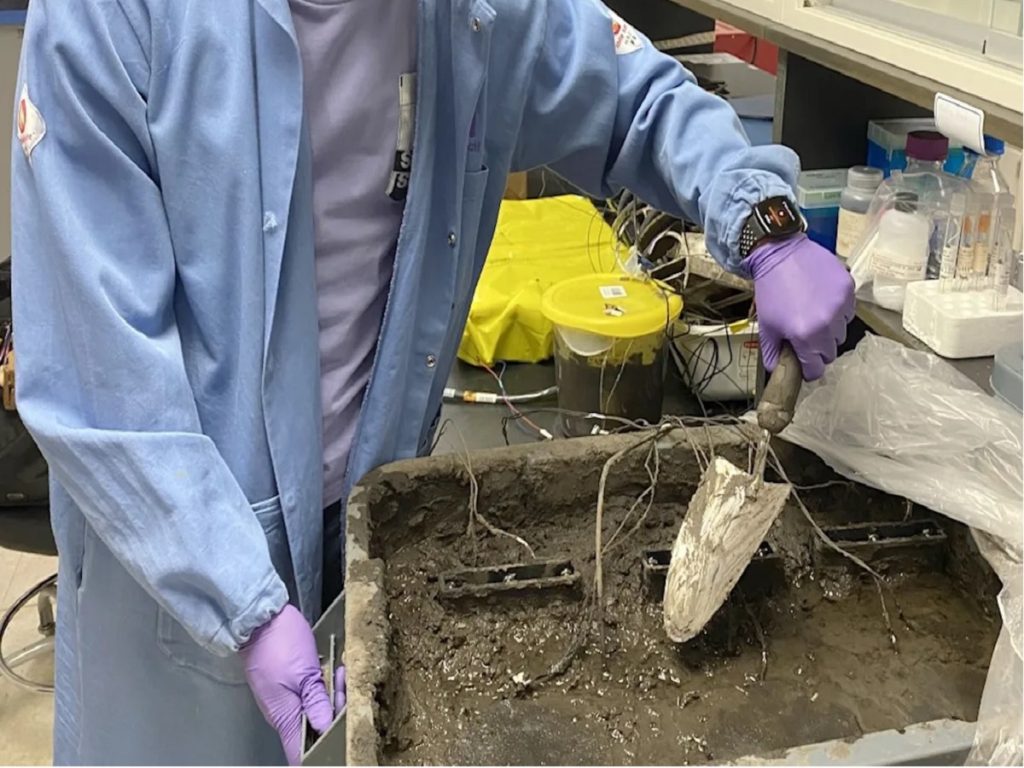
The new fuel cell acts like a microscopic power plant. It captures those floating electrons and turns them into a steady electrical current. Because the microbes are always active, the fuel cell can generate power indefinitely, as long as there is organic matter in the soil for them to consume.
Why This Matters
Right now, billions of sensors are used globally to track things like soil moisture, crop health, and weather patterns. Up until now, these devices relied on standard lithium-ion batteries or solar panels. Both options have major flaws:
- Batteries die: Replacing them in thousands of acres of farmland is expensive and creates toxic electronic waste.
- Solar panels fail: They cannot generate power at night, break easily under farm equipment, and get covered in mud.
The soil-powered cell solves all of these problems. It sits safely underground, out of the way of tractors, and works 24/7 regardless of the weather.
Built to Last
The device is about the size of a standard paperback book. To ensure it survives harsh outdoor conditions, the team built it using a special vertical design. The top sits near the surface to catch oxygen, while the bottom sits deep in the dirt where the moisture and microbes live.
In early tests, the dirt-powered cell successfully generated enough juice to power a sensor that transmits data wirelessly to a nearby computer. Scientists believe this is just the beginning. In the near future, the technology could be scaled up to power larger environmental monitoring networks, making green technology truly a part of the earth.