Key Highlights
- Fuel prices remained largely stable on June 9 after multiple hikes since mid-May.
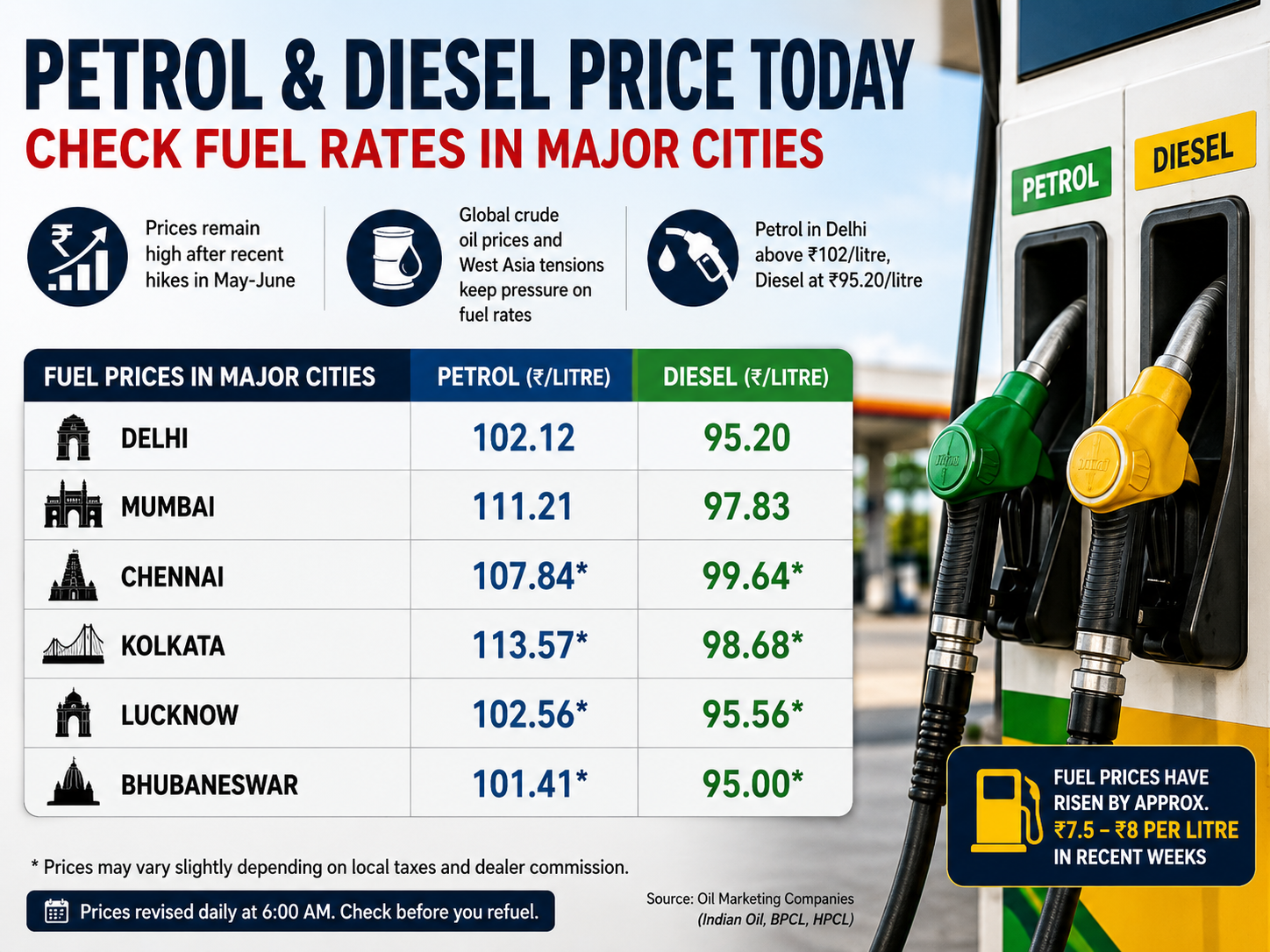
- Petrol in Delhi is priced at around ₹102.12 per litre, while diesel stands at ₹95.20 per litre.
- Mumbai continues to record among the highest fuel prices among metro cities.
- Global crude oil prices and West Asia tensions have contributed to recent fuel price increases.
- Fuel rates have risen by approximately ₹7.5–₹8 per litre over recent weeks.
- Oil marketing companies continue to monitor international market conditions.
- Government officials have expressed hope that fuel prices could ease if global crude stabilizes.
Fuel Prices Remain Firm Across Major Cities as Global Crude Market Keeps Pressure on Retail Rates
New Delhi, June 9, 2026: Petrol and diesel prices across India remained largely unchanged on Monday, although consumers continue to face elevated fuel costs following multiple price revisions over the past few weeks.
According to the latest fuel price updates, retail rates in major cities such as Delhi, Mumbai, Lucknow, Bhubaneswar, Chennai, and Kolkata have remained broadly stable, with only minor fluctuations of a few paise in select locations. However, prices continue to hover near their highest levels since 2022 after a series of increases implemented by oil marketing companies.
The recent rise in fuel prices has largely been attributed to higher international crude oil prices, which surged amid geopolitical tensions and supply concerns linked to developments in West Asia. Industry observers note that crude oil volatility has significantly impacted the cost structure of fuel retailers, leading to upward revisions in petrol and diesel prices across the country.
Fuel Rates in Major Cities
Current retail fuel prices in key Indian cities are as follows:
| City | Petrol (₹/litre) | Diesel (₹/litre) |
|---|---|---|
| Delhi | 102.12 | 95.20 |
| Mumbai | 111.21 | 97.83 |
| Chennai | Around 107.8+ | Around 99.6+ |
| Kolkata | Around 113.5+ | Above 98 |
| Lucknow | Around 102+ | Around 95+ |
| Bhubaneswar | Varies by locality | Varies by locality |
The exact retail price may vary slightly depending on local taxes, dealer commissions, and municipal levies.
Four Fuel Price Hikes in Recent Weeks
Fuel consumers have witnessed multiple upward revisions since mid-May. Reports indicate that petrol and diesel prices have increased by approximately ₹7.5 to ₹8 per litre during this period, reflecting the impact of rising global energy costs. The hikes have pushed fuel prices in several cities above psychologically important thresholds, including ₹100 per litre for petrol in Delhi and well above ₹110 per litre in Mumbai.
Industry experts point out that international crude oil prices remain the most significant factor influencing domestic fuel rates. Exchange rate movements, transportation costs, and state-level taxes also contribute to regional price differences across India.
Signs of Relief Emerging
Despite recent increases, there are indications that the global oil market may be stabilizing. Reports suggest that ceasefire discussions and easing geopolitical concerns in parts of West Asia have helped reduce some pressure on crude oil prices. Government officials have expressed optimism that if global markets continue to stabilize, fuel prices could eventually see some moderation.
However, analysts caution that any significant reduction in retail fuel prices will depend on sustained softness in international crude benchmarks and broader geopolitical developments.
Consumers Encouraged to Monitor Daily Revisions
Since petrol and diesel prices are revised daily at 6 a.m., consumers are advised to regularly check updated rates before refuelling. Oil marketing companies such as Indian Oil, Bharat Petroleum, and Hindustan Petroleum continue to adjust retail prices based on prevailing market conditions. Consumers can also access city-wise fuel prices through official company websites, mobile applications, or SMS services.
As India continues to navigate global energy market volatility, fuel prices are expected to remain closely linked to international crude oil movements, making future price trends dependent on both economic and geopolitical factors