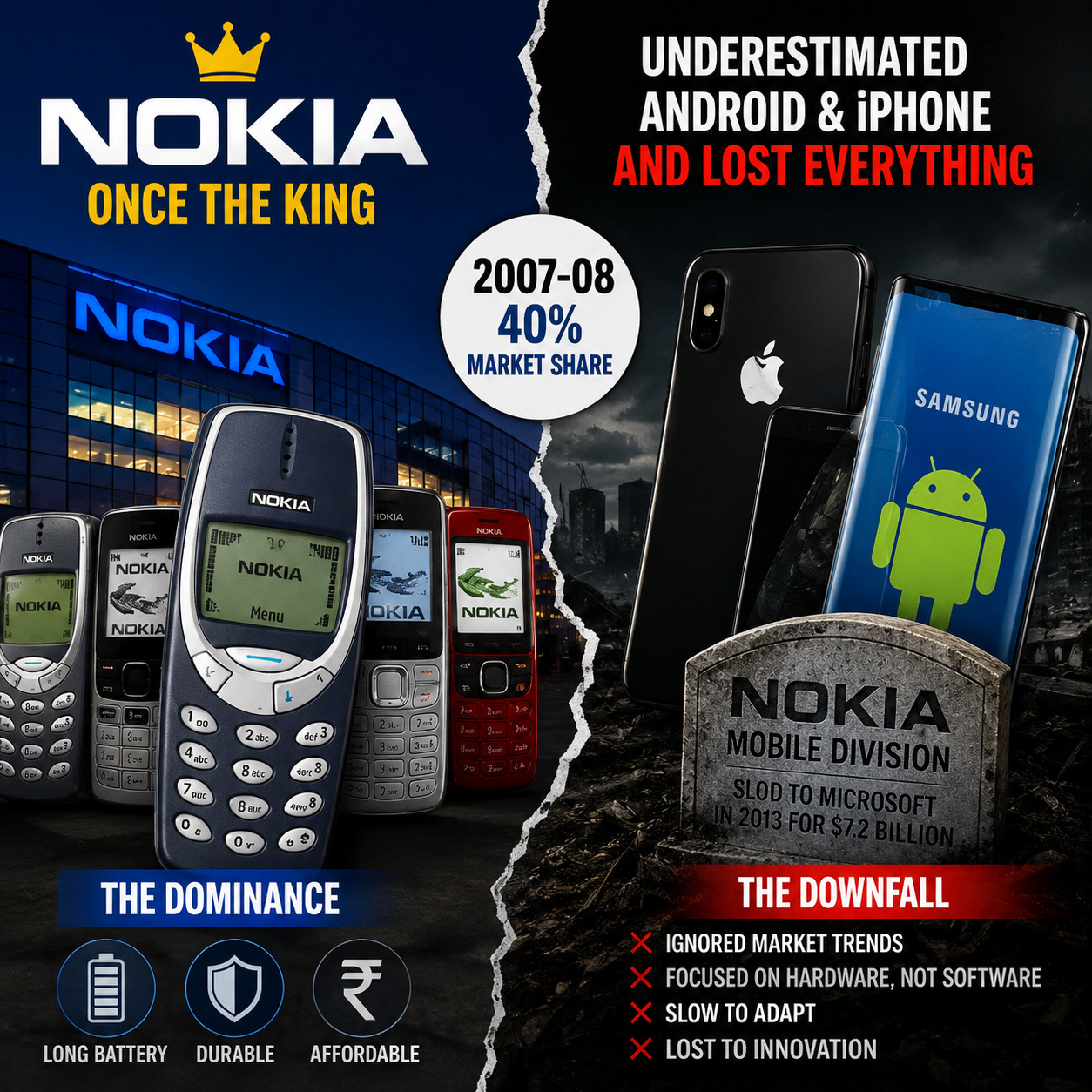
Once the undisputed king of mobile phones, Nokia lost its dominance by underestimating the smartphone revolution led by Android and Apple’s iPhone.
Key Highlights
- Nokia dominated the mobile industry for over a decade.
- The company held nearly 40% market share in 2007-08.
- It underestimated the impact of touchscreen smartphones.
- Nokia focused on hardware instead of software ecosystems.
- Android and iPhone manufacturers adapted faster.
- Nokia sold its handset business to Microsoft in 2013 for about $7 billion.
- The company’s decline remains a major business case study.
Updated News Article
For years, Nokia was synonymous with mobile phones. The Finnish company dominated the global handset market with its affordable, durable devices featuring long battery life. From the iconic Nokia 1100 to the legendary Nokia 3310, its phones were trusted by millions across the world.
However, one of the biggest business success stories eventually turned into one of the most discussed examples of corporate decline.
In the early 2000s, Nokia controlled a significant share of the mobile market. By 2007-08, the company accounted for nearly 40% of the global mobile phone industry, cementing its position as the undisputed market leader.
Where Did Nokia Go Wrong?
Nokia’s downfall began when the industry shifted toward smartphones.
As touchscreen devices emerged, Nokia executives reportedly believed that:
- Touchscreen phones would not be durable.
- Consumers would continue preferring physical keypads.
- Smartphone batteries were weak.
- High prices would limit mass adoption.
While competitors embraced change, Nokia remained focused on its traditional keypad devices and its Symbian operating system.
The iPhone and Android Revolution
The launch of Apple’s iPhone in 2007 transformed consumer expectations. Smartphones were no longer just communication devices; they became platforms for apps, internet browsing, entertainment, and productivity.
At the same time, Android manufacturers, particularly Samsung, rapidly introduced smartphones across various price segments, making the technology accessible to millions of users.
Nokia failed to respond quickly to these changing market dynamics.
Hardware Over Software
Industry experts believe Nokia’s biggest mistake was prioritising hardware while underestimating the importance of software ecosystems.
While Apple focused on delivering a seamless user experience and Android manufacturers built extensive app ecosystems, Nokia continued relying on outdated software strategies.
The company failed to adapt to evolving consumer demands and delayed its transition into the smartphone era.
Market Share Collapse
After peaking during 2007-08, Nokia’s sales began declining steadily.
- By 2012, its global market share had dropped to nearly 2-3%.
- In 2013, Nokia sold its mobile phone business to Microsoft for approximately $7 billion.
- Although Nokia-branded smartphones returned later through licensing arrangements, the company never regained its former dominance.
Lessons From Nokia’s Failure
Nokia’s story highlights the importance of innovation and adaptability.
Businesses cannot rely solely on past success. Understanding customer needs, embracing technological change, and responding quickly to market disruptions are essential for long-term survival.
As industries today undergo transformation driven by artificial intelligence and emerging technologies, Nokia’s rise and fall remains a powerful reminder that even market leaders must evolve with changing times.