Appeal Rejected; Company Faces ₹2,000 Crore Impact
Key Highlights
- US Supreme Court rejected TCS’s appeal in the trade secrets case.
- Total financial impact estimated at $220 million (around ₹2,000 crore).
- Court upheld the ruling in favour of DXC Technology.
- TCS had already provided $150 million for the case in its accounts.
- Additional $70 million will be recognised as an exceptional expense in Q1 FY2027.
- The case originated from a lawsuit filed in 2019.
What Happened?
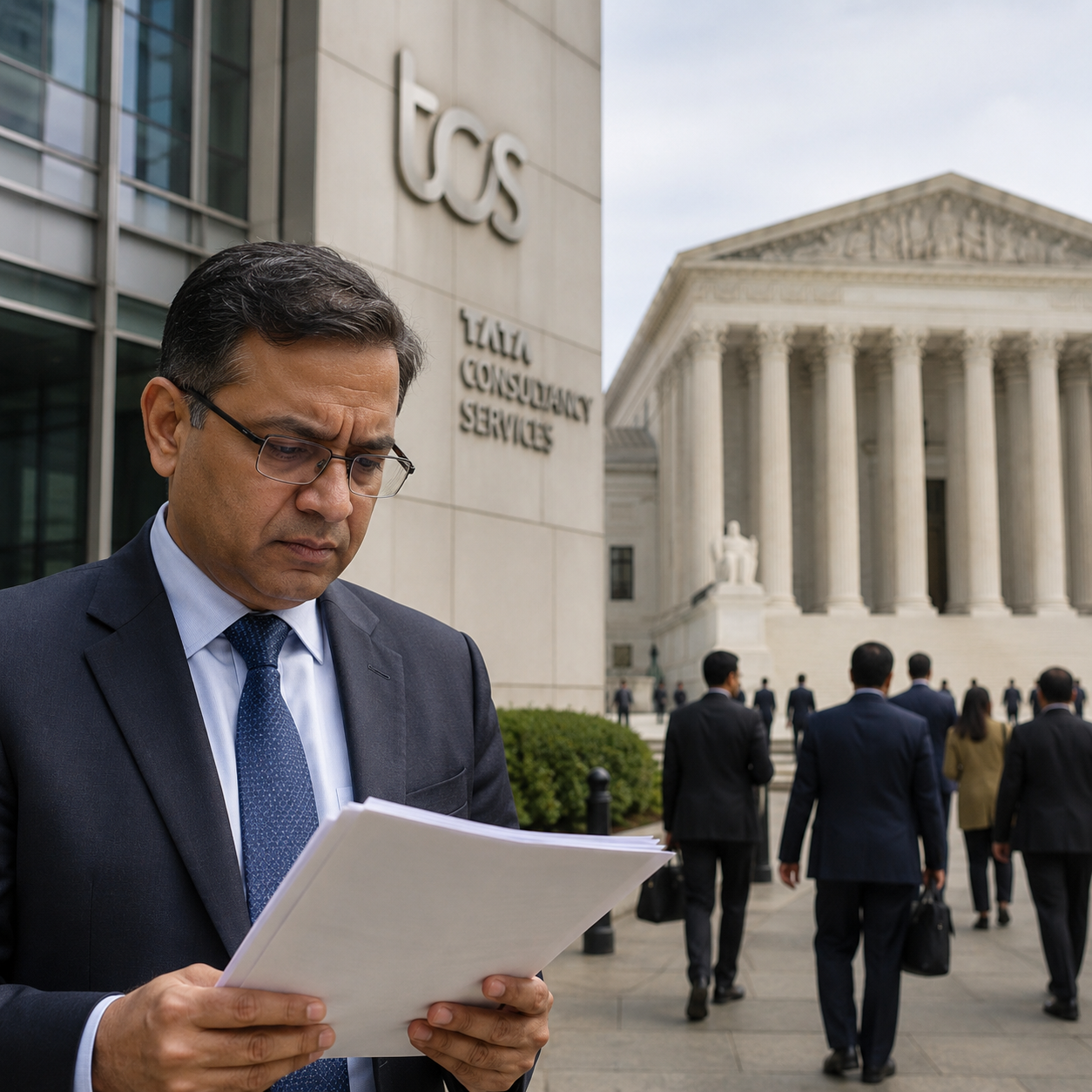
According to an exchange filing by TCS, the US Supreme Court on June 15, 2026, declined to review the judgment passed by the United States Court of Appeals for the Fifth Circuit.
TCS stated:
“The United States Supreme Court has denied our petition for a writ of certiorari seeking review of the Fifth Circuit’s judgment.”
As a result, the earlier compensation awarded in favour of DXC Technology remains intact.
Financial Impact on TCS
The company revealed that it had already created a provision of $150 million in line with accounting standards.
However, following the Supreme Court’s decision, TCS will now recognise an additional $70 million towards damages, interest, and legal expenses.
The company said the amount would be recorded as a one-time exceptional charge in the first quarter of FY2027, taking the total impact to $220 million.
Background of the Case
The legal dispute dates back to 2019, when DXC Technology’s predecessor, Computer Sciences Corporation (CSC), filed a lawsuit in a federal court in Dallas.
The allegations claimed that TCS hired around 2,200 employees from insurance firm Transamerica and used confidential information to develop a competing life insurance software platform.
How the Case Progressed
- In 2023, a jury recommended that TCS pay $210 million for alleged misappropriation of trade secrets.
- Later, US District Judge Brantley Starr reduced the amount to $168 million, comprising:
- $56 million in compensatory damages
- $112 million in punitive damages
- The Fifth Circuit Court of Appeals upheld the ruling in 2025.
- TCS subsequently approached the US Supreme Court, arguing that DXC had failed to establish actual losses and that punitive damages were excessive.
- The Supreme Court has now declined to intervene.
What It Means for Investors
While the financial hit is unlikely to materially impact TCS’s long-term operational strength, the judgment represents a notable legal and reputational setback for one of India’s most valuable companies.
Investors are expected to closely monitor:
- The impact of the exceptional charge on upcoming earnings,
- Management commentary during Q1 FY2027 results,
- Any implications for TCS’s global contracting and compliance practices.