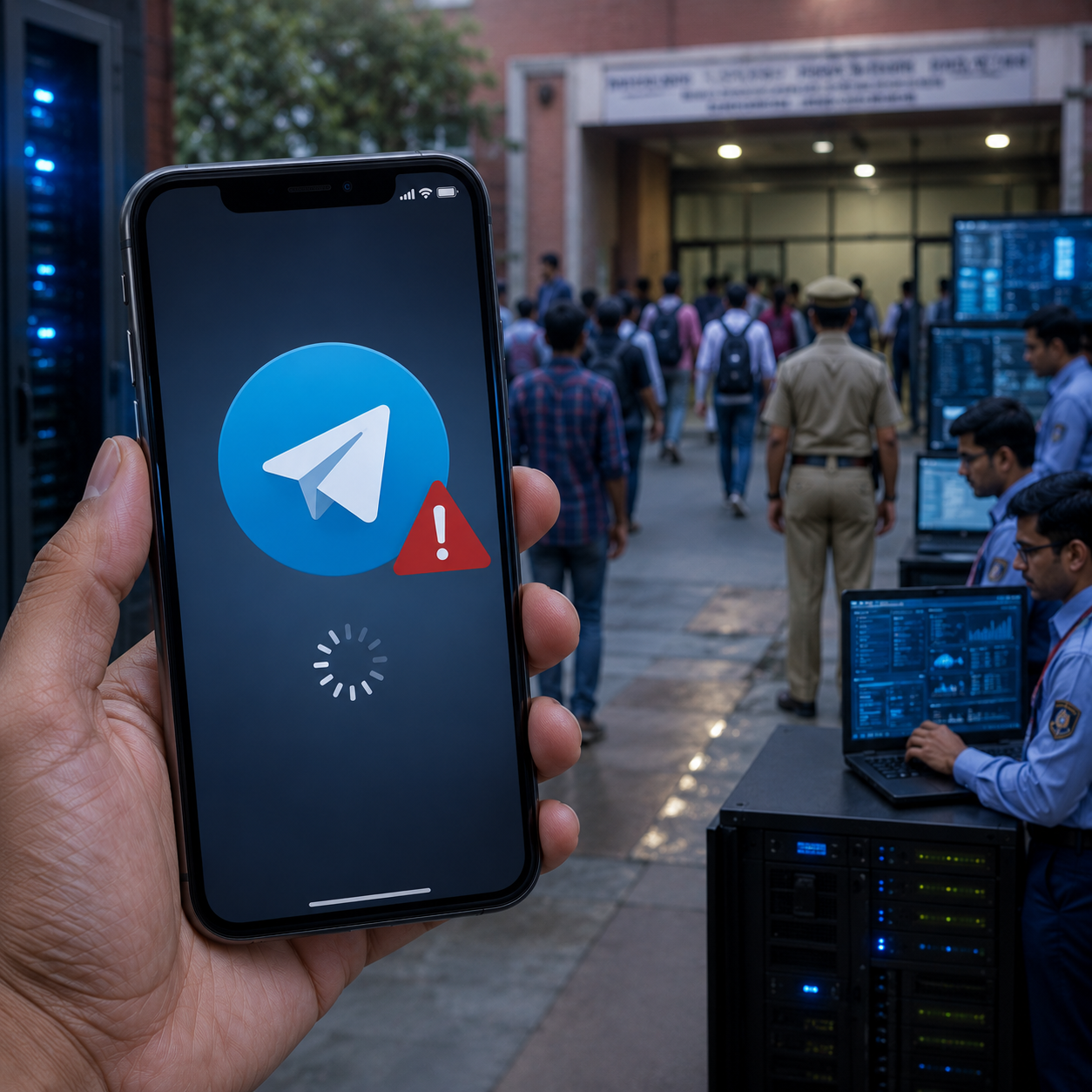
Telegram CEO Pavel Durov Accuses Reliance-Linked Network of Disrupting Access, While Industry Sources Reject the Claims and Cite Regulatory Scrutiny Over NEET-UG Leaks
Highlights
- Pavel Durov alleged a Reliance-linked network interfered with Telegram access.
- Industry sources dismissed the allegations as misleading and inaccurate.
- Telegram is facing regulatory action linked to NEET-UG re-test leak concerns.
- Apple and Google were reportedly asked to delist Telegram temporarily.
- Telegram says over 150 million Indian users could be affected.
Telegram founder and CEO Pavel Durov has accused a Reliance-linked entity of interfering with access to the messaging platform and suggested that commercial interests may have influenced efforts to restrict Telegram in India. The allegations were swiftly rejected by telecom industry sources, who described them as misleading and based on a misunderstanding of India’s telecom sector.
In a series of posts on X, Durov claimed that millions of Telegram users outside India, including users in the United Arab Emirates, experienced disruptions due to alleged Border Gateway Protocol (BGP) hijacking. He alleged that a Reliance network operator was responsible for routing issues that affected Telegram’s accessibility.
Durov further suggested that the issue could be linked to market competition, noting that Meta, the parent company of WhatsApp, holds a minority stake in Jio Platforms. He stated that he would not be surprised if interests connected to Reliance and WhatsApp had supported efforts to restrict Telegram’s operations in India.
The Telegram chief also urged global network operators to reject unauthorized BGP route announcements linked to Autonomous System Number (AS18101), warning that such activity could lead to internet traffic hijacking and service instability.
However, a senior telecom industry source dismissed the claims, stating that Durov appeared to have confused Reliance Communications with Jio Platforms, the telecom arm of Reliance Industries.
According to the source, the autonomous system number referenced in Durov’s allegations belongs to Reliance Communications, which operates independently and is not part of Reliance Industries. The source further emphasized that Meta’s investment in Jio is limited to a minority shareholding acquired in 2020 and does not provide operational or managerial control.
The controversy comes amid heightened regulatory scrutiny of Telegram in India. Authorities are reportedly attempting to curb the circulation of leaked examination material linked to the upcoming NEET-UG 2026 re-test, scheduled for June 21.
Sources familiar with the matter indicated that the government has instructed both Apple App Store and Google Play Store to temporarily remove Telegram until June 22. Additionally, Telegram has reportedly been directed to disable its message-editing feature in India until June 30 to prevent the creation of altered or backdated content that could be used in exam leak-related misinformation campaigns.
Telegram, Reliance Communications, Jio, Meta, and WhatsApp had not issued official responses at the time of reporting.
In a separate statement, Durov criticized the government’s decision, arguing that restricting Telegram penalizes more than 150 million legitimate users in India while doing little to stop those responsible for sharing leaked examination materials.
He said Telegram has removed hundreds of channels involved in distributing leaked exam content and scams and is making edited-message labels more visible to improve transparency and reduce misuse.
Durov maintained that Telegram remains a valuable communication platform and argued that even a temporary restriction is unlikely to prevent leaks, which may simply migrate to other digital services.