Affordable ethanol conversion technology could help millions of BS4 and BS6 vehicle owners adapt to India’s growing ethanol fuel ecosystem without buying new vehicles.
Highlights
- India has already achieved its E20 ethanol blending target.
- E100 fuel has received legal approval in the country.
- E85 fuel, containing 85% ethanol, has been launched in Delhi.
- A new conversion kit costing ₹15,000–₹20,000 may enable older vehicles to run on higher ethanol blends.
- The technology could save vehicle owners from the expense of purchasing new cars.
As India accelerates its transition towards cleaner and more sustainable fuels, ethanol is emerging as a key component of the country’s energy strategy. With the government successfully achieving its E20 blending target and granting legal approval to E100 fuel, the automotive landscape is rapidly evolving. The recent launch of E85 fuel in Delhi has further signaled India’s commitment to higher ethanol adoption.
However, this shift has raised an important question among millions of vehicle owners across the country: Will their existing BS4 and BS6 vehicles be compatible with future ethanol-rich fuels?
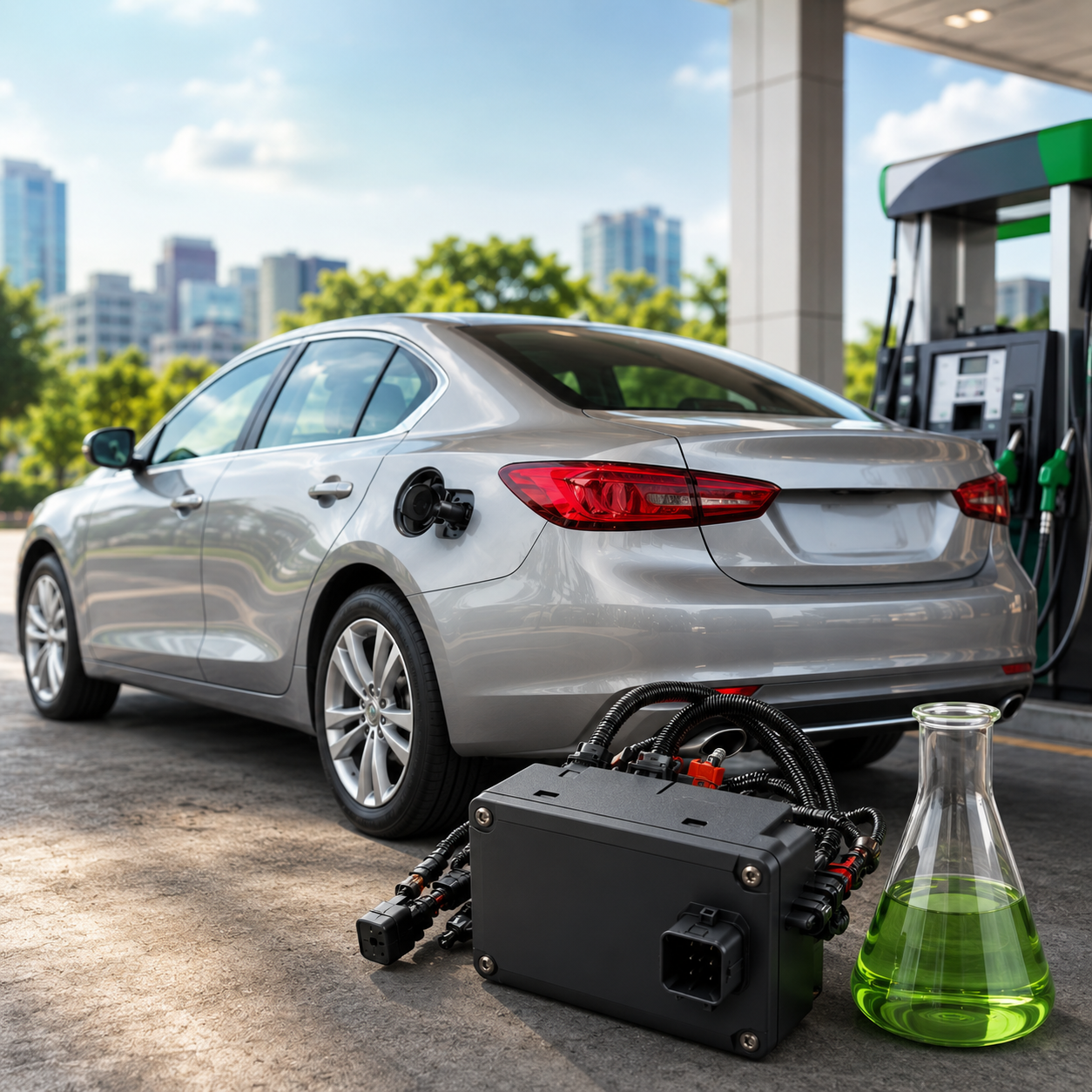
According to a report by Aaj Tak, a promising solution is beginning to attract attention. A newly developed ethanol fuel conversion kit, estimated to cost between ₹15,000 and ₹20,000, could allow older vehicles to operate efficiently on higher ethanol blends. If implemented on a large scale, the technology could become a significant breakthrough for millions of motorists.
The growing ethanol content in fuel has been a concern for owners of older vehicles, many of whom worry that future fuel standards may require expensive upgrades or even replacement of their cars. The conversion kit aims to address these concerns by modifying specific components of the vehicle’s fuel system, enabling compatibility with higher ethanol concentrations.
Industry observers believe the development could play a crucial role in India’s broader clean energy ambitions. By extending the lifespan of existing vehicles and reducing the need for new vehicle purchases, the technology may help consumers save substantial amounts of money while supporting the country’s efforts to reduce crude oil imports.
The affordability of the kit is particularly noteworthy. Compared to the cost of purchasing a new car, an investment of ₹15,000–₹20,000 could offer a practical pathway for vehicle owners to remain compliant with evolving fuel standards.
While large-scale deployment and regulatory approvals will determine the ultimate success of the technology, the concept has already generated considerable interest among consumers. For millions of Indians who depend on their vehicles for daily commuting and business activities, the conversion kit could offer a cost-effective bridge to the future of cleaner mobility.
If successfully adopted, this innovation has the potential to become a game-changing solution in India’s ethanol-powered transportation journey.