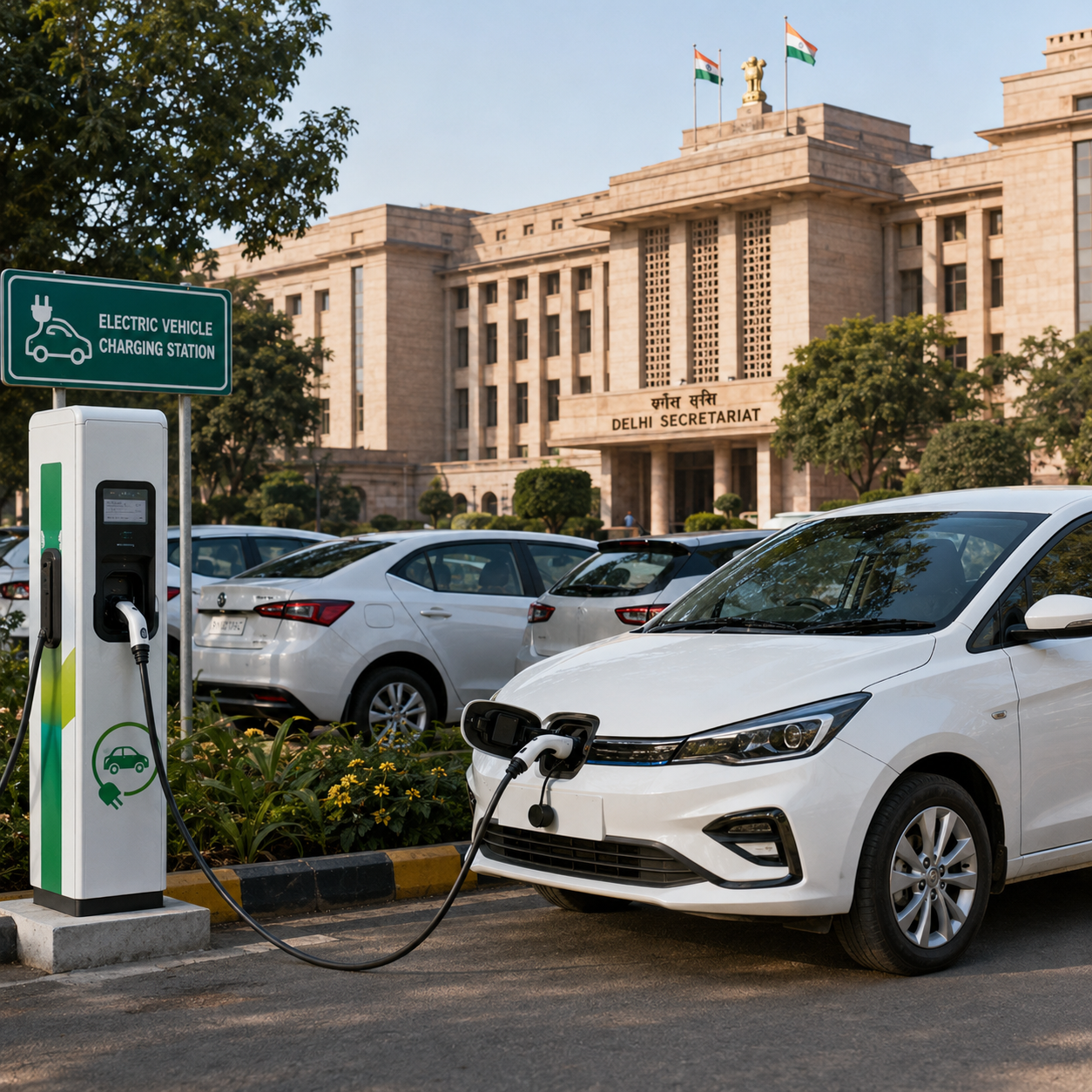
Delhi government approves EV Policy 2.0 with tax exemptions, scrappage incentives, purchase subsidies, and a phased transition away from petrol and diesel vehicles.
Key Highlights:
- Delhi EV Policy 2.0 comes into effect from July 1, 2026.
- Electric cars priced up to ₹30 lakh get 100% exemption from road tax and registration fees.
- Owners scrapping eligible BS-IV cars can receive a ₹1 lakh scrappage incentive while purchasing an EV.
- Subsidies announced for electric two-wheelers, three-wheelers, and light commercial vehicles.
- Only electric auto-rickshaws can be newly registered from January 2027, while new petrol/CNG two-wheelers will be phased out from April 2028.
- The government plans to invest ₹15,000 crore over the next four years to accelerate EV adoption and charging infrastructure.
New Delhi, June 29: The Delhi government has approved its ambitious EV Policy 2.0, introducing a wide range of incentives aimed at accelerating electric vehicle adoption and reducing air pollution across the national capital.
Effective July 1, 2026, all electric cars with an ex-showroom price of up to ₹30 lakh will be exempt from road tax and registration charges, making EV ownership significantly more affordable.
To encourage the replacement of older, polluting vehicles, the policy also offers a ₹1 lakh scrappage incentive for owners of eligible BS-IV cars who purchase a new electric vehicle. Additional purchase subsidies have been announced for electric two-wheelers, three-wheelers, and N1 category commercial vehicles to boost clean mobility across multiple transport segments.
The policy outlines a phased transition away from internal combustion engine (ICE) vehicles. From January 1, 2027, only electric auto-rickshaws will be eligible for new registration in Delhi. Beginning April 1, 2028, registrations of new petrol and CNG two-wheelers will also be discontinued, marking a major shift toward zero-emission transportation.
The Delhi government has earmarked ₹15,000 crore for the policy over the next four years. The investment will support EV adoption, expand charging and battery-swapping infrastructure, and strengthen the city’s overall green mobility ecosystem.
With tax exemptions, financial incentives, and a clear roadmap for phasing out conventional vehicles, the new policy is expected to make Delhi one of India’s leading electric mobility markets while contributing to cleaner air and lower transport emissions.