Government oil companies are planning to extend lightweight 10 kg composite LPG cylinders to commercial customers. The move could benefit small businesses, street vendors, students, tenants, and migrant workers with a more portable and convenient cooking fuel option.
Highlights
- Oil companies plan to offer 10 kg composite LPG cylinders to commercial customers.
- Cylinders may be sold at commercial rates through LPG distributors and select retail outlets.
- Around 50% lighter than conventional steel LPG cylinders, making them easier to carry.
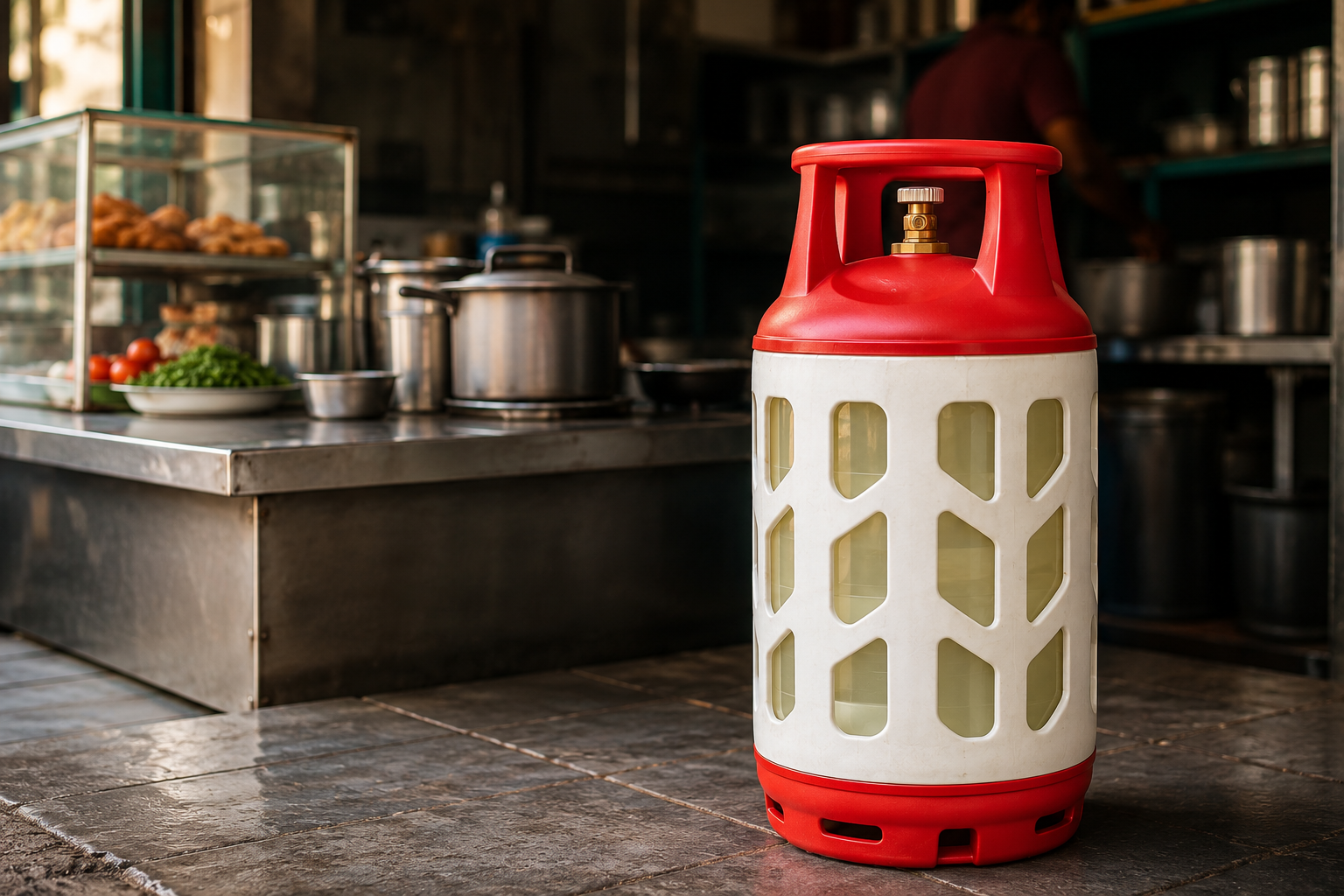
- Transparent outer body allows users to check the remaining gas level without a gauge.
- Street vendors, tea stalls, small eateries, students, tenants, and migrant workers are expected to benefit the most.
- Currently available only for limited domestic use under HP Gas Ojas, Indane Xtralite, and Bharatgas Light. Money9 first reported the planned commercial rollout.
Government-owned oil marketing companies are preparing to introduce lightweight 10 kg composite LPG cylinders for commercial customers, expanding access to a fuel option that is currently available only to a limited number of domestic consumers. According to a report by Money9, the proposal is under consideration and, once approved, the cylinders will be sold at commercial prices through LPG distributors and selected retail outlets.
The move is aimed at addressing the needs of customers who require smaller quantities of LPG but find existing commercial cylinders either too large or difficult to handle. At present, commercial LPG is mainly available in 19 kg, 5 kg, and 2 kg cylinder sizes. The addition of a 10 kg option could provide greater flexibility, particularly for small businesses.
The proposed cylinder is expected to benefit a wide range of users, including street food vendors, tea stall owners, small restaurants, students, tenants, migrant workers, and other small commercial establishments. These users often have limited storage space and lower fuel requirements than businesses using standard 19 kg cylinders.
One of the biggest advantages of the composite cylinder is its lightweight design. Built using advanced three-layer composite technology, it weighs around 50% less than a conventional steel LPG cylinder, making it much easier to lift, transport, and store. This can be especially useful for people working in temporary locations or operating mobile food businesses.
Another key feature is its transparent outer body, which allows users to see the amount of LPG remaining inside the cylinder. Unlike traditional steel cylinders, customers do not need a separate gas gauge to estimate the remaining fuel. This helps avoid unexpected gas shortages and makes refill planning more convenient.
Currently, the 10 kg composite cylinder is available in limited domestic markets under different brand names—HP Gas Ojas, Indane Xtralite, and Bharatgas Light. Oil companies now intend to expand the same product into the commercial segment, significantly increasing its reach and usability.
If the proposal receives regulatory approval, the rollout is expected to make LPG usage more convenient for millions of small commercial users across India while supporting greater portability, safety, and ease of handling. The development also reflects the oil companies’ focus on offering more customer-friendly LPG solutions for diverse user groups.