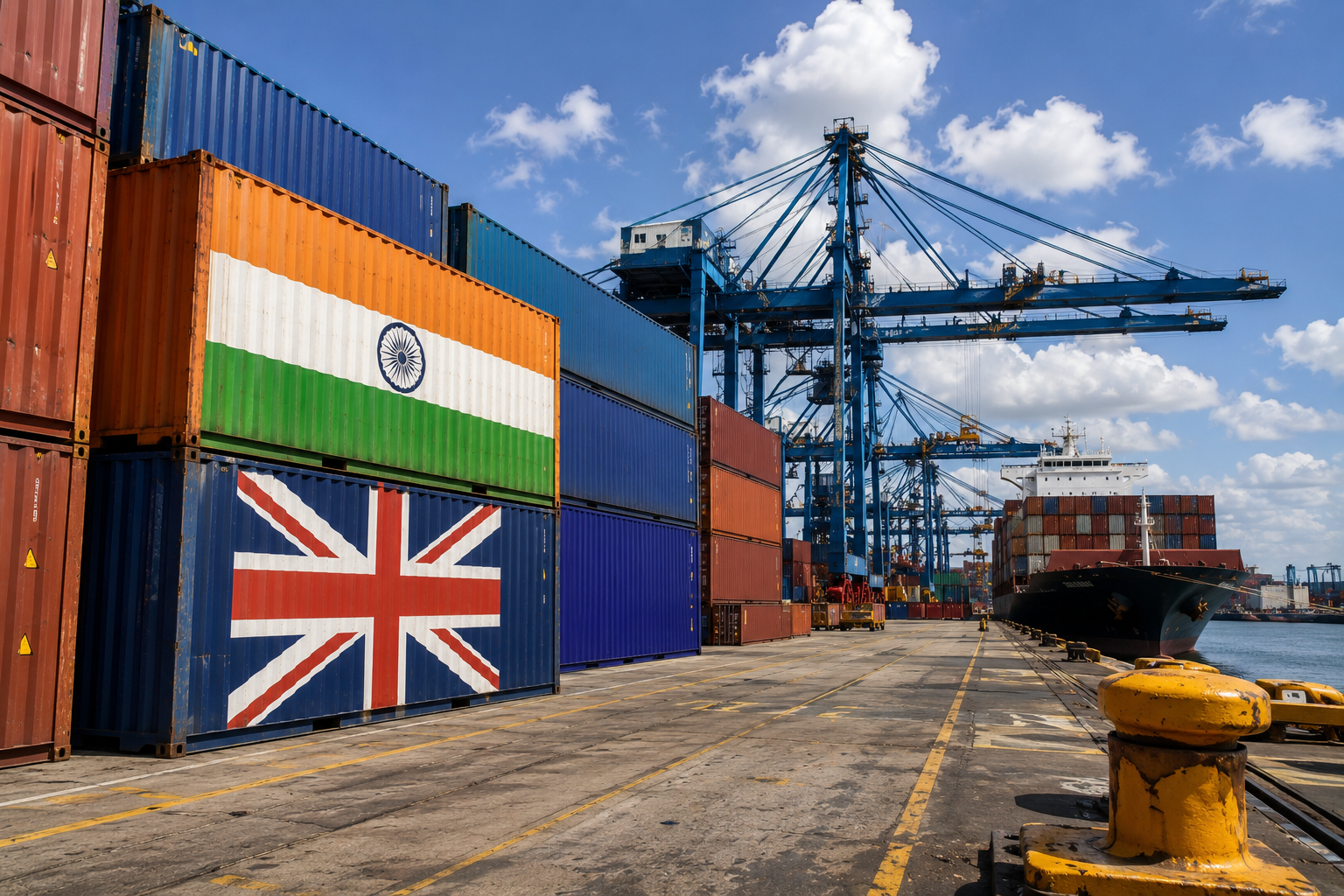
The landmark CETA agreement offers duty-free access for nearly 99% of India’s exports to the UK.
Key Highlights
- India-UK Comprehensive Economic and Trade Agreement (CETA) came into force on July 15.
- Nearly 99% of India’s exports to the UK will receive zero-duty market access.
- The agreement is expected to boost sectors including textiles, engineering, gems, chemicals and marine products.
- A bilateral social security agreement has also become operational.
- The UK said the pact sets a “new gold standard” for future trade agreements.
New Delhi: The India-UK Comprehensive Economic and Trade Agreement (CETA) officially came into effect on July 15, marking a major milestone in bilateral economic relations and providing duty-free market access for nearly 99% of India’s exports to the United Kingdom.
The agreement is expected to strengthen India’s export competitiveness across sectors including textiles, leather, gems and jewellery, engineering goods, chemicals, marine products and processed foods. Alongside the trade pact, the India-UK social security agreement has also become operational.
British High Commissioner Lindy Cameron described the agreement as a “new gold standard” for trade deals, saying it demonstrates the strength of a rules-based global trading system and creates a template for future international agreements.
The agreement also provides significant benefits for UK exports. Import duties on Scotch whisky have been reduced from 150% to 75%, while tariffs on premium UK-built cars will gradually fall from over 110% to 10%, making them more affordable for Indian consumers.
The CETA aims to simplify trade procedures, improve services market access, promote investment, strengthen digital trade, encourage innovation and enhance professional mobility while safeguarding India’s sensitive sectors through phased tariff liberalisation.