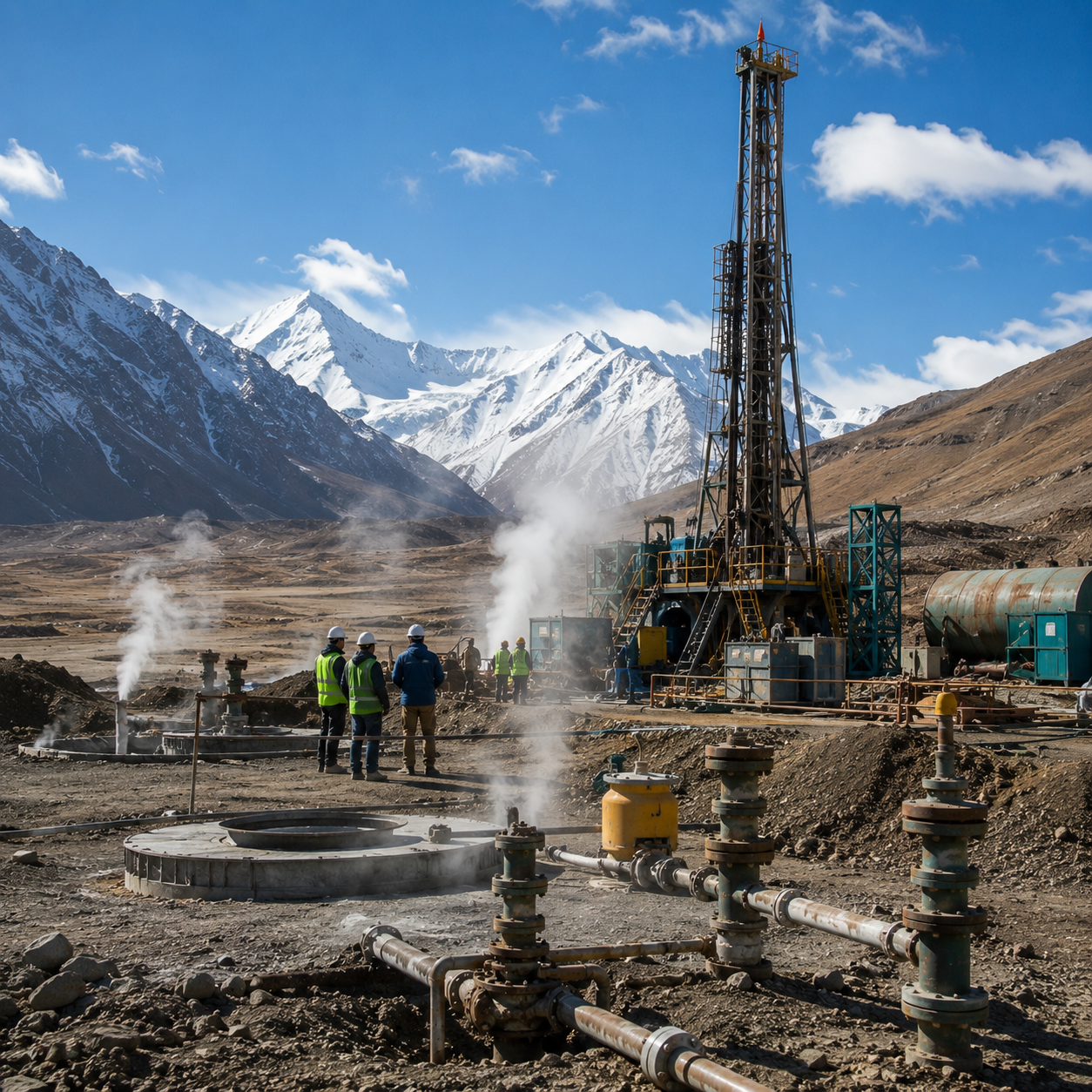
ONGC commissions two 1,000-metre-deep geothermal wells in Ladakh’s Puga Valley, marking a major step toward clean, round-the-clock renewable energy.
Key Highlights
- ONGC commissions India’s deepest geothermal wells in Ladakh.
- Two wells drilled to 1,000 metres at an altitude of 14,000 feet.
- Pilot project aims to generate 1 MW of clean electricity.
- Geothermal energy can provide 24×7 power throughout the year.
- Project supports Ladakh’s Carbon Neutral Mission.
- Puga Valley selected due to its high geothermal potential.
- Power can be used for space heating, greenhouse farming and tourism infrastructure.
- Successful pilot could pave the way for large-scale commercial geothermal power plants in India.
India Takes Major Geothermal Energy Step
India has achieved a significant milestone in renewable energy with the commissioning of its first geothermal energy project in Puga Valley, Ladakh. Developed by the ONGC Energy Centre, the project includes two geothermal wells drilled 1,000 metres deep at an altitude of nearly 14,000 feet, making them among the deepest geothermal wells in the country.
The project was inaugurated by Lieutenant Governor Brig. (Dr.) B.D. Mishra (Retd.), who described it as an important step towards India’s clean energy and net-zero goals.
24×7 Clean Energy from Earth’s Heat
Unlike solar and wind power, geothermal energy uses the Earth’s natural underground heat to generate electricity. Since the heat source remains constant, geothermal plants can produce electricity 24 hours a day, throughout the year, regardless of weather conditions.
The current project is a 1 MW pilot plant, which will undergo further testing before being expanded into a larger commercial power generation facility.
Why Puga Valley Was Selected
Puga Valley is considered India’s most promising geothermal hotspot. Geological studies have found abundant underground hot water and steam in the region, with temperatures reaching around 135°C at a depth of 400 metres. Engineers expect even higher temperatures at greater depths, making the site ideal for geothermal electricity generation.
The steam produced from these underground reservoirs will be used to drive turbines and generate clean electricity.
Benefits for Ladakh
The project is expected to reduce Ladakh’s dependence on diesel-based power generation while providing a reliable energy source during the region’s harsh winters.
Besides electricity generation, geothermal energy can support space heating, greenhouse farming, and continuous power supply for tourism infrastructure, helping improve living conditions and boost economic activity in the region.
Engineering Achievement
Executing the project at an altitude of 14,000 feet presented significant engineering challenges, including low oxygen levels, difficult terrain and transporting heavy drilling equipment through mountainous roads.
Despite these conditions, ONGC successfully completed drilling of both wells within a short period, demonstrating India’s growing capability in advanced clean energy infrastructure.
The successful completion of the pilot project is expected to open new opportunities for geothermal energy development across India while strengthening the country’s transition towards sustainable and carbon-neutral energy sources.