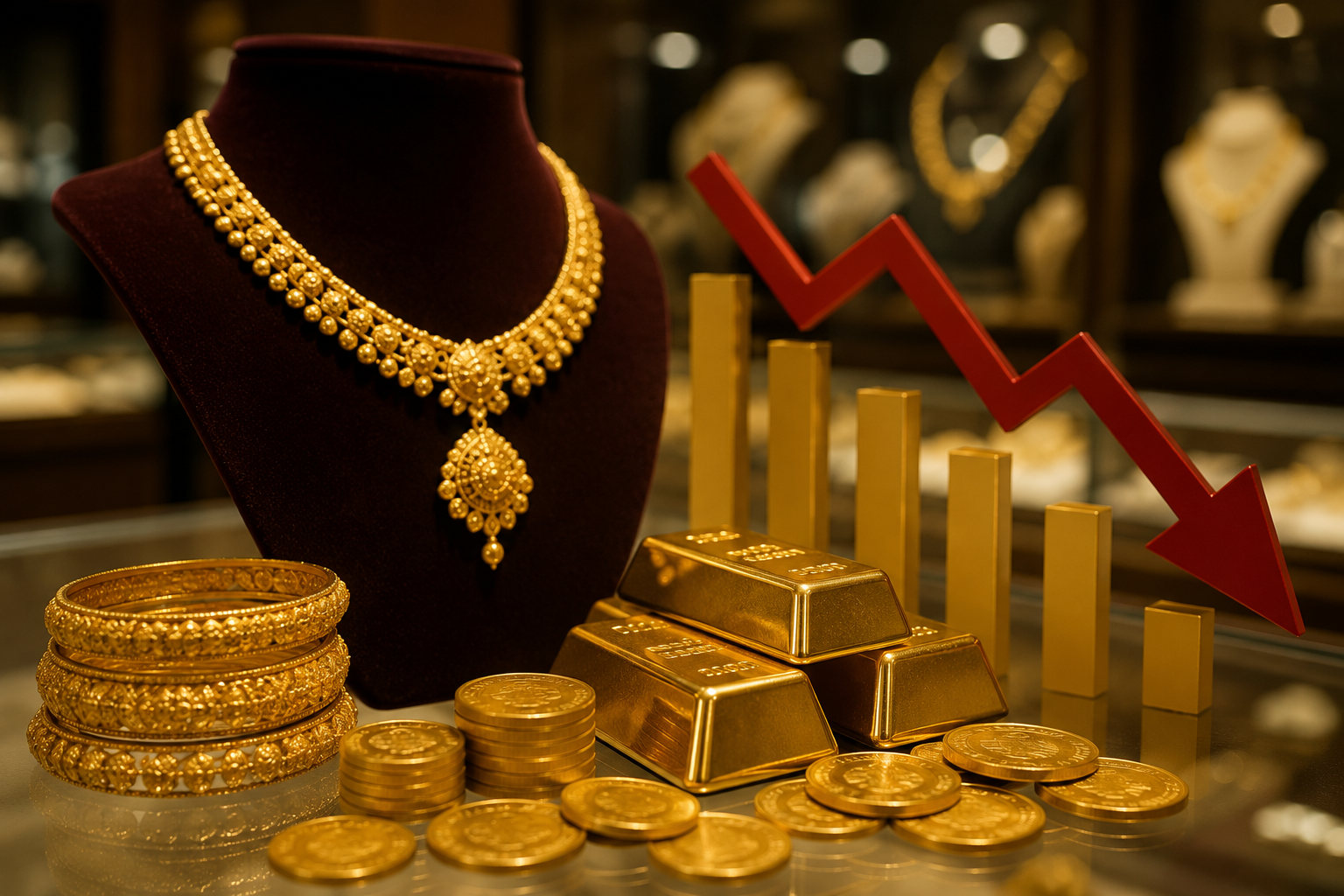
Despite lower volumes, the value of gold demand touched a record Rs 1.98 lakh crore during the quarter.
WGC expects festive and wedding season demand to improve in the second half of 2026.
Highlights
- India’s gold demand declined 6% year-on-year to 131.4 tonnes in April-June 2026.
- Demand value hit a record Rs 1.98 lakh crore, up 50% from a year ago due to higher prices.
- Jewellery demand fell 15% to 75.1 tonnes, impacted by weak seasonal demand and higher customs duty.
- Gold bar and coin investment demand rose 9% to 50.3 tonnes, while Gold ETFs saw 4.2 tonnes of net inflows.
- Gold imports dropped 23% to 98.1 tonnes, while recycled gold supply declined 17%.
- WGC forecasts India’s 2026 gold demand at 650–750 tonnes, with festive demand expected to support purchases.
India’s gold demand declined by 6% year-on-year during the April-June quarter of 2026 as higher gold prices, increased customs duty and subdued seasonal buying weighed on consumer purchases, according to the World Gold Council’s (WGC) latest Q2 2026 Gold Demand Trends report.
Total gold demand stood at 131.4 tonnes, compared with 139.7 tonnes in the same period last year. However, despite the fall in physical demand, the value of gold consumption reached a record Rs 1.98 lakh crore, marking a 50% increase over Rs 1.32 lakh crore recorded in the second quarter of 2025. The sharp rise reflects the significant increase in gold prices during the quarter.
WGC Regional CEO (India), Sachin Jain, said consumers continued to prioritise gold even in a high-price environment, though buying volumes were affected by seasonal weakness, higher import duty and Prime Minister Narendra Modi’s appeal in May to reduce non-essential gold purchases in order to help conserve India’s foreign exchange reserves.
Jewellery demand witnessed the biggest decline, falling 15% to 75.1 tonnes from 88.8 tonnes a year earlier. In contrast, investment demand remained strong. Demand for gold bars and coins increased 9% to 50.3 tonnes, while Indian Gold Exchange Traded Funds (ETFs) recorded 4.2 tonnes of net inflows, despite global ETF outflows.
The report also highlighted concerns over rising gold smuggling following the customs duty hike. Jain said reports of illicit gold entering the market are increasing, making grey market activity one of the biggest risks for the industry.
Other indicators also reflected weaker physical demand. Gold imports into India declined 23% to 98.1 tonnes, while recycled gold supply fell 17% to 19.2 tonnes during the quarter.
Looking ahead, the World Gold Council expects India’s total gold demand in 2026 to remain between 650 and 750 tonnes. The festive and wedding season in the second half of the year is expected to support demand, although elevated prices and global economic uncertainties will continue to influence consumer buying behaviour.