Electric vehicles now account for 8.26% of all vehicle registrations, up sharply from 0.71% in FY20.
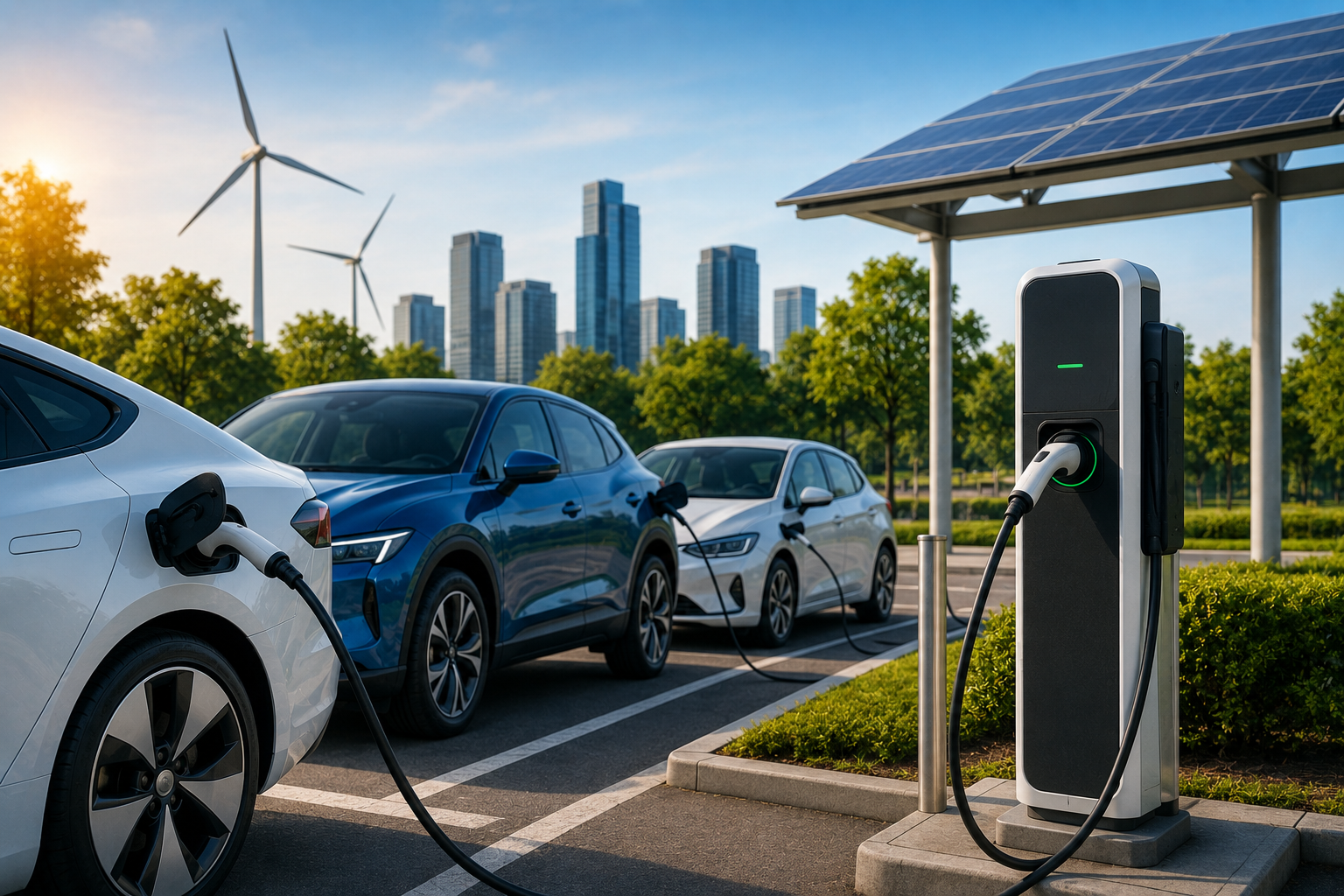
The government is accelerating the rollout of public charging stations and highway EV infrastructure.
Highlights:
- India’s registered electric vehicles have crossed 1 crore for the first time.
- EV market share has grown from 0.71% in FY20 to 8.26% in FY26.
- Over 1,00,23,396 EVs were registered across the country as of July 26, 2026.
- India had 52,718 public EV charging stations by March 31, 2026.
- The government plans EV charging hubs every 40–60 km on national highways.
- Lower running costs, government incentives and expanding charging networks are driving EV adoption.
India’s electric vehicle (EV) revolution has reached a major milestone, with the number of registered EVs crossing the 1-crore mark for the first time. According to data shared by Union Road Transport and Highways Minister Nitin Gadkari in Parliament, the country had 1,00,23,396 registered electric vehicles across all categories as of July 26, 2026.
The rapid growth highlights the increasing acceptance of electric mobility among Indian consumers. EVs accounted for just 0.71% of all vehicle registrations in FY2020, but their share has risen to 8.26% by FY2026, representing more than an eleven-fold increase in six years. The figures are based on the VAHAN portal.
The government attributes the growing popularity of electric vehicles to several factors, including significantly lower operating costs compared with petrol and diesel vehicles, reduced maintenance expenses, zero tailpipe emissions and various central and state government incentives that have encouraged adoption.
Charging infrastructure has also expanded rapidly to support the growing EV fleet. As of March 31, 2026, India had 52,718 public EV charging stations. The government has also allowed private companies to establish charging stations under the Ministry of Power’s guidelines, further boosting charging accessibility.
To make long-distance EV travel more convenient, the National Highways Authority of India (NHAI), through its subsidiary National Highways Logistics Management Limited (NHLML), plans to develop modern wayside amenities every 40 to 60 kilometres along national highways and expressways. These facilities will feature EV charging stations, fuel pumps, restaurants, food courts, parking areas, toilets, drinking water and short-stay accommodation.
With stronger charging infrastructure and rising consumer confidence, the government expects India’s EV market to continue expanding rapidly over the coming years. The milestone reflects the country’s broader push towards cleaner mobility, reduced dependence on fossil fuels and lower carbon emissions.
Keywords:
India EV market, electric vehicles India, EV registrations, EV charging stations, Nitin Gadkari, electric mobility India, public charging infrastructure, EV adoption India