

Under current proposals, the fitment factor multiplier (expected between 1.92x and 2.86x) could increase the minimum basic salary from ₹18,000 to between ₹34,560 and ₹51,480 per month, while resetting Dearness Allowance (DA) to zero upon rollout.

Adani Ports Profit Rises 10%
Adani Ports Reports ₹3,650 Crore Q1 Profit, Revenue Jumps 19% Despite Share Price Fall Adani Ports and Special Economic Zone reported strong financial performance in the first quarter of FY27, supported by growth in its domestic ports and international operations. However, the company’s shares declined despite better profit, revenue and operating earnings. Highlights Adani Ports and Special Economic Zone Limited reported a 10% year-on-year increase in its consolidated net profit for the first quarter of financial year 2026-27, supported by strong growth across its domestic and international businesses. The company’s consolidated net profit increased to ₹3,650 crore in the April-June quarter, compared with ₹3,311 crore in the corresponding quarter of the previous financial year. Revenue from operations rose 19% year-on-year to ₹10,821 crore, up from ₹9,126 crore recorded during the same period last year. The company’s operating performance also remained strong, with EBITDA increasing 19% to ₹6,541 crore from ₹5,495 crore. The EBITDA margin improved marginally to 60.4% during the quarter, compared with 60.2% in the year-ago period. Domestic Ports Drive Growth Adani Ports’ domestic port business continued to remain the company’s main source of earnings. Revenue from the segment increased 12% year-on-year, driven by higher cargo volumes, improved cargo mix and better realisations. The company’s domestic ports handled 115.3 million metric tonnes of cargo during the quarter. The segment recorded an EBITDA margin of around 74%, which the company said remained among the best in the industry. Adani Ports is also undertaking one of its largest-ever port capacity expansion programmes. Its domestic port capacity stood at 653 MMT as of June 30, 2026, and the company aims to increase it to 1,000 MMT by December 2030. During the quarter, the company had a 27.6% share of India’s overall cargo market. Its market share in the container cargo segment stood at 44.8%. Shares Fall Despite Strong Results Despite the strong quarterly numbers, Adani Ports shares witnessed selling pressure. At around 1:30 pm, the stock was trading 3.35% lower at ₹1,717.60 on the BSE, falling ₹59.55 from its previous closing level. At this price, the company’s market capitalisation stood at approximately ₹3.96 lakh crore. The fall in the stock suggests that investors may have booked profits or reacted to broader market conditions despite the company reporting healthy growth in profit, revenue and operating performance.

Samsung Foldables Break Records
Samsung has received over 2.71 lakh pre-orders for the Galaxy Z Fold8 Ultra, Galaxy Z Fold8 and Galaxy Z Flip8 within 72 hours of launch in India. Nearly 45% of bookings came from Tier-2 cities and beyond, highlighting the rapid adoption of foldable smartphones across the country. Highlights Samsung has announced that its latest foldable smartphones—the Galaxy Z Fold8 Ultra, Galaxy Z Fold8 and Galaxy Z Flip8—have created a new pre-order record in India. The company said it received more than 2.71 lakh pre-orders within just 72 hours of the launch on July 22, significantly faster than last year’s Galaxy Z Fold7 and Z Flip7, which took 15 days to achieve similar numbers. The company said the response reflects the growing popularity of foldable smartphones in India. Notably, 45% of all pre-orders came from Tier-2 cities and smaller towns, indicating that premium foldable devices are now gaining traction beyond metro markets. Samsung Southwest Asia President and CEO JB Park said the strong demand shows Indian consumers are increasingly embracing innovative technologies powered by Galaxy AI. He added that the devices are Made in India and supported by Samsung’s Indian R&D teams. The Galaxy Z Fold8 focuses on productivity and entertainment with a lighter 201g design, Snapdragon 8 Elite Gen 5 processor, 4,800mAh battery and dual 50MP cameras. The Galaxy Z Fold8 Ultra offers an 8-inch display, 200MP main camera, 5,000mAh battery and advanced AI features for creators and professionals. Meanwhile, the Galaxy Z Flip8 brings AI-powered interactions to its FlexWindow, enhanced camera features and a slimmer, lighter design. Samsung has also introduced new Galaxy AI capabilities such as Now Brief, Now Nudge, Gemini Intelligence and Gemini Notebook, along with enhanced security through Samsung Knox and One UI 9 privacy features. The new foldable lineup is priced from ₹1,24,999 for the Galaxy Z Flip8, ₹1,79,999 for the Galaxy Z Fold8, and ₹1,99,999 for the Galaxy Z Fold8 Ultra. Samsung is also offering an industry-first 30-month, zero down-payment, no-cost EMI option for buyers.

Toyota Launches New Hilux
The all-new Hilux comes with a refreshed design, advanced safety features and improved connectivity.Bookings are now open, with customer deliveries set to begin from the second week of August. Highlights Toyota Kirloskar Motor (TKM) has launched the all-new ninth-generation Hilux in India, further strengthening its premium SUV and pickup portfolio. Built on Toyota’s proven IMV platform, the latest Hilux combines rugged durability, off-road capability and modern comfort for customers seeking both workhorse performance and lifestyle utility. The new Hilux features Toyota’s “Cyber Sumo” design philosophy, giving it a bolder front fascia with a wider grille, sculpted bonnet, LED headlamps, LED fog lamps and redesigned bumpers. The pickup also gets new alloy wheels, LED rear lamps and additional styling elements to enhance its road presence. Under the hood, the Hilux continues to be powered by a 2.8-litre BS6 Phase 2 diesel engine that produces 204 PS of power and 500 Nm of torque, paired with a six-speed automatic transmission. Toyota says the pickup has been engineered to deliver strong performance across highways, city roads and demanding off-road conditions. For adventure enthusiasts, the Hilux offers Toyota’s advanced four-wheel-drive system with High (H4) and Low (L4) range, an Electronic Differential Lock and Downhill Assist Control. The suspension setup and chassis have also been tuned to provide better stability and comfort over rough terrain. Inside, the cabin has been upgraded with soft-touch materials, a premium dashboard layout and practical storage spaces. Key features include a 12.3-inch infotainment system with wireless Apple CarPlay and Android Auto, Toyota i-Connect connected car technology, wireless charging, cruise control, multiple drive modes, PM2.5 air filtration and an eight-speaker audio system. Safety remains a major focus with seven SRS airbags, Vehicle Stability Control, ABS with Brake Assist, ISOFIX child seat mounts, TPMS, front and rear parking sensors, a panoramic view monitor and Toyota’s impact-absorbing GOA body structure. The all-new Hilux is available in three variants—4X2 GX AT, 4X4 GX AT and 4X4 VX AT—with prices starting at Rs 31.99 lakh (ex-showroom). Customers can choose from six exterior colours, including the new Sulphur Metallic and Ash shades. Bookings are now open across Toyota dealerships, while deliveries are scheduled to begin from the second week of August.
Sugar Stock Limits Imposed
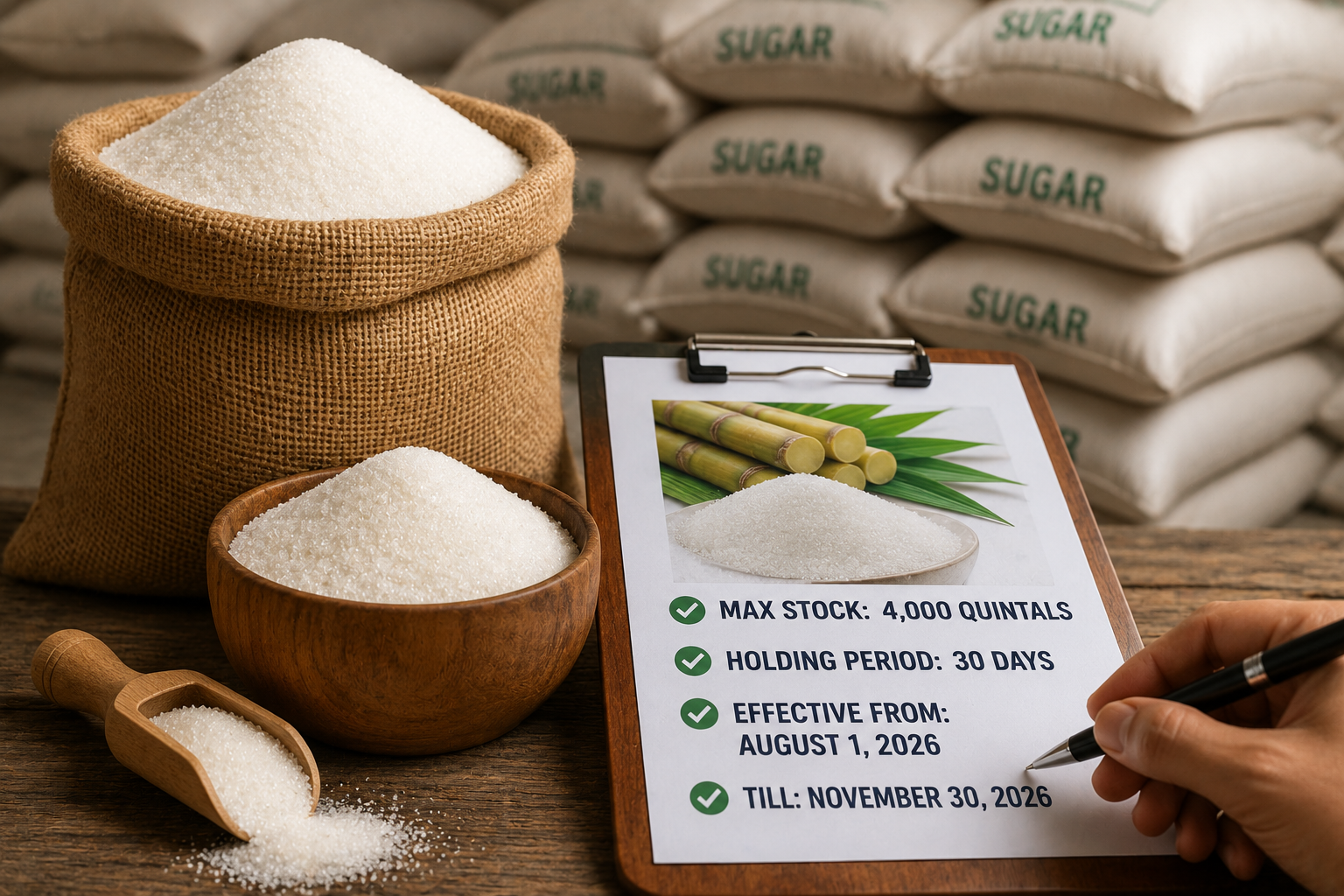
Centre Caps Sugar Dealer Stocks at 4,000 Quintals, Limits Holding Period to 30 Days to Curb Price Rise Highlights The Central government has imposed fresh restrictions on sugar dealers to keep domestic prices under control and ensure adequate availability of the sweetener. Under the new order, no dealer will be allowed to hold sugar stocks for more than 30 days from the date of receipt, while the maximum stock limit has been capped at 4,000 quintals. The new rules will come into effect from August 1, 2026, and will remain in force until November 30, 2026. The decision has been issued by the Ministry of Food and Consumer Affairs under the provisions of the Essential Commodities Act, 1955 and the Sugar (Control) Order, 2025. According to the notification, sugar dealers across the country cannot keep stocks exceeding 4,000 quintals at any location. The government has also directed that every dealer must declare and regularly update sugar stock details on the designated online portal to improve transparency and monitoring. The restrictions, however, will not apply to sugar stocks held on behalf of the government or by dealers authorised by state governments for distribution through the Public Distribution System (PDS). State governments and Union Territories have also been instructed to enforce stock and turnover limits within the framework prescribed by the Centre. The move comes as the government remains cautious about food inflation amid concerns over a potentially deficient monsoon. To ensure sufficient domestic supplies, India has already prohibited sugar exports until September 30, 2026, while permitting exports of around 1.6 million tonnes for the current 2025-26 sugar marketing season. Despite recent price increases, industry bodies ISMA and NFCSF have maintained that the country has adequate sugar stocks. They have urged institutional buyers, wholesalers and retailers to avoid speculative purchases that could artificially push prices higher. According to ISMA, India’s sugar production for the 2025-26 marketing season is estimated at 29.3 million tonnes after ethanol diversion, higher than the 26.12 million tonnes produced in the previous season. The government expects the latest stock limits to discourage hoarding, stabilise prices and ensure uninterrupted supplies for consumers.

FDI Rules Set for Ease
Government Weighs Easing Downstream FDI Norms to Attract More Foreign Investment and Create Jobs Highlights The Centre is considering a proposal to ease foreign direct investment (FDI) norms for downstream investments in a bid to attract higher overseas capital and create more jobs in the country. According to government sources, the proposal is currently under discussion among various ministries and departments before a final decision is taken. Downstream investment refers to indirect foreign investment made by an eligible Indian company into another domestic company through subscription to shares or acquisition. Industry experts believe that simplifying these rules could make it easier for foreign-backed Indian companies to expand their investments within the country. The government has been regularly reviewing India’s FDI policy to ensure the country remains an attractive destination for global investors. Officials said changes are introduced after extensive consultations with stakeholders to improve the ease of doing business and support economic growth. India already has one of the most liberal FDI regimes among major economies. Most sectors permit up to 100% foreign investment through the automatic route, which does not require prior government approval. Only a few strategically sensitive sectors continue to require government clearance. More than 90% of the total FDI inflows into India currently come through the automatic route. The proposed relaxation is expected to further strengthen investor confidence and encourage multinational companies to increase their presence in India. It could also help domestic businesses access additional capital for expansion, boosting manufacturing, services, infrastructure and employment. The government’s continued focus on policy reforms has helped India attract significant foreign investment over the past decade. Between FY2014-15 and FY2025-26, the country received cumulative FDI inflows of USD 843 billion, registering a 169% increase compared with the previous 12-year period. If approved, the revised downstream investment norms could become another key reform aimed at making India a more competitive and investor-friendly global investment destination.
Govt Bets Big On Toys
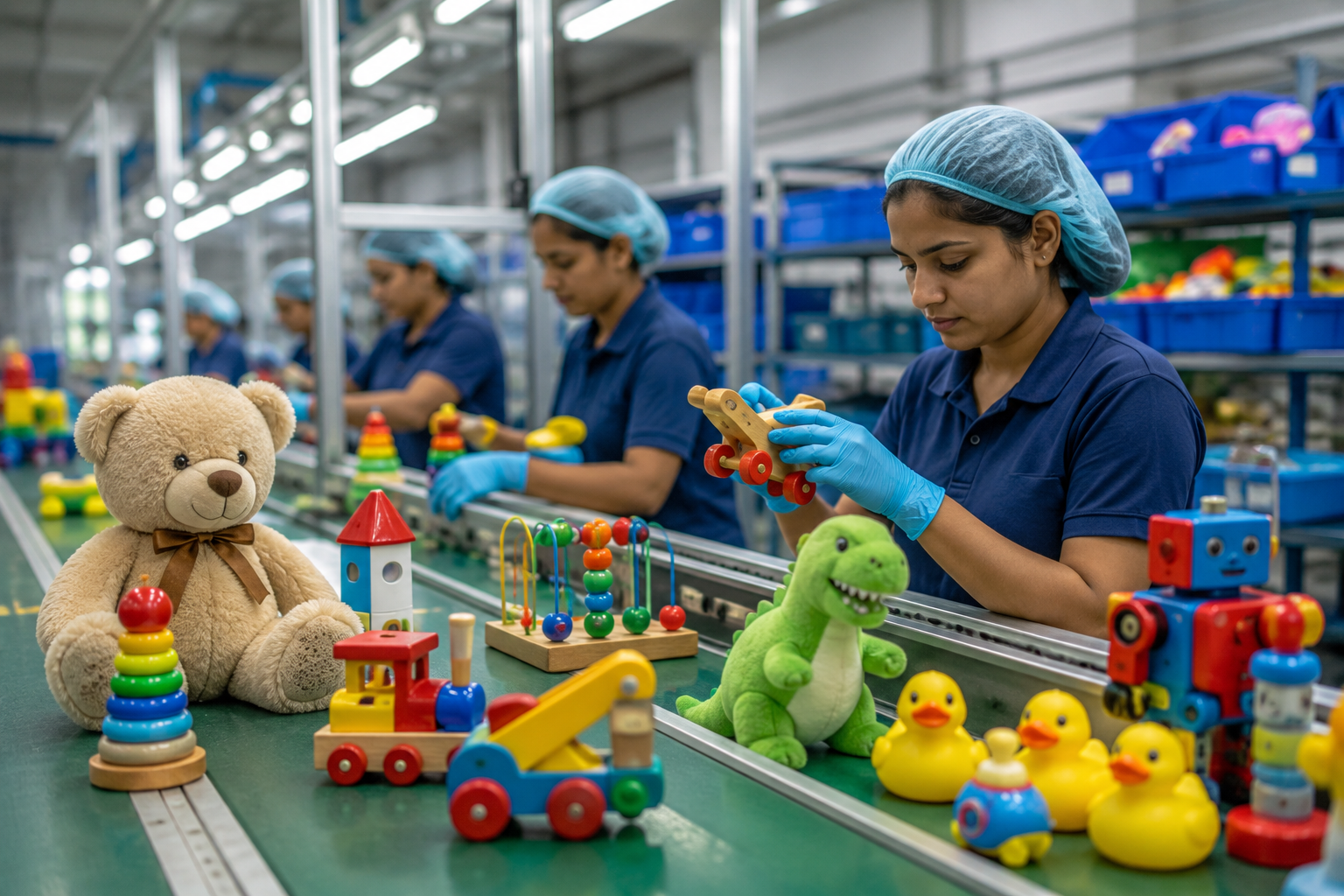
Government Forms Task Force, Launches Playbook To Make India A Global Toy Manufacturing Hub By 2032 Highlights The Central government has announced a major push for India’s toy industry by setting up a dedicated task force and launching a comprehensive Toy Sector Playbook. The initiative aims to transform India into a global toy manufacturing and export hub, with a target of securing a 5% share of the global toy market by 2032. Commerce and Industry Minister Piyush Goyal said the new task force will recommend policy measures to strengthen domestic manufacturing, improve product quality, encourage innovation and develop globally competitive Indian toy brands. It will also identify ways to attract investments, address industry challenges and integrate Indian manufacturers into global supply chains. Alongside the task force, the government has introduced a Toy Sector Playbook to serve as a practical guide for manufacturers and exporters. The document provides detailed guidance on manufacturing best practices, export opportunities, quality standards, intellectual property protection and regulatory compliance, helping businesses compete in both domestic and international markets. The initiative will operate under the government’s SCALE (Steering Committee on Advancing Local Value-add and Exports) framework, which focuses on increasing local value addition, improving exports and building globally competitive industries through close collaboration with stakeholders. India’s toy industry has grown significantly in recent years due to measures aimed at reducing imports, encouraging domestic production and enforcing stricter quality standards. The government believes the latest policy push will further strengthen the sector, create employment opportunities and establish India as a preferred destination for toy manufacturing. With the formation of the task force and the launch of the sector-specific playbook, the Centre expects Indian toy makers to expand their presence in global markets while building a robust, innovation-driven manufacturing ecosystem.

India’s Gig Workforce Set To Triple
India’s gig workforce could rise to 1.7–2.1 crore monthly active workers by 2030, up from nearly 60 lakh today.The sector may help bridge around 70% of India’s annual non-farm job creation gap. Highlights India’s gig economy is expected to become one of the country’s biggest sources of employment over the next few years. The number of monthly active gig workers could nearly triple to between 1.7 crore and 2.1 crore by 2030, compared with around 60 lakh at present, according to a report by Redseer Strategy Consultants. The report, titled Gig Internet Workforce in India: Bridge to Nearly 20 Million Livelihoods, said the workforce associated with delivery services, ride-hailing platforms and home-service companies is growing at an annual rate of 24% to 29%. This rapid expansion could help address nearly 70% of India’s annual non-farm job creation requirement, estimated at around 80 lakh jobs by 2030. More than 30% of the projected gig workers are expected to be people entering the workforce for the first time. The report also found that income earned through gig platforms is significantly higher than earnings in comparable formal and informal jobs. Full-time gig workers can earn up to 2.5 times more per month than people working in similar traditional roles. Average earnings for gig workers stood at around Rs 138 per hour, compared with Rs 54 per hour for workers in comparable formal and informal occupations. However, earnings differ sharply across sectors. Workers providing home services earn around Rs 70,000 to Rs 80,000 per month, while ride-hailing drivers make between Rs 37,000 and Rs 39,000. Delivery workers earn approximately Rs 22,000 to Rs 23,000 per month. The findings were based on a survey of 2,250 gig workers. Around 54% of respondents were not engaged in paid work before joining a gig platform, showing that these platforms are creating opportunities for unemployed people and first-time workers. Nearly 70% of surveyed workers said gig work had improved their future job prospects. They also gained practical skills such as customer management, navigation and financial planning. Ride-hailing is expected to remain the largest gig segment, with around 1.2 crore to 1.4 crore workers by 2030. Delivery services could employ 50 lakh to 70 lakh people, while home services are also expected to create more livelihood opportunities. The report noted that welfare benefits available to gig workers are broadly comparable to those received by salaried employees. However, awareness about such benefits continues to remain limited.

June IIP Growth Hits 23-Month High
India’s industrial output grew 7.3% in June, beating market estimates and marking the fastest growth in nearly two years. Strong manufacturing, capital goods and infrastructure output powered the sharp rise despite global economic uncertainties. Highlights India’s industrial sector delivered a strong performance in June 2026, with the Index of Industrial Production (IIP) growing 7.3% year-on-year, the fastest pace recorded in the last 23 months. The figure was well above market expectations of 6% and higher than the revised 5.1% growth recorded in May, indicating that industrial activity continues to strengthen despite an uncertain global economic environment. The biggest driver of this growth was the manufacturing sector, which accounts for the largest share of the IIP. Manufacturing output expanded 7.8% during the month, supported by healthy domestic demand and improved production across key industries. The strong performance reflects the resilience of India’s industrial base and continued momentum in economic activity. Among the use-based sectors, capital goods production jumped 14.2%, highlighting sustained investment by businesses in machinery, equipment and capacity expansion. The sharp rise suggests that companies remain confident about future demand and continue to invest in expanding production capabilities. Infrastructure and construction goods also recorded healthy growth of 7.5%, reflecting continued progress in government and private sector infrastructure projects. Consumer durables output rose 7.7%, indicating steady demand for products such as home appliances and electronic goods. The energy sector also posted robust numbers, with electricity and gas output increasing 10.6% during June. Higher energy generation points to increased industrial activity and rising economic demand. Water supply and related services also registered 6.1% growth. However, the mining sector remained relatively weak, growing only 1% year-on-year. Despite this moderation, the overall industrial performance remained strong due to broad-based growth across manufacturing, capital goods and infrastructure-related industries. The latest IIP data indicates that domestic demand, government-led infrastructure spending and private sector investments continue to support India’s industrial growth. The strong June performance is expected to boost confidence in the country’s economic outlook even as global trade and geopolitical uncertainties persist
Centre Clears Polymer Note Trial
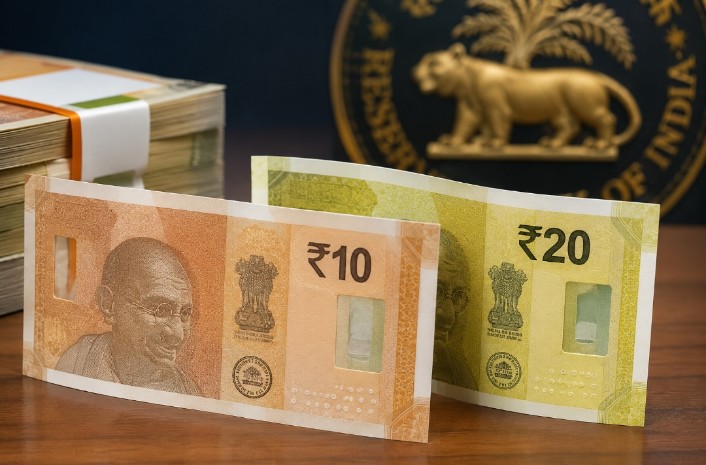
Government approves RBI’s pilot for 2 billion polymer ₹10 and ₹20 notes.Paper currency will continue as the trial tests durability, cost and public acceptance. Highlights The Central Government has approved the Reserve Bank of India’s proposal to conduct field trials of 2 billion polymer currency notes in the ₹10 and ₹20 denominations, marking a significant step towards modernising India’s currency system. The approval has been granted under the RBI Act, 1934, and is only for a pilot project. The government has clarified that existing paper currency notes will continue to remain in circulation, and the proposal does not aim to replace them at this stage. If the field trials are successful, the RBI will consider the regular issuance of polymer notes in the future. Replying to a question in the Lok Sabha, Minister of State for Finance Pankaj Chaudhary said the polymer notes will circulate alongside paper notes during the trial. He also stressed that the move is not expected to disrupt India’s rapidly growing digital payment ecosystem, adding that cash and digital payments complement each other. The RBI will evaluate the polymer notes under different climatic conditions across the country. The trial will assess factors such as durability, resistance to folding and wear, handling quality, public acceptance and overall performance. Since India experiences extreme heat, humidity, dust and heavy currency usage, the pilot will help determine whether polymer notes are better suited for long-term circulation. Preparations for the project are already underway. Earlier this month, Bharatiya Reserve Bank Note Mudran Pvt Ltd (BRBNMPL) floated a global Expression of Interest to procure polymer substrate sheets embedded with advanced security features for the trial. Although polymer notes cost around 20–24% more to manufacture initially, international studies suggest they last 2.5 to 4 times longer than conventional cotton-paper banknotes. Their longer lifespan can significantly reduce the RBI’s expenditure on printing, transporting and disposing of worn-out notes. With annual currency printing costs running into thousands of crores, a successful rollout could generate substantial long-term savings for the central bank while improving the durability and quality of India’s currency.
