

Reliance Jio added the highest number of active mobile subscribers in June, according to TRAI.The telecom giant also retained its leadership in mobile, 5G FWA and wireline services. Highlights Reliance Jio strengthened its leadership in India’s telecom sector by adding the highest number of active mobile subscribers in June 2026, according to the latest data released by the Telecom Regulatory Authority of India (TRAI). The company added 3.33 million active (VLR) mobile subscribers during the month, taking its active subscriber base to 498.9 million. This gives Jio a 41.5% share of India’s total 1.2011 billion active mobile subscribers, making it the country’s largest operator in terms of active users. Jio also continued to expand its overall mobile customer base by adding 2.15 million new subscribers in June. As a result, its total mobile subscriber base reached 503.6 million, with a 39.3% market share, maintaining its position as India’s largest telecom operator. Among competitors, Bharti Airtel added 2.93 million active subscribers, while Vodafone Idea, BSNL and MTNL recorded a decline in their active subscriber bases during the month. The company also retained its leadership in the wireline broadband segment. Jio added nearly 144,000 new wireline connections in June, taking its total wireline subscriber base to 15.6 million and giving it a 32.7% market share. In the fast-growing 5G Fixed Wireless Access (FWA) segment, Jio remained the clear market leader with 9.114 million subscribers, accounting for 70.5% of the country’s total 5G FWA user base. The company added approximately 146,000 new FWA subscribers during the month. Jio also remained the only telecom operator offering UBR-based Fixed Wireless Access services, with 4.934 million subscribers in this category. According to TRAI, India’s total telephone subscriber base increased to approximately 1.348 billion by the end of June 2026, reflecting continued growth in telecom connectivity across the country. Create image without text

Diet Coke Gets Costlier
Middle East conflict disrupts aluminium can supply, forcing Coca-Cola to change packaging and increase Diet Coke prices in India. Highlights If you’ve noticed that a can of Diet Coke costs more than before, you’re not alone. Coca-Cola has increased the price of Diet Coke in India due to disruptions in the global supply chain caused by the ongoing conflict in the Middle East. The conflict has affected the availability of aluminium cans, an essential packaging material for soft drinks. With regular can supplies becoming difficult, Coca-Cola has had to source alternative aluminium cans, which are larger and more expensive than the ones it previously used. This change in packaging has pushed up the overall production cost of Diet Coke. Instead of absorbing the additional expense, the company has revised retail prices, making the beverage costlier for consumers. The development highlights how geopolitical tensions can directly affect everyday products sold in India. Although the drink itself has not changed, the cost of packaging and logistics has increased because of disruptions in global supply chains. Industry experts say aluminium prices and packaging availability have become more volatile as shipping routes and supplies from the region remain under pressure. Beverage companies that rely on imported packaging materials are particularly vulnerable to such disruptions. For consumers, the price increase means paying more for the same soft drink. While the change may appear small on a single purchase, it reflects the broader impact that international conflicts can have on retail prices, inflation and supply chains. If supply conditions improve and aluminium availability normalises, packaging costs could stabilise. Until then, products dependent on imported packaging materials may continue to face pricing pressure.

Private FM Radio Expands Reach
India now has 386 operational private FM radio channels, while broadcasters must air at least 20% of their daily content in local languages to promote regional culture and traditions. Highlights India’s private FM radio sector continues to expand, with 386 private FM radio channels currently operational across the country. The government has said that the sector is not only growing in reach but is also playing a key role in preserving regional languages and cultural heritage. According to the Ministry of Information & Broadcasting, the government conducted transparent e-auctions in July 2025 for 730 FM radio channels across 234 new cities. The auction attracted 18 successful bidders, including nine new entrants, reflecting growing interest in India’s radio broadcasting market. A key feature of the Private FM Radio Phase-III Policy is its emphasis on promoting local identity. Every private FM broadcaster is required to ensure that at least 20% of its daily programming is in the local language of the city where it operates. The content should also highlight local culture, traditions, folk music and community issues. To accelerate network expansion, especially in Left Wing Extremism (LWE)-affected and aspirational districts, broadcasters are allowed to use Prasar Bharati towers and infrastructure, wherever available. The government also issues Letters of Intent (LOIs) and Grant of Permission Agreements (GOPAs) with defined timelines to ensure faster operationalisation. The government said it also works closely with private FM broadcasters to disseminate public service announcements, government schemes and verified information during emergencies, ensuring timely communication with citizens. The information was shared by Minister of State for Information & Broadcasting Dr. L. Murugan in a written reply in the Rajya Sabha.

Gold, Silver Rally This Week
Global tensions pushed gold and silver prices sharply higher this week, while investors now await the U.S. Federal Reserve’s interest rate decision for the next market trigger. Highlights Gold and silver prices witnessed a strong rally this week as rising geopolitical tensions and global uncertainty drove investors towards safe-haven assets. According to the India Bullion and Jewellers Association (IBJA), the price of 24-carat gold increased by ₹2,622 during the week to ₹1,43,781 per 10 grams, compared with ₹1,41,159 at the beginning of the week. Other gold categories also recorded sharp gains. 22-carat gold rose to ₹1,31,703 per 10 grams, while 18-carat gold climbed to ₹1,07,836 per 10 grams. Gold prices remained volatile throughout the week. The lowest level was recorded on July 20 at ₹1,41,915 per 10 grams, while the highest price touched ₹1,45,557 per 10 grams on July 23. Silver also posted an impressive weekly gain. The metal rose by ₹6,974 per kg, taking its price to ₹2,22,721 per kg, up from ₹2,15,747 per kg at the start of the week. During the week, silver touched a high of ₹2,26,238 per kg and a low of ₹2,19,556 per kg. In the international market, gold was trading near $4,055 per ounce, while silver was around $58 per ounce. Market experts say that increasing geopolitical risks, particularly tensions involving the United States and Iran, have strengthened demand for precious metals. Investors generally move towards gold and silver during periods of uncertainty, making them preferred safe-haven investments. Looking ahead, analysts believe that the U.S. Federal Reserve’s upcoming interest rate decision will be the key factor influencing the next movement in gold and silver prices. Any indication of future rate cuts or policy changes could significantly impact global bullion markets.

Cabinet Clears BHAVYA Rasayan
₹3,030 crore scheme to set up three world-class Chemical Parks with plug-and-play infrastructure, aiming to boost manufacturing, exports, jobs and attract investments. Highlights The Union Cabinet, chaired by Prime Minister Narendra Modi, has approved the Bharat Audyogik Vikas Yojana Rasayan (BHAVYA Rasayan) scheme to establish three dedicated Chemical Parks across India. Announced in the Union Budget 2026-27, the initiative is designed to strengthen India’s chemical manufacturing ecosystem and position the country as a global chemicals production hub. The scheme has a total financial outlay of ₹3,030 crore, including ₹3,000 crore for creating common infrastructure and ₹30 crore for administrative expenses. It will be implemented over five years, from FY2026-27 to FY2030-31. Under the scheme, the Central Government will provide up to ₹1,000 crore for each Chemical Park, while the respective state government must contribute a minimum of ₹500 crore. States will also be required to provide at least 2,000 acres (8 sq. km.) of contiguous, encumbrance-free land through a competitive challenge-based selection process. The proposed parks will feature plug-and-play infrastructure, allowing chemical manufacturers to set up operations more quickly and at lower cost. Shared facilities will include Common Effluent Treatment Plants (CETP), hazardous waste treatment and disposal systems, water supply networks, steam generation facilities, solvent recovery units, interconnected pipelines, and logistics and warehousing infrastructure. The government expects the scheme to reduce logistics and production costs by enabling industries to share essential infrastructure. This is expected to improve the global competitiveness of Indian chemical manufacturers while encouraging greater domestic and foreign investment. The initiative is also expected to strengthen India’s participation in global value chains by increasing exports and reducing dependence on imported chemicals. The chemical sector supplies critical raw materials to industries such as pharmaceuticals, agriculture, textiles, automobiles, construction, electronics and nutraceuticals, making it a key pillar of India’s manufacturing economy. In addition, BHAVYA Rasayan places strong emphasis on sustainable industrial development through centralized environmental infrastructure, ensuring better compliance with environmental regulations and responsible waste management. The government believes the development of these Chemical Parks will create significant employment opportunities, support downstream industries, enhance manufacturing capacity and contribute to the vision of Viksit Bharat 2047 through greater industrial growth and self-reliance.

Indian Refiners Diversify Crude Sources
Indian refiners are exploring new crude oil suppliers as Red Sea tensions continue to disrupt global shipping.Companies are testing cargoes from Venezuela and Angola to ensure uninterrupted supplies and reduce dependence on traditional routes. Key Highlights Indian oil refiners are expanding their crude sourcing strategy by testing supplies from Venezuela and Angola as ongoing security concerns in the Red Sea continue to disrupt global energy trade. The move comes after repeated attacks by Yemen’s Houthi rebels on commercial vessels passing through the Bab el-Mandab Strait, one of the world’s most important shipping chokepoints. The strait connects the Red Sea with the Gulf of Aden and carries nearly 12% of global oil shipments. With many shipping companies avoiding the Red Sea route, crude oil cargoes are being diverted around the Cape of Good Hope, significantly increasing travel time and transportation costs. The disruption has pushed Brent crude prices above $100 per barrel, raising concerns over global energy supplies. To reduce dependence on traditional suppliers and safeguard fuel availability, Indian state-run refiners are evaluating new crude grades from Venezuela and Angola. According to Bharat Petroleum Corporation Ltd. (BPCL), the company has diversified its sourcing portfolio to maintain uninterrupted supplies despite the geopolitical tensions. The strategy is aimed at improving energy security while giving refiners greater flexibility in managing supply disruptions caused by conflicts in key maritime trade routes. Industry experts say India’s diversified crude procurement approach helps reduce risks associated with geopolitical crises and ensures that domestic fuel supplies remain stable even during periods of global uncertainty. With crude prices remaining volatile, refiners are expected to continue exploring new sourcing options while closely monitoring developments in the Red Sea and West Asia.
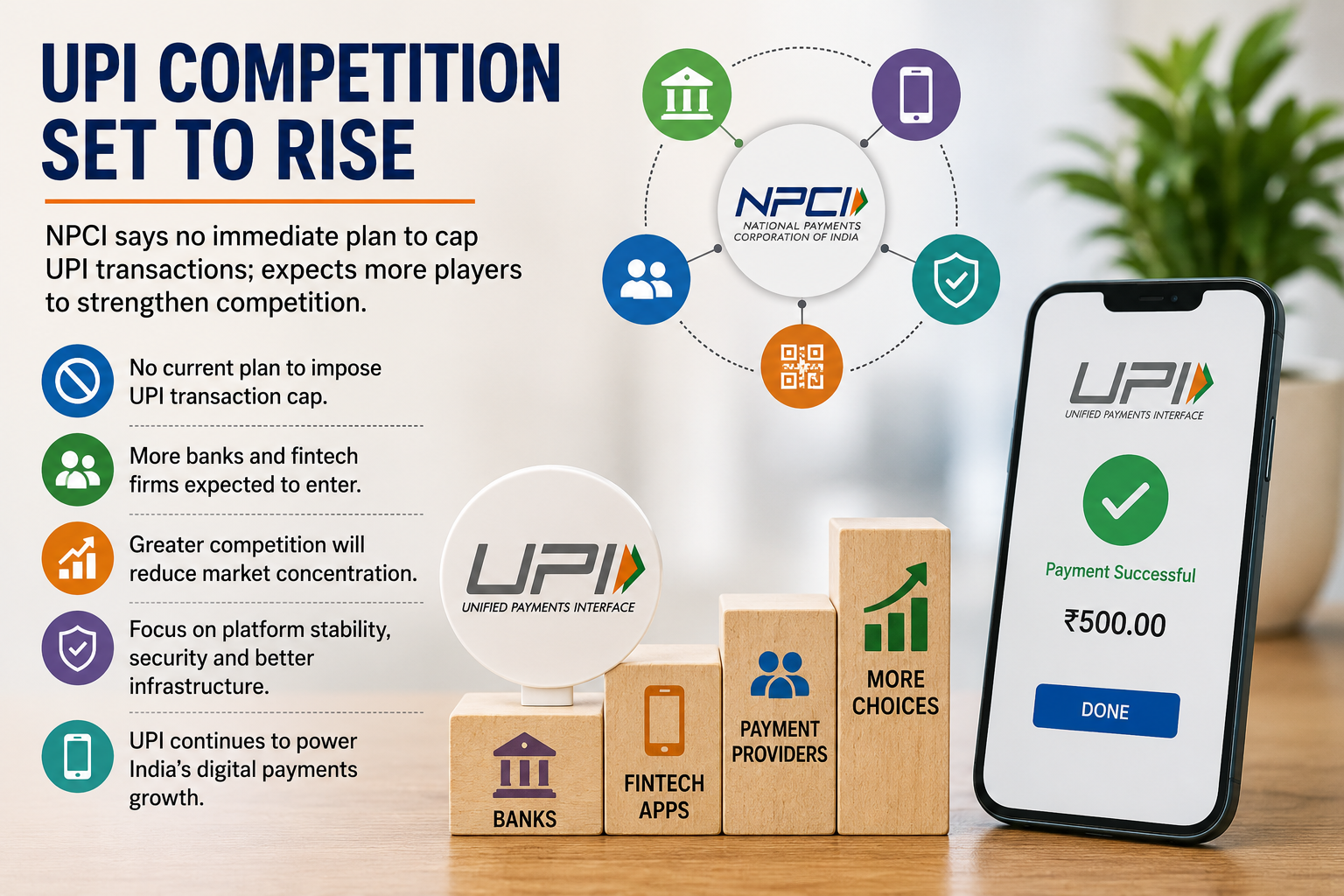
UPI Competition Set to Rise
NPCI says it has no immediate plans to cap UPI transactions despite concerns over market concentration.The body expects new players to strengthen competition and reduce dependence on a few dominant apps. Key Highlights The National Payments Corporation of India (NPCI) has clarified that it has no immediate plans to introduce a transaction cap on Unified Payments Interface (UPI), even as concerns continue over the dominance of a few major payment apps. NPCI officials said the focus is currently on expanding the UPI ecosystem by encouraging more banks, fintech companies and payment service providers to participate. The organisation believes that greater competition will naturally reduce market concentration instead of relying solely on regulatory restrictions. The clarification comes amid discussions around the proposed 30% market share cap for third-party UPI applications. The rule was introduced to prevent excessive dependence on a few platforms, but its implementation has been deferred multiple times to avoid disrupting India’s fast-growing digital payments ecosystem. According to NPCI, new players are steadily entering the market, and several initiatives are underway to improve the reliability, scalability and security of UPI infrastructure. As competition increases, consumers are expected to get more choices, better services and continued innovation. UPI has become India’s most widely used digital payment system, processing billions of transactions every month. The rapid adoption of QR-code payments, merchant acceptance and mobile banking has made UPI the backbone of the country’s digital economy. Industry experts believe that instead of imposing immediate restrictions, expanding the ecosystem and strengthening infrastructure will help create a healthier and more competitive digital payments market. NPCI also reiterated its commitment to ensuring that UPI remains secure, reliable and capable of supporting the growing volume of digital transactions across the country.

IRDAI Flags Fire Insurance Discounts
Insurance regulator IRDAI has cautioned insurers against offering steep discounts on fire insurance premiums.The regulator says aggressive underpricing could weaken insurers’ financial health and impact claim settlements. Key Highlights The Insurance Regulatory and Development Authority of India (IRDAI) has warned general insurance companies against offering deep discounts on fire insurance policies, saying such aggressive pricing could threaten insurers’ financial stability and weaken underwriting discipline. The regulator issued the advisory after receiving complaints about exceptionally high discounts being offered on large industrial and commercial fire insurance policies. According to the advisory, insurers have reportedly been offering discounts of 60–75% on catastrophe covers and 85–90% on preferred risks, primarily due to intense competition, business targets and pressure to acquire large corporate clients. IRDAI said fire insurance is a low-frequency but high-severity business, where a single claim can be several times larger than the premium collected. Therefore, premiums should be determined using sound actuarial principles and should adequately cover expected claims, operating expenses, reinsurance costs and a reasonable margin for uncertainty. The regulator cautioned that unsustainably low premiums could affect insurers’ ability to honour claims during major fire incidents or natural disasters. Industry experts also warned that if such pricing continues, insurers may struggle to maintain profitability and financial strength over the long term. Although fire insurance tariffs were de-regulated in 2024, insurers are still required to follow board-approved underwriting and pricing policies. Despite these concerns, the fire insurance segment continues to grow strongly. Industry data shows fire insurance premiums rose to ₹8,087 crore in the first quarter of FY27, compared with ₹7,206 crore in the same period last year. The segment accounts for around 8.2% of the general insurance industry’s premium pool. The latest advisory signals that IRDAI wants insurers to focus on sustainable growth and disciplined pricing rather than aggressive discounting to win business.

Wipro Buys TTK’s Brands
Wipro Consumer Care will acquire TTK Healthcare’s Good Home and Eva brands for ₹256 crore.The deal strengthens Wipro’s home care and personal care portfolio amid rising demand for premium consumer products. Key Highlights Wipro Consumer Care & Lighting has signed an agreement to acquire TTK Healthcare’s Good Home and Eva brands for ₹256 crore, strengthening its presence in India’s fast-growing home care and personal care market. The acquisition includes the Good Home range of home cleaning products and the Eva fragrance brand. Together, the two brands reported a combined revenue of ₹148 crore in FY2025-26 and have built a strong presence in their respective categories over the years. According to Wipro Consumer Care, the acquisition aligns with its long-term strategy of expanding its consumer products portfolio through strategic investments. The company believes demand for home cleaning, hygiene, air care and personal fragrance products is increasing as consumers become more health-conscious and increasingly prefer premium products. Managing Director Kumar Chander said the acquisition will strengthen Wipro’s presence in categories where consumer demand is witnessing sustained growth. He added that the company plans to retain the existing brand identities while leveraging Wipro’s extensive distribution network, marketing capabilities and product innovation expertise to accelerate growth. For Wipro, this is the 17th acquisition in its consumer care business, highlighting its strategy of expanding through mergers and acquisitions in addition to organic growth. The deal also complements Wipro’s existing portfolio, which includes well-known brands such as Glucon-D, Santoor, Yardley, Chandrika, Nirapara and Brahmins across personal care, food and home care segments. The transaction is expected to be completed by September 2026, subject to customary regulatory approvals. The acquisition reflects growing competition in India’s FMCG sector, where companies are increasingly focusing on premium products and established brands to capture higher consumer spending.
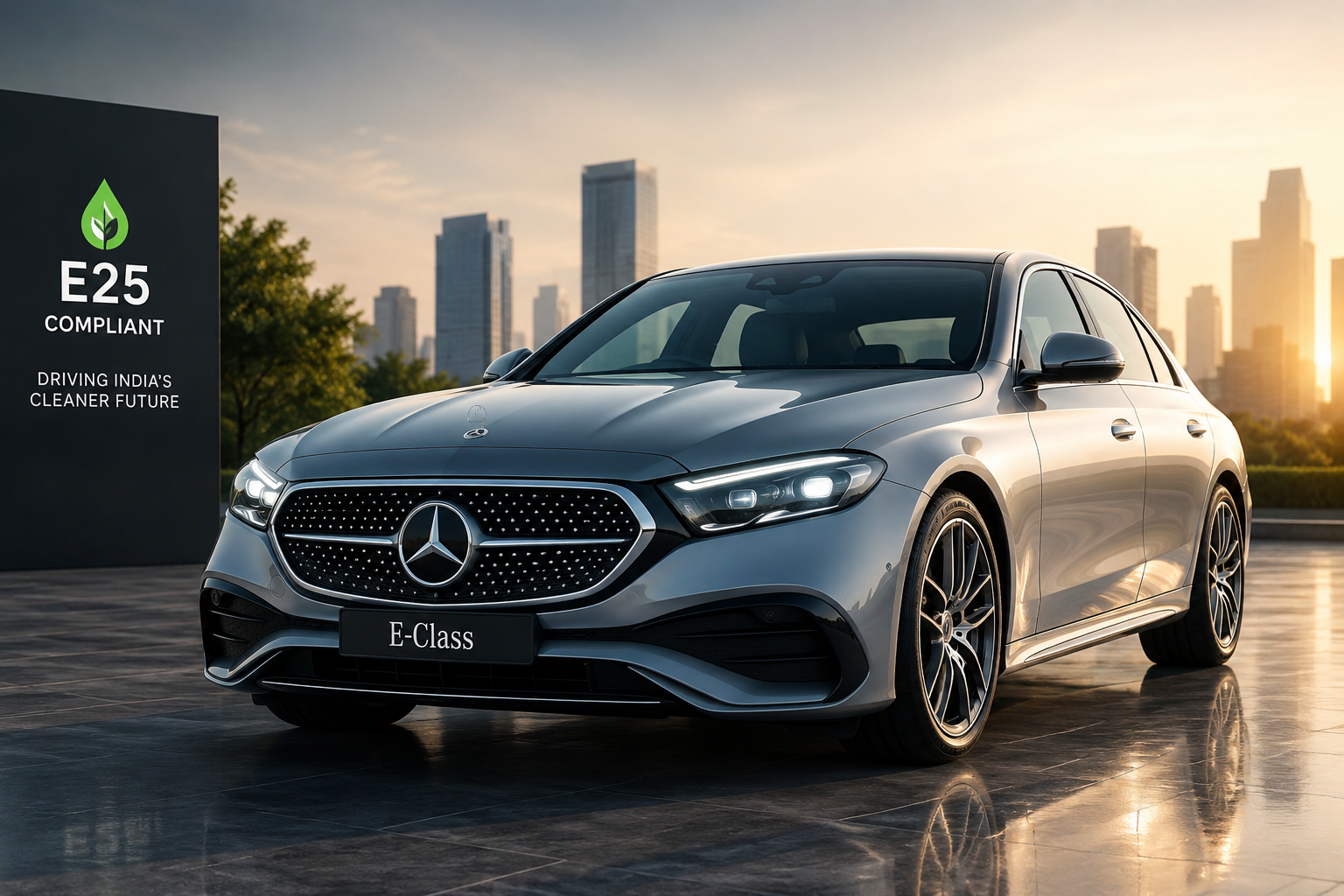
Mercedes Starts E25-Compatible Cars
Mercedes-Benz India has begun rolling out E25-compatible vehicles ahead of future ethanol fuel regulations.The move aligns with India’s biofuel push while the luxury carmaker continues offering both petrol and electric models. Key Highlights Mercedes-Benz India has started rolling out E25-compliant vehicles in the country, becoming one of the early luxury carmakers to prepare for future ethanol-blended fuel regulations. The move comes as India continues to promote biofuels to reduce dependence on imported crude oil and improve energy security. Mercedes-Benz India Managing Director and CEO Santosh Iyer said the company has already upgraded its product portfolio to meet anticipated fuel norms. According to him, all vehicles currently being sold in India are E25 compliant, ensuring they are ready if the government decides to introduce E25 (25% ethanol blend) petrol in the future. At present, the Centre has made E20 petrol (20% ethanol blend) mandatory across the country. While trials on E25 fuel are underway, the government has not yet announced a timeline for its nationwide rollout. By making its vehicles E25-ready in advance, Mercedes-Benz aims to future-proof its products and offer customers greater peace of mind. Iyer noted that the transition to E25 aligns with the German luxury carmaker’s broader strategy of preparing for changing fuel standards while maintaining a wide range of powertrain options for Indian buyers. On the electric mobility front, Mercedes-Benz said customer demand continues to be divided between conventional petrol-powered vehicles and electric models. The company believes consumers increasingly prefer having multiple technology choices rather than shifting entirely to a single powertrain. According to the company, 22–25% of its sales in segments where electric variants are available now come from EVs. However, Iyer added that a significant share of buyers still prefers internal combustion engine vehicles, prompting Mercedes-Benz to continue investing in both electric mobility and cleaner combustion technologies. The rollout of E25-compatible vehicles reflects the company’s long-term strategy of staying ahead of evolving regulations while supporting India’s transition towards cleaner transportation.
